
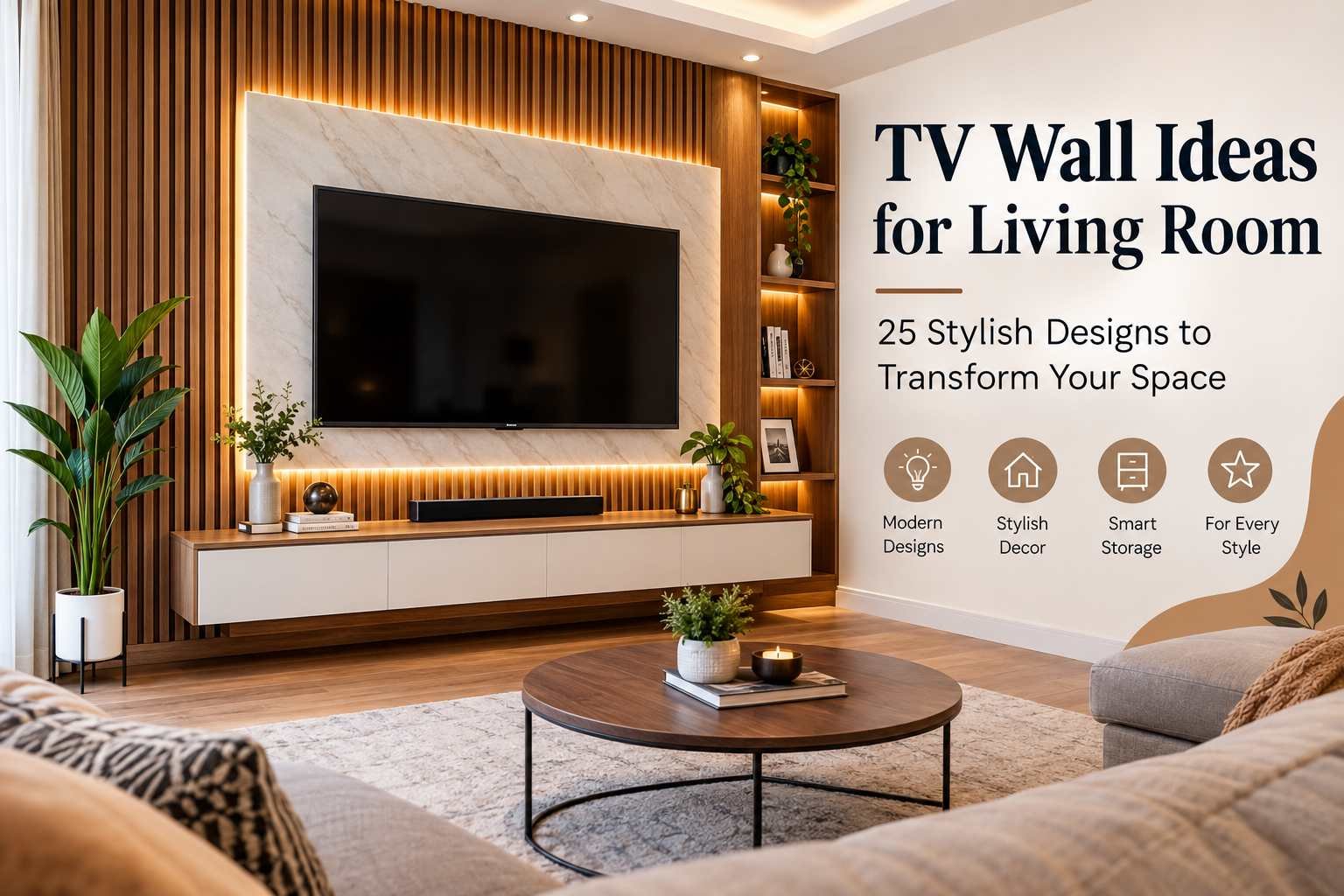
If you are looking for TV wall ideas for living room spaces, there are plenty of ways to make your television area both functional and beautiful. The TV wall often becomes the focal point of a living room, so choosing the right colors, materials, furniture, lighting, and storage can dramatically improve the overall appearance of your home. Whether your style is modern, minimalist, rustic, or luxurious, the right TV wall design can create an inviting atmosphere.
25 TV Wall Design & Styling Ideas
1. Create a Modern Wood Slat TV Wall
Wood slats are one of the most popular ways to create a warm and contemporary television feature wall. Vertical wooden panels can add texture while making the wall feel taller and more sophisticated.
Choose oak, walnut, or light-colored wood depending on your existing furniture. You can install the slats across the wall or use them only behind the television.
For a clean appearance, hide the television cables behind the paneling. Add a floating cabinet underneath to provide storage without making the area feel crowded.
2. Use a Minimalist Floating TV Cabinet
Minimalism works well when you want your living room to look clean and uncluttered. A floating cabinet beneath a wall-mounted television provides storage while maintaining an open appearance.
Choose a cabinet with handleless doors and minimal hardware. White, beige, gray, or natural wood finishes can work beautifully with various interiors.
Keep decorations limited to a few carefully selected accessories. The simplicity of the arrangement allows the television wall to remain visually organized.
3. Add a Stone or Marble Feature Wall
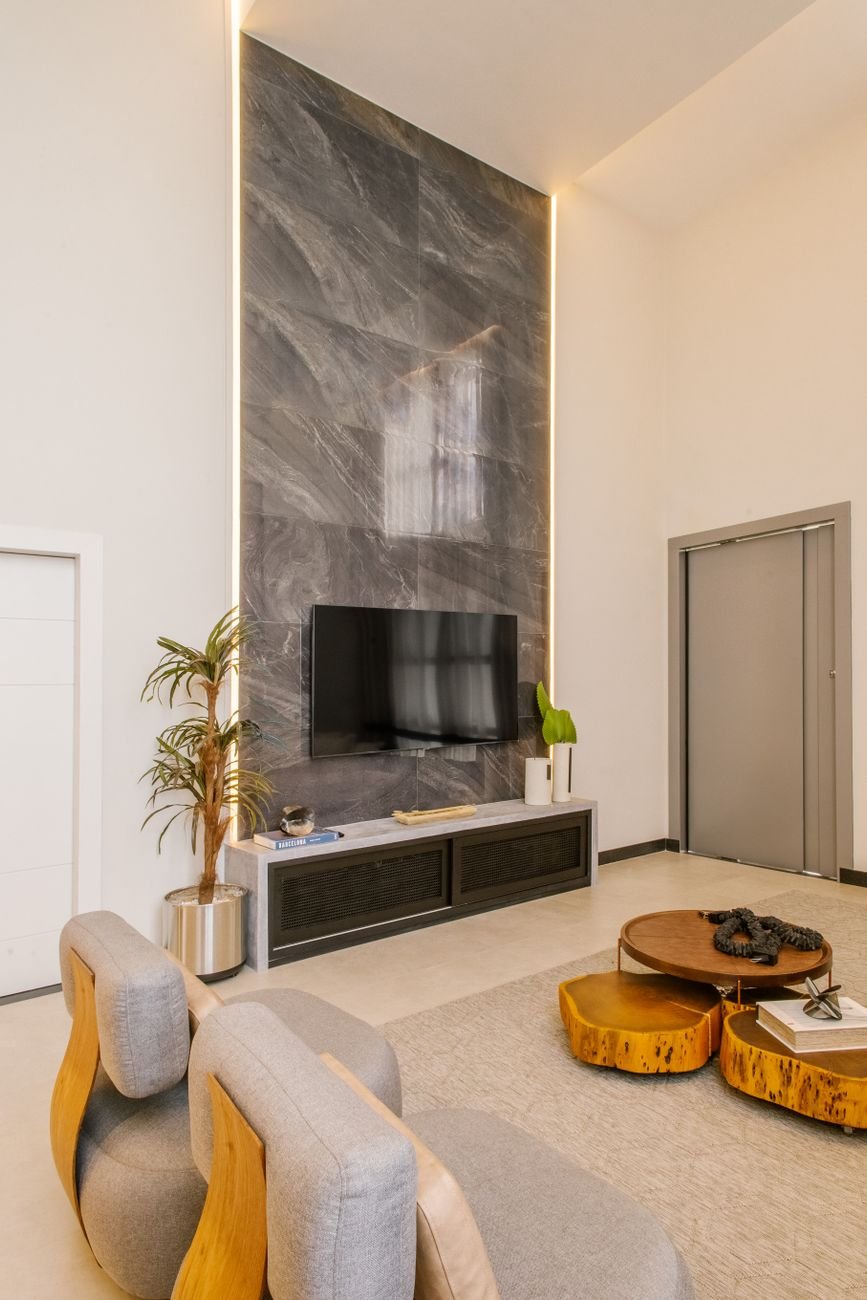
Stone-effect walls can instantly give a living room a high-end appearance. Marble-look porcelain panels, natural stone, or textured stone tiles can all be used behind a television.
For a dramatic design, combine a dark stone background with warm lighting and a simple wooden console. Light marble can create an airy appearance, while darker stone produces a rich effect.
Make sure the material is installed securely and that access to cables and electrical connections remains possible.
4. Try a Dark Accent Wall
A dark accent wall can make a television blend naturally into the background. Charcoal, deep gray, navy, or even black can work exceptionally well.
This approach is especially effective in living rooms with lighter furniture. The contrast helps define the television area without requiring complex architectural features.
Use lamps or subtle LED lighting to prevent the wall from feeling too dark or imposing.
5. Incorporate Built-In Shelving
Built-in shelving can turn a television wall into a complete entertainment center. Shelves can be installed on either side of the television or surrounding the unit entirely.
Use the shelves to display books, plants, artwork, photographs, and decorative objects. Closed cabinets below can hide electronics, games, remotes, and other items.
A combination of open shelves and closed storage offers both decoration and practicality.
6. Design a Cozy Fireplace and TV Combination
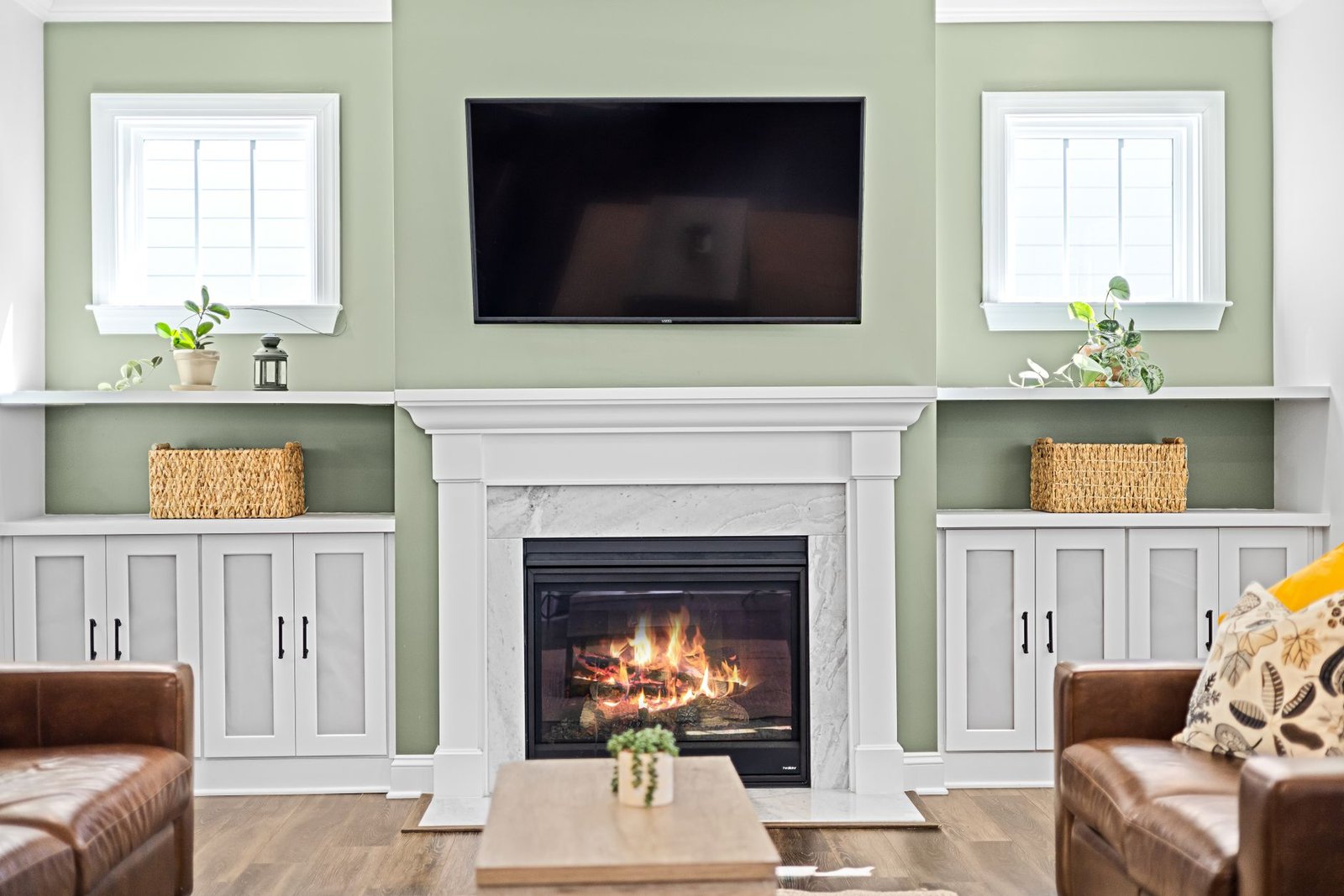
Combining a fireplace with a television can create the ultimate focal point in a living room. The fireplace provides warmth and architectural interest while the television remains the entertainment feature.
However, the television and fireplace should be positioned carefully. Follow the manufacturer’s recommendations regarding heat exposure and mounting height.
A symmetrical design with the television above the fireplace creates a classic appearance, while a side-by-side placement offers a more contemporary layout.
7. Use Fluted Wall Panels
Fluted panels add three-dimensional texture without overwhelming the room. Their repeated vertical lines create an architectural feature behind the television.
You can use wood, MDF, PVC, or other suitable decorative materials depending on your budget and installation requirements.
Pair fluted panels with a floating console and understated accessories for a modern look.
8. Add LED Backlighting
LED lighting can make a television wall look dramatically different in the evening. Soft backlighting behind the television creates depth and highlights the feature wall.
Warm white lighting is ideal for a relaxing atmosphere, while adjustable RGB lighting allows you to change the mood.
Avoid placing bright lighting directly behind the screen, as it can create a visual distraction while watching television.
9. Create a Full Entertainment Wall
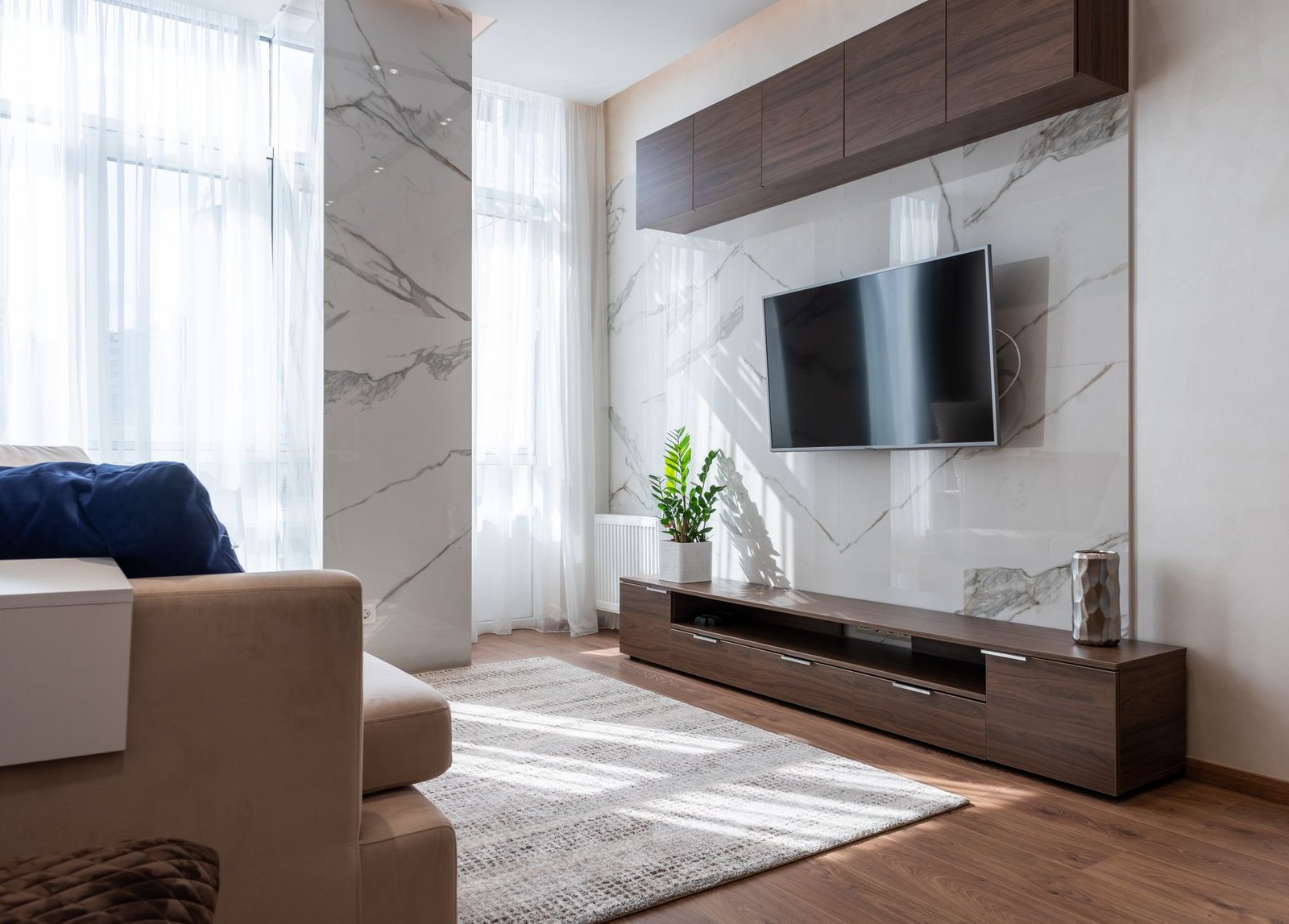
If your living room has enough space, consider creating an entertainment wall that combines the television, storage, shelving, and decorative elements into one cohesive design.
A full-wall arrangement can include:
- Wall-mounted television
- Floating media console
- Open shelves
- Closed cabinets
- Textured panels
- Integrated lighting
- Display niches
The key is to maintain visual balance rather than filling every available space.
10. Choose a Simple Painted Accent Wall
You don’t necessarily need expensive materials to create an attractive television feature. A well-selected paint color can completely transform the area.
Consider beige, sage green, charcoal, muted blue, or terracotta depending on your decorating style.
Painting the TV wall a darker shade than the surrounding walls creates a subtle contrast while keeping the design affordable.
11. Combine Wood and White
Wood and white make a classic combination for contemporary interiors. White cabinets keep the design bright, while wooden elements add warmth.
For example, you could mount the television on a white wall and install a long wooden floating console underneath it. Add matching wooden shelves to connect the elements visually.
This combination works exceptionally well in Scandinavian and modern interiors.
12. Create a Gallery Around the TV
Instead of treating your television as an isolated object, integrate it into a gallery wall.
Place framed artwork, photographs, or decorative prints around the television. Use frames with cohesive colors to keep the arrangement organized.
Leave enough visual space around the television so the wall doesn’t look overcrowded.
13. Use a Concrete-Look Finish
Concrete-effect walls are ideal for modern industrial living rooms. A gray textured finish provides an architectural background for a wall-mounted television.
Combine the effect with black metal furniture, warm wood, and soft textiles. This creates an urban-inspired look without making the room feel cold.
If real concrete is impractical, consider concrete paint, microcement, or realistic wall panels designed to imitate concrete.
14. Add Vertical Storage
Vertical storage is particularly useful in smaller living rooms because it uses wall space efficiently.
Tall cabinets can be positioned beside the television to provide storage without taking up additional floor space. Open niches can be incorporated for books and decorations.
Keep the furniture visually balanced with the television rather than making one side significantly heavier than the other.
15. Try a Scandinavian TV Wall
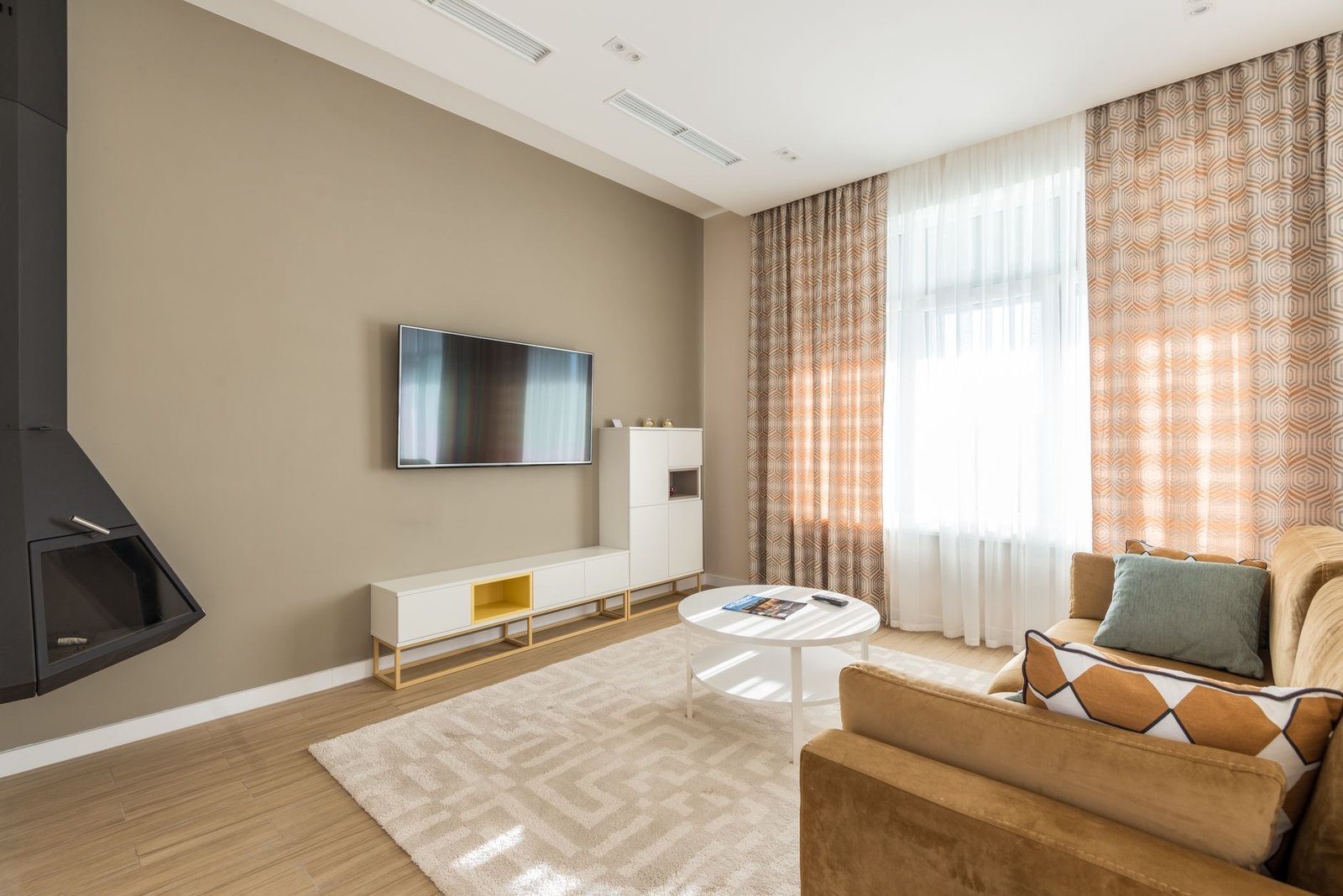
Scandinavian design emphasizes simplicity, natural materials, light colors, and functionality.
Choose light wood, soft white, beige, or light gray. Add a wooden media cabinet and a few plants to create a calm environment.
Avoid excess decoration; Scandinavian interiors benefit from a few carefully selected pieces rather than numerous accessories.
16. Create a Luxury Look With Large-Format Panels
Large-format wall panels can create an upscale, hotel-like appearance. Marble-inspired designs are particularly effective when paired with metallic details.
For example, a white marble-effect panel with light veining can be combined with a slim black console and warm recessed lighting.
The large uninterrupted surface helps create a seamless focal point without requiring many decorative items.
17. Build a Recessed TV Wall
A recessed television installation gives your living room a custom-built appearance. The television sits flush within a designed wall niche, often surrounded by built-in shelves or decorative panels.
This type of installation should be planned carefully, as electrical wiring, ventilation, wall structure, and equipment access all require consideration.
A professional installer can help ensure the television and components are safely positioned.
18. Add Decorative Niches
Niches can make a television wall more dynamic by providing dedicated areas for decoration.
You might create two illuminated niches beside the television using integrated LED strips. Display pottery, books, plants, or artwork inside.
Keep the displayed objects coordinated with the colors used elsewhere in the living room.
19. Use Wallpaper Behind the Television
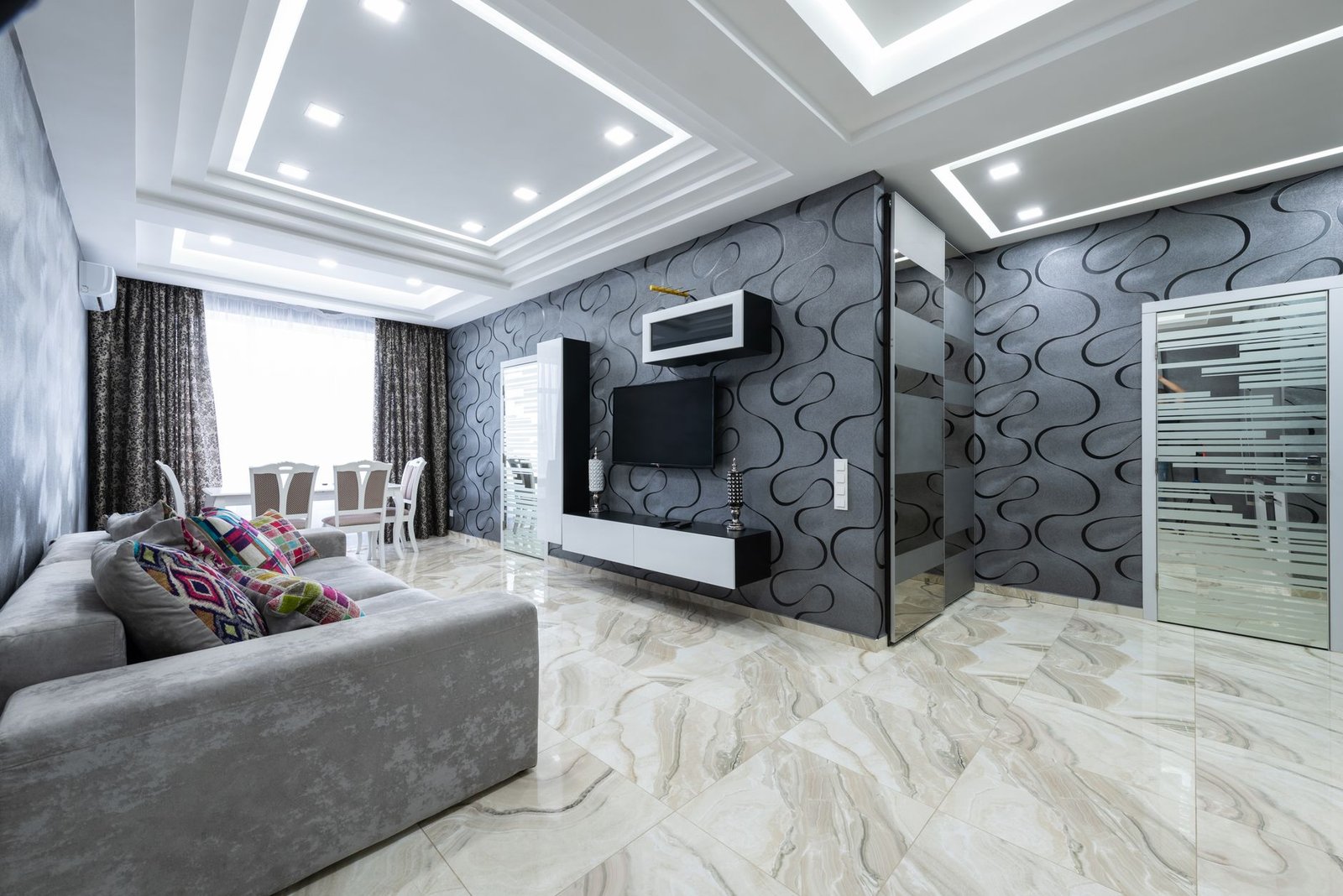
Wallpaper offers a simple way to add pattern and personality to a TV wall. Geometric patterns, botanical designs, textured effects, and subtle neutral patterns can all work well.
If the wallpaper has a busy pattern, keep the surrounding furniture relatively simple. For an understated room, choose a textured neutral wallpaper that adds depth without becoming a distraction.
20. Design a Corner TV Wall
Not every living room has space for a television on the main wall. A corner installation is a practical solution for smaller or unusually shaped rooms.
Use a corner-mounted television with a custom console or corner shelving unit. Make sure viewing angles are comfortable from all main seating positions.
A swivel wall mount provides flexibility when the television needs to be viewed from different angles in the room.
21. Add Floating Shelves
Floating shelves are simple, affordable, and versatile. Install one or two shelves above or beside the television to create opportunities for decoration.
Avoid cluttering the shelves with too many objects. A balanced combination of books, plants, framed art, and small decorative pieces provides visual interest.
Choose shelf materials that complement your coffee table, flooring, or other wooden elements in the room.
22. Make the TV Wall Kid-Friendly
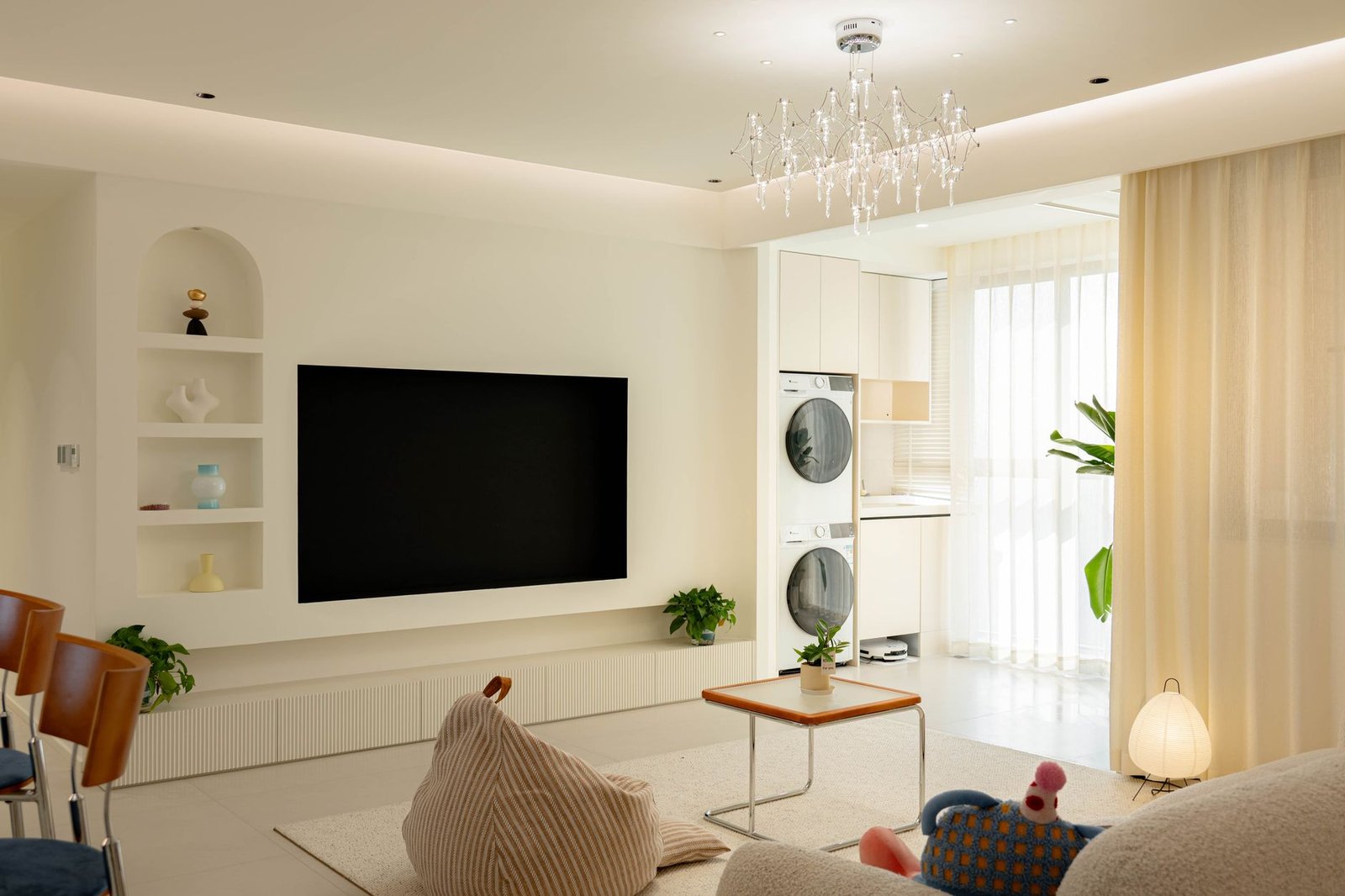
If your home has children, safety and durability should be top priorities when designing the entertainment area.
Secure wall-mounted televisions properly with safety studs. Anchor all media furniture according to manufacturer recommendations. Keep cords organized and fully inaccessible.
Use closed storage for electronic accessories to hide temptation, and avoid placing unstable display items within easy reach.
23. Create a Warm Rustic Design
Rustic interiors combine televisions with natural wood, stone, woven textures, and warm colors to create a cozy feel. A reclaimed-wood panel behind the television serves as a backdrop, complemented by a solid wood console and warm lighting.
Natural materials work best when the living room already contains exposed beams, hardwood flooring, or brick features, helping tie the television into the theme of the room.
Choose light-colored woods like oak or pine for a brighter look, or go bold with dark-stained walnut for contrast. Woven baskets, linen throws, and ceramic vases complete the aesthetic.
24. Use a Black-and-Wood Combination
Black and wood create a sleek, contemporary contrast. A black television mounted against a dark wood panel or wall visually blends in when turned off, while the wooden elements add warmth.
Try a floating cabinet beneath the screen paired with a matching wall panel. This approach is particularly suitable for modern apartments and open-plan spaces, balancing sleekness with warmth.
Stick to a streamlined palette—pair the TV with medium-toned wood like walnut or ash and neutral furniture to avoid visual overload. Under-cabinet LED strips can highlight the wooden surfaces effectively.
25. Keep the Design Simple and Balanced
Sometimes the most successful design is the simplest one. A wall-mounted television, a slim console, a neutral wall color, and one or two decorative elements are often all you need.
The television wall should complement the living room rather than dominate it. Think about how the wall looks both when the television is switched on and when it is turned off.
A simple white, beige, or light gray wall keeps the focus clean. Choose low-profile furniture that matches the room’s scale—large rooms can handle substantial media units, while small rooms benefit from lightweight designs.
How to Choose the Right TV Wall Design
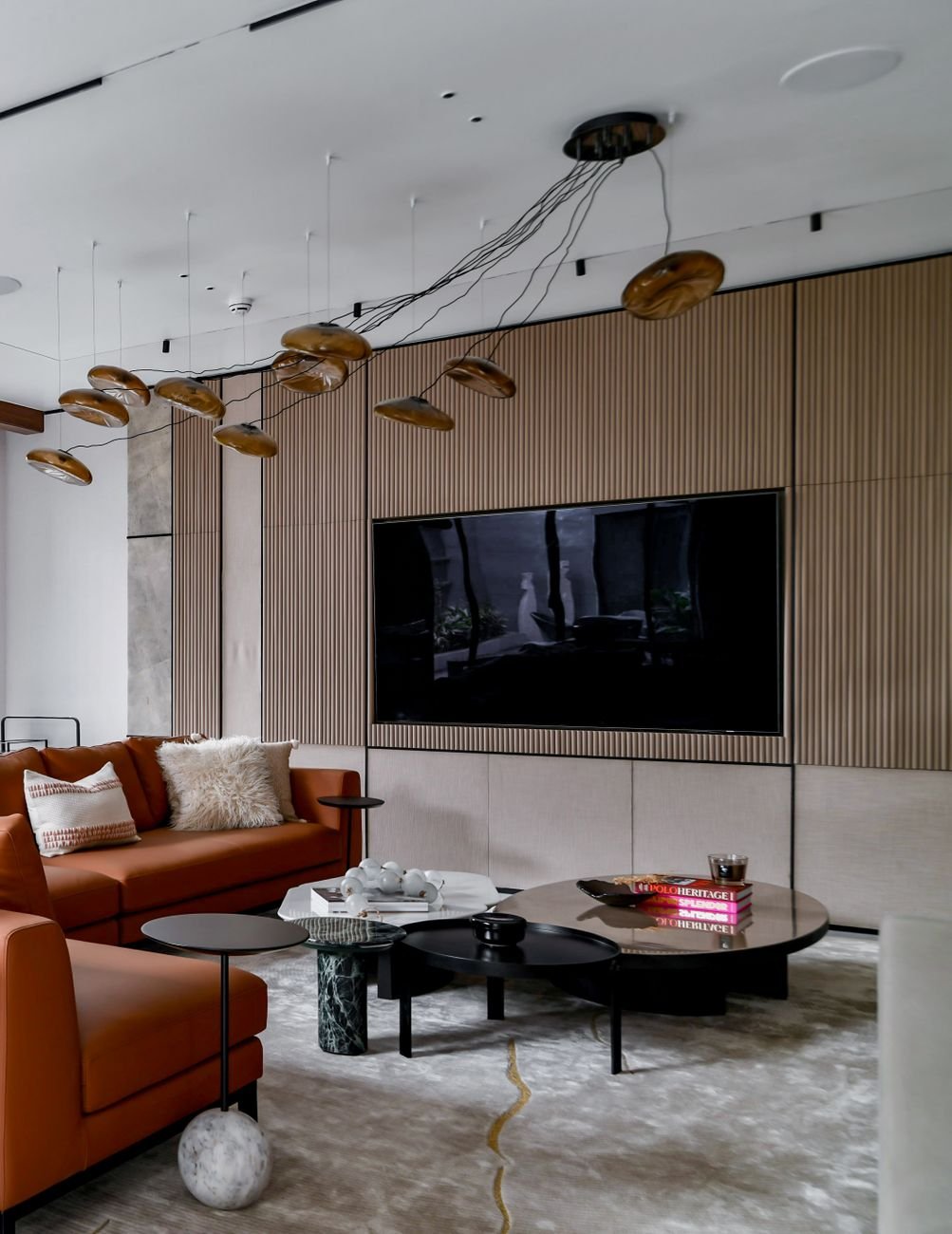
Choosing between TV wall ideas for living room spaces depends on several practical factors:
Consider the Size of the Room
- Small Rooms: Floating cabinets, light colors, and simple shelves keep the area open and airy. Avoid bulky units that block sightlines or reduce movement space.
- Large Rooms: Built-ins, fireplaces, extensive shelving, and full-height decorative wall panels work well to create an impressive focal point.
Think About Your Viewing Distance
Position the television at a comfortable viewing distance and height. Measure the distance from your seating area to the wall before installation. Most experts recommend mounting the center of the TV at eye level when seated to minimize neck strain and optimize viewing comfort.
Match Your Existing Decor
The TV wall should connect with the rest of your interior decor:
- Wood Accents: Match the TV wall panels or media unit to existing wood furniture or flooring.
- Metal Finishes: Align metal frames or hardware with light fixtures or coffee table bases.
- Color Palette: Use paint or wallpaper shades that echo your sofa, rug, or curtains to build harmony across the space.
Plan Cable Management
Cable clutter can ruin the appearance of a television wall. Plan cable routes before installation:
- Use concealed in-wall wiring channels where possible.
- Utilize floating cabinets with cable pass-through holes.
- Install cable trays, zip ties, or plastic sleeves to bundle wires neatly.
- Place electrical outlets directly behind the TV or console.
Consider Storage Needs
Identify what you need to store before picking a design:
- Closed Cabinets: Best for hiding gaming consoles, sound systems, cables, and clutter.
- Open Shelves: Best for displaying books, plants, and decorative objects.
- Recessed Niches: Offer sleek storage without encroaching on floor space.
Common TV Wall Design Mistakes to Avoid
- Mounting the TV Too High: Mounting a television excessively high (e.g., too high above a mantle) causes neck strain. Keep the screen center at eye level when seated.
- Over-Decorating: Adding dozens of accessories around the TV creates visual noise and distracts from the screen. Keep decorations minimal and intentional.
- Ignoring Room Lighting: Mounting the TV directly opposite bright windows or lamps creates severe glare. Use wall sconces or soft LED backlighting instead of direct front lighting.
- Choosing High-Maintenance Materials: Open glass shelves and high-gloss black surfaces show dust and fingerprints easily. Opt for matte finishes and sealed materials for easier upkeep.
- Forgetting Future Technology: Avoid sealing in cables or building exact-fit enclosures that leave no room for future tech upgrades like larger screens or new soundbars.
Budget-Friendly TV Wall Ideas
You don’t need a massive budget to redesign your television wall. Consider these low-cost approaches:
- Paint an Accent Wall: A single coat of dark or rich paint behind the TV completely changes the room’s dynamic for minimal cost.
- Install Floating Shelves: Inexpensive floating shelves above or beside the TV add structured storage and display space.
- Focus on a Single Feature: Instead of a full-wall renovation, combine a textured panel section with your existing media cabinet.
- Create a Gallery Wall: Frame affordable prints, personal photos, or artwork around the TV using matching frames.
- Add Greenery & Soft Decor: Use house plants, stacked books, and warm lighting to naturally integrate the screen into your decor.
Frequently Asked Questions
What is the best wall for a TV in a living room?
The best wall is one that allows comfortable viewing from the main seating area while minimizing natural glare from windows. It should also provide easy access to electrical outlets and structural support for mounting.
Should a TV wall be dark or light?
Both options work well depending on your goal:
- Dark Walls: Help the black TV screen blend into the background when turned off, creating a dramatic, cozy look.
- Light Walls: Reflect light and make smaller or dimmer rooms feel brighter and more spacious.
How can I make my TV wall look expensive?
Incorporate large-format panels, natural wood slats, integrated soft LED backlighting, and built-in storage. Ensuring clean lines and hiding all visible cables makes the biggest difference in creating a high-end look.
Is it better to mount a TV or place it on a cabinet?
- Wall Mounting: Saves floor space and creates a modern, sleek appearance.
- Media Cabinets: Offer flexibility, extra storage, and require no structural wall drilling.
What should I put under my TV?
A floating media console, low sideboard, electric fireplace, or custom built-in unit work best. Ensure whatever you place beneath the screen is wider than the TV to maintain proper visual balance.
How do I hide TV cables?
Run cables inside the wall using a cord conduit kit, cover them with paintable raceways, or hide them behind decorative wood paneling, fluted boards, or floating furniture units.
Can I decorate around my television?
Yes! Shelves, artwork, plants, and decorative panels help integrate the screen into your room’s aesthetic. Leave breathing room around the screen so the area doesn’t feel cluttered.
What colors work best behind a TV?
Neutral tones like charcoal, beige, warm gray, soft white, taupe, and muted sage or terracotta work best because they complement the screen without causing visual fatigue.
Conclusion
The right TV wall ideas for living room designs can transform a basic entertainment area into an attractive focal point that enhances your entire home. From wood slats and marble-effect panels to floating cabinets, built-in shelving, and simple painted accent walls, there are stylish options available for every budget and spatial layout.
The key to success is balancing aesthetics with everyday practicality. Prioritize comfortable viewing height, clean cable management, adequate storage, and balanced lighting to ensure your TV wall is as functional as it is beautiful.
2 thoughts on “TV Wall Ideas for Living Room: 25 Stylish Ways to Transform Your Space”