
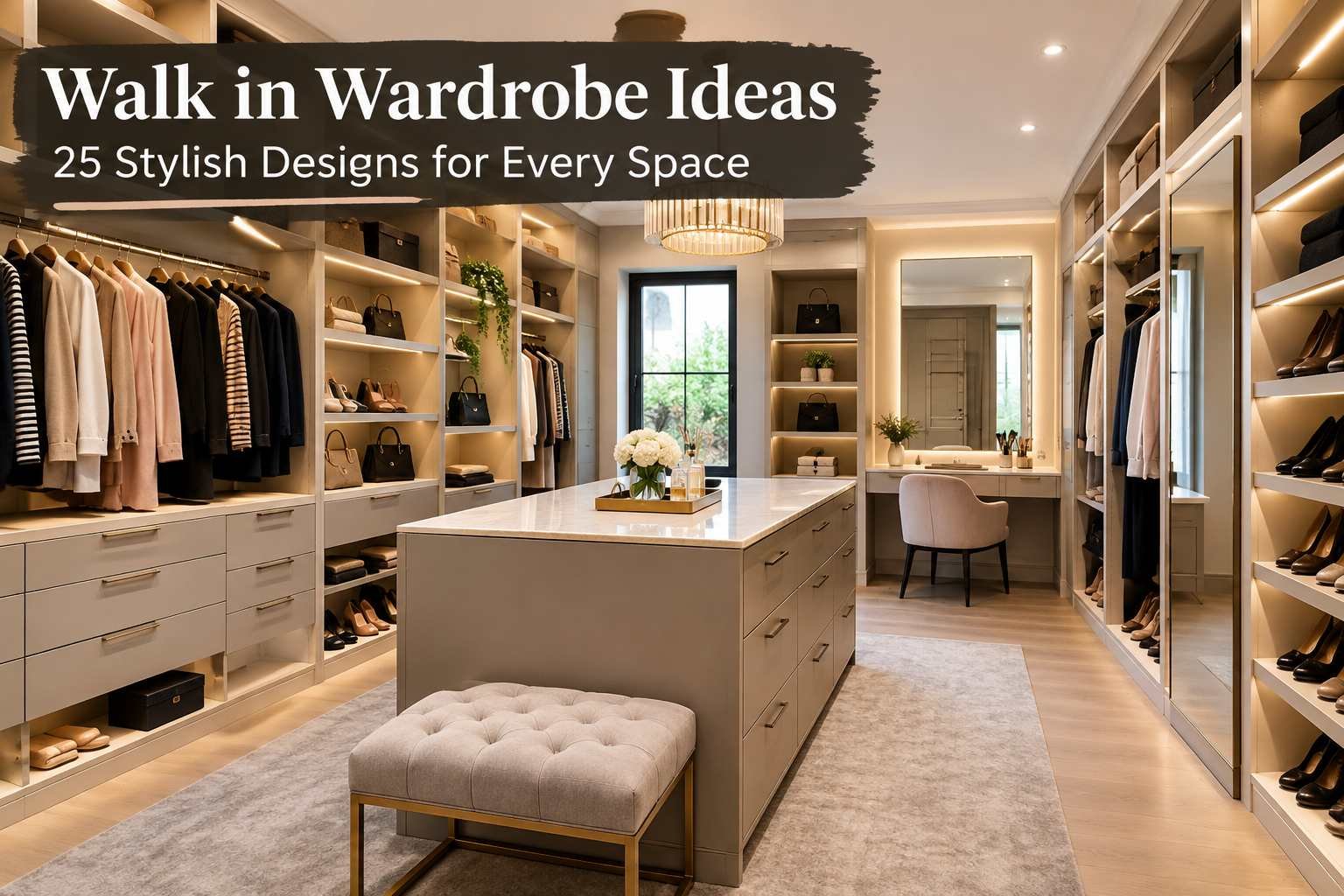
Walk in wardrobe ideas can completely change the way you use your bedroom and dressing area. A designed walk-in wardrobe gives you a dedicated place for clothing, shoes, accessories, bags and everyday essentials while making your morning routine easier. Whether you have a dressing room or a spacious area to work with, thoughtful storage, lighting, colors and organization can turn an ordinary room into a beautiful and practical wardrobe.
A walk in wardrobe does not have to be huge or expensive to look impressive. The right layout can make even a small space feel organized and luxurious. From floor-to-ceiling cabinets and illuminated shelves to islands and clever corner storage there are countless ways to create a wardrobe that suits your lifestyle.
In this guide we explore 25 walk in wardrobe ideas that combine style, functionality and smart organization. These ideas can inspire everything from a budget-friendly makeover to a sophisticated custom dressing room.
1. Choose Floor-to-Ceiling Storage
One of the ways to maximize a walk in wardrobe is to use the entire height of the room. Floor-to-ceiling cabinets provide storage without taking up additional floor space.
The upper sections can hold clothing, luggage, bedding or items you rarely use. Keep clothes at eye level so they are easy to reach.
If you prefer an appearance choose matching cabinet doors throughout the room. For an open design combine closed cupboards with exposed shelves and hanging rails.
2. Create Separate Zones for Different Clothing
A wardrobe layout should make it easy to find what you need. Of placing everything randomly divide the room into dedicated zones.
For example one section can be used for dresses and coats another for shirts and trousers and another for shoes and accessories.
Creating zones also makes cleaning and reorganizing easier. When every category has its place you are less likely to end up with piles of clothing on chairs or the floor.
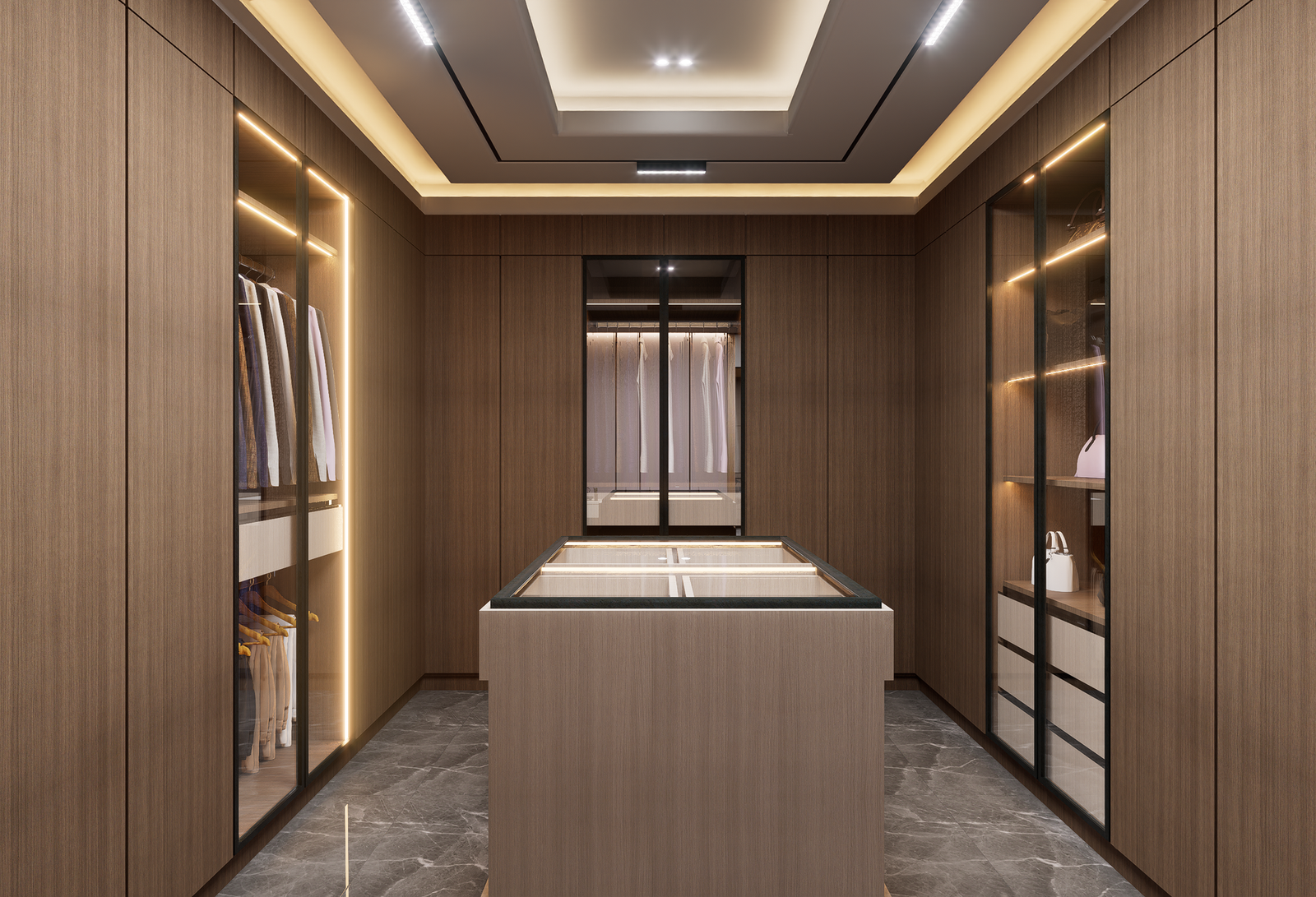
3. Add a Central Wardrobe Island
If your room is large enough a central island can become both a storage feature and a stylish focal point.
Drawers are particularly useful for jewelry, watches, belts, sunglasses, socks and other smaller accessories. A countertop can also provide space for displaying perfume bottles or decorative objects.
For a luxury appearance choose a countertop material that complements the surrounding cabinetry.
4. Install Built-In Drawers
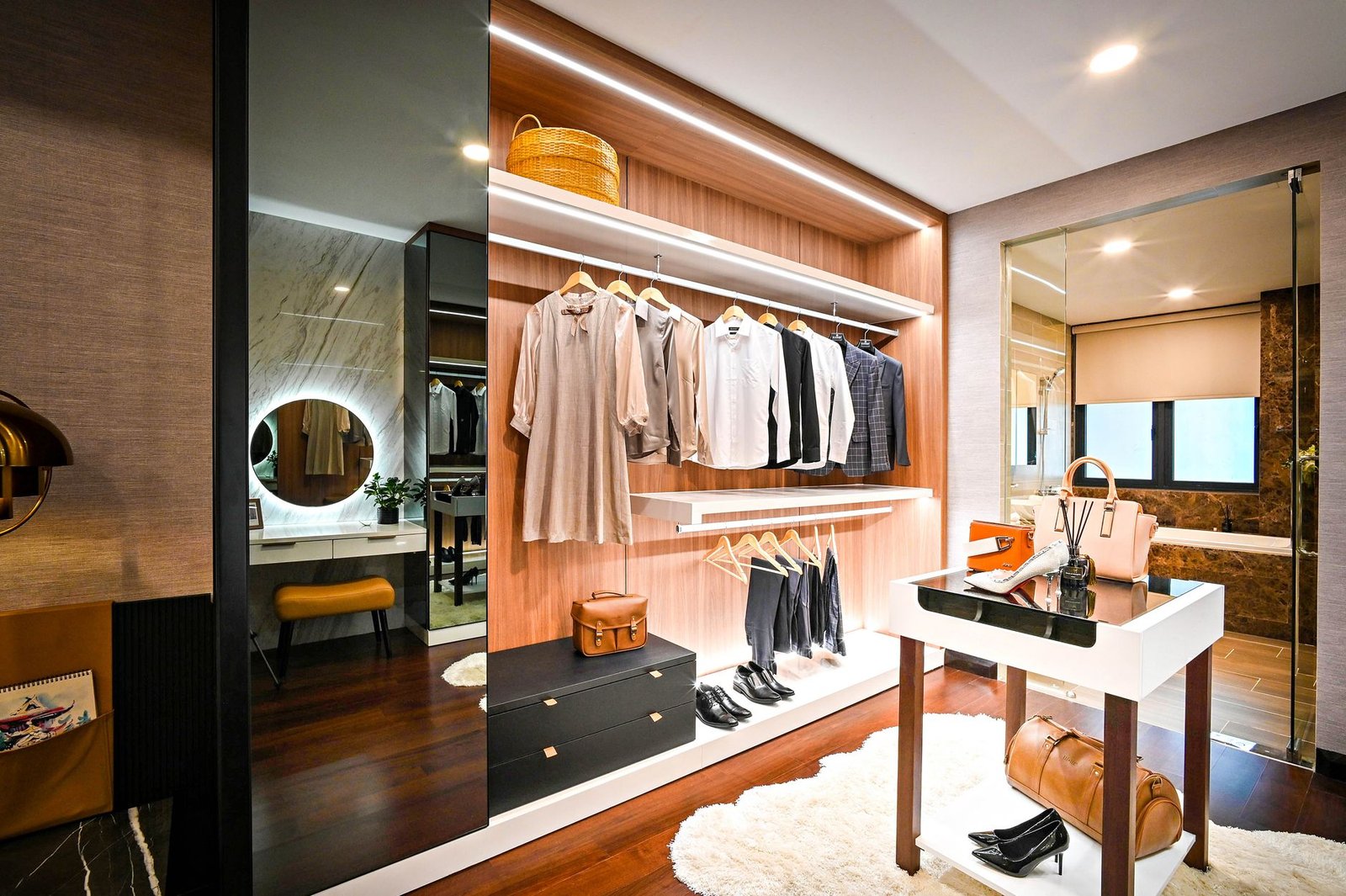
Built-in drawers are among the useful features in a dressing room. They provide concealed storage while keeping items organized.
Consider using drawers for accessories and deeper drawers for folded clothing. Drawer dividers can prevent items from becoming mixed together.
Soft-close drawers are another feature because they create a quieter and more refined feel.
5. Use Glass Cabinet Doors
Glass doors can make a wardrobe feel more open while allowing you to see your clothes without opening every cabinet.
Clear glass provides an appearance while tinted or fluted glass can create a softer more sophisticated look.
If you use glass doors keeping the wardrobe organized becomes especially important because everything remains visible.
6. Add LED Wardrobe Lighting
Lighting can dramatically change the appearance and usability of a walk in wardrobe.
LED strip lights can be installed underneath shelves, inside cabinets or along hanging sections. Motion-activated lighting is particularly convenient because the lights turn on when you enter or open a cabinet.
Choose a lighting temperature that makes clothing colors easy to distinguish. Combining ceiling lighting with focused cabinet lighting can create a balanced result.
7. Include a Full-Length Mirror
A full-length mirror is almost essential in a dressing room. It allows you to check an outfit from head to toe before leaving the house.
A wall-mounted mirror saves floor space while a freestanding mirror can become a feature.
For rooms mirrored cabinet doors can serve two purposes by providing storage and reflection at the same time.
8. Make Use of Awkward Corners
Corners are often overlooked when designing storage. With custom shelving or corner hanging rails however these spaces can become extremely useful.
Corner shelves work well for handbags, shoes, folded sweaters and decorative storage boxes.
If your wardrobe has a shape custom cabinetry can help make use of areas that standard furniture might leave empty.
9. Add Dedicated Shoe Storage
Shoes deserve their storage area. Keeping them separate from clothing helps maintain organization and makes it easier to choose footwear.
Open shelves allow you to see your collection immediately. Angled shelves can also make individual pairs easier to access.
For an appearance use pull-out shoe drawers or closed cabinets.
10. Create a Handbag Display
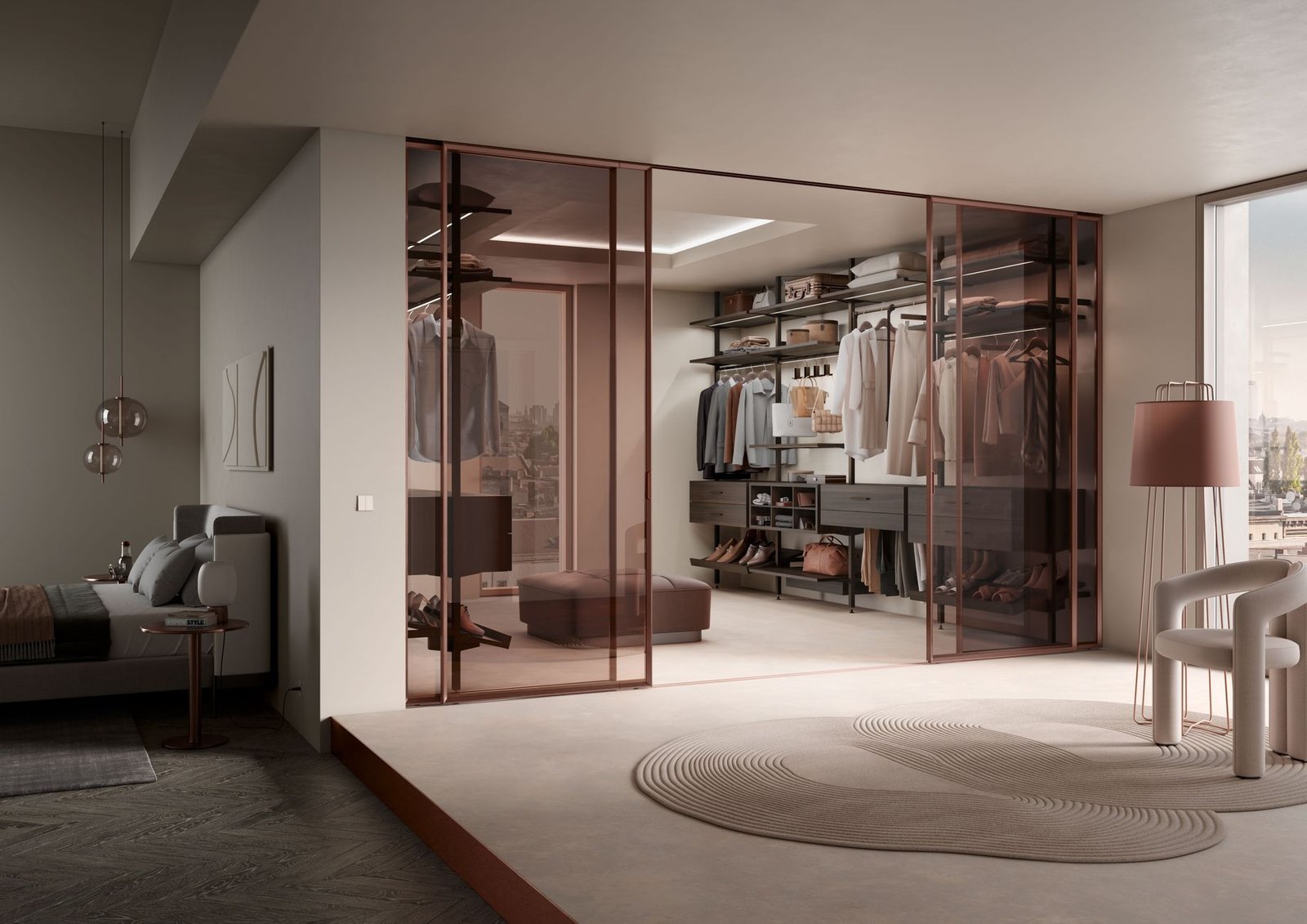
Handbags can take up an amount of space when stored incorrectly. Of stacking them in a corner create a dedicated display area.
Open shelving is ideal for used bags. Adjustable shelves allow you to accommodate handbag sizes.
For delicate bags glass-fronted cabinets can offer both visibility and protection.
11. Add a Dressing Bench
A bench can make a walk in wardrobe much more comfortable. It gives you somewhere to sit while putting on shoes or planning an outfit.
In a wardrobe position the bench in the center or near the mirror. In a room a narrow upholstered bench can fit against a wall.
Choose a fabric and color that complement the cabinetry for an appearance.
12. Try a Neutral Color Scheme
colors can make a wardrobe feel calm, clean and timeless.
White, cream, beige soft gray, taupe and warm wood tones work well in dressing rooms. These shades can also help clothing become the focus.
If you want personality introduce color through an accent wall, rug, chair, artwork or accessories.
13. Use Warm Wood Finishes
Wood finishes can make a wardrobe feel warmer and more inviting. Light oak creates a Scandinavian-inspired appearance while darker wood can produce a dramatic and sophisticated atmosphere.
You do not necessarily need wood throughout the room. High-quality wood-effect finishes can provide a visual effect while keeping the design more affordable.
14. Design a Boutique-Inspired Wardrobe
If you enjoy the feeling of a luxury clothing store use your wardrobe as inspiration.
Display clothing pieces on open rails, arrange shoes neatly on shelves and use glass cabinets for accessories. Add lighting and a comfortable seating area.
The key is to keep the room uncluttered. A boutique-inspired wardrobe looks best when every item has a place.
15. Install Double Hanging Rails
hanging rails are particularly useful when vertical space is available.
Use the rail for shirts, jackets and shorter garments and the lower rail for trousers, skirts or other items.
This arrangement can significantly increase hanging capacity without requiring a room.
16. Add Pull-Out Trouser Racks
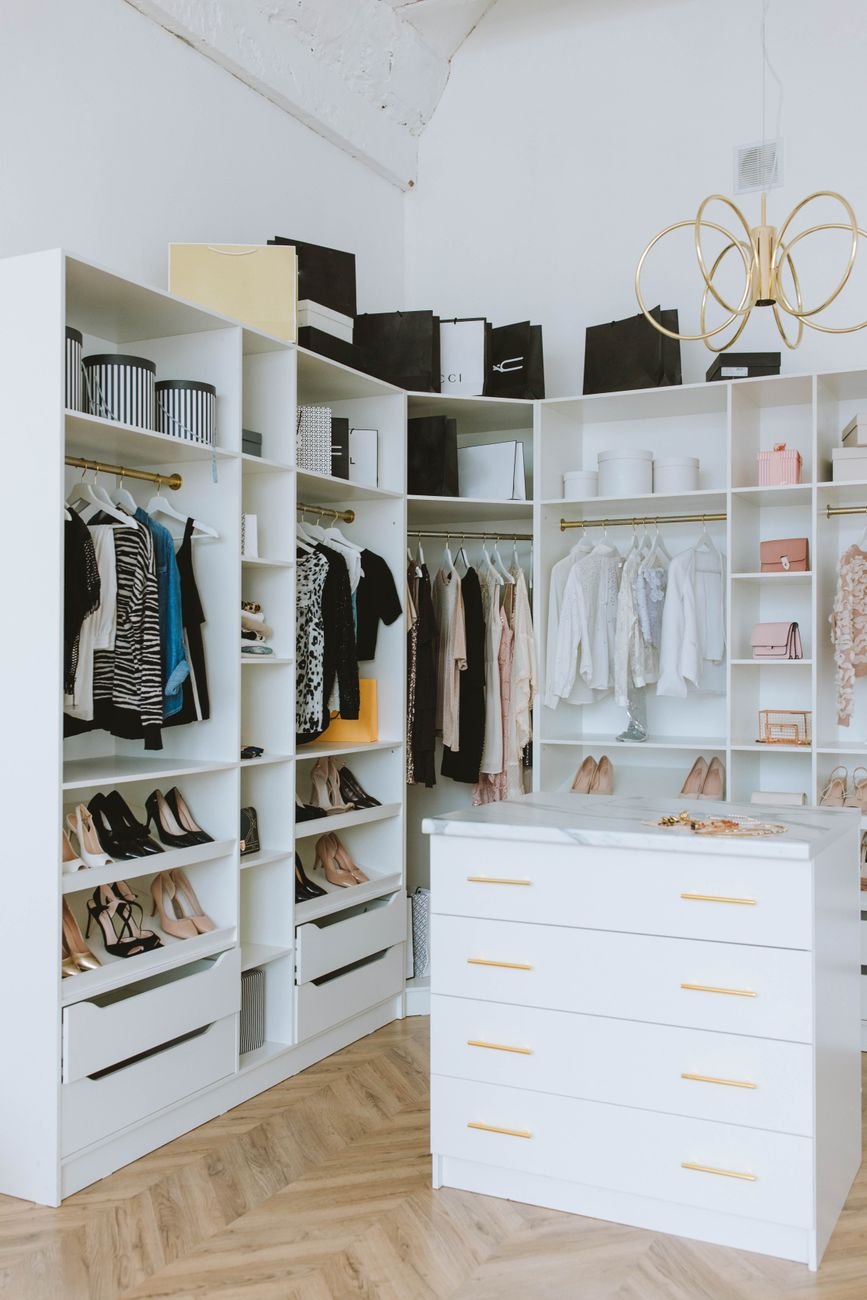
Trouser racks are a feature that can make a major difference to organization.
Of folding trousers into drawers or hanging them over standard rails a pull-out rack allows each pair to remain visible and accessible.
These racks are especially useful in wardrobe sections.
17. Create a Jewelry Drawer
Jewelry can easily become tangled or misplaced. A dedicated drawer with compartments keeps necklaces, earrings, bracelets and rings separated.
Velvet-lined organizers can provide an appearance while protecting delicate pieces.
If you prefer to display your jewelry, a shallow glass-fronted drawer can turn accessories into part of the rooms design.
18. Use a Dressing Table
A dressing table can turn a walk in wardrobe into a getting-ready space.
Choose a compact desk-style vanity if the room is small. In a wardrobe a built-in dressing table can be integrated directly into the cabinetry.
Add a mirror, appropriate lighting and organized drawers for cosmetics and grooming products.
19. Make the Ceiling Part of the Design
The ceiling is often forgotten when decorating a wardrobe. However interesting lighting can make a difference.
Recessed spotlights create a modern appearance while a decorative pendant light can become a statement feature.
For a luxury look combine a fixture with discreet LED lighting inside cabinets.
20. Add an Area Rug
An area rug can soften a wardrobe. Make it feel more comfortable.
Choose a rug that fits the walking space without interfering with cabinet doors or drawers.
A simple neutral rug works in minimalist wardrobes while a patterned design can add personality to an otherwise understated room.
21. Use Sliding Doors
Sliding doors are a choice when floor space is limited.
Traditional hinged wardrobe doors require clearance when opened, whereas sliding doors move sideways and keep the surrounding area
Mirrored sliding doors can make a wardrobe appear larger while providing a convenient full-length reflection.
22. Include Laundry and Decluttering Solutions
A walk in wardrobe can become cluttered quickly if worn clothing does not have a designated place.
Add a concealed basket or pull-out hamper inside the cabinetry. Having a location for laundry prevents clothes from accumulating on the floor.
You can also include a basket for items that need repair, tailoring or dry cleaning.
23. Create a Seasonal Storage Area
Not every piece of clothing needs to be accessible all year.
Use cabinets or under-shelf boxes for seasonal items such, as winter coats, swimwear, scarves and special-occasion clothing.
Marked storage boxes help make it simpler to change your clothes when the weather changes.
24. Add Personal Touches with Decor
A wardrobe needs to work well. It can also show who you are.
Paintings, trays, plants, framed photos, nice storage boxes and carefully chosen decorations can make the room feel more like you.
Don’t add too many decorations. The wardrobe should still be easy to clean and use.
25. Keep the Setup Easy to Use
the most important idea for a walk in wardrobe is to make it easy to use.
A nice wardrobe won’t help if clothes are hard to reach or there isn’t room to move around.
Before buying any cabinets measure the room carefully. Think about where doors open, where you stand when getting dressed and which items you use most.
A simple setup with storage can be more helpful than a complicated design that takes up too much space.
How to Plan Your Walk-In Wardrobe
Before starting your project make a list of what you need to store.
Count your hanging clothes, shoes, bags, folded items, accessories and other things. This helps you know how storage you really need.
Next measure the room from wall to wall and floor to ceiling. Write down where windows, doors, outlets, radiators and other fixed parts are.
Once you know the space divide the wardrobe into areas that work.
For example:
- A area for dresses and coats
- A short area for shirts and jackets
- Shelves for folded clothes
- Drawers for things
- A spot for shoes
- A place for handbags
- A mirror area
- A spot to sit or get dressed
Planning these areas before buying furniture can stop wasted space.
Ideas for Walk-In Wardrobes in Small Rooms
You don’t need a bedroom to have a walk-in wardrobe. Small spaces can work great if you plan every bit of space.
Use storage as much as possible. Tall cabinets can hold more without taking floor space.
Mirrors are also helpful because they reflect light and can make the room look bigger. Sliding doors save space and open shelves give a look.
Light colors are a choice too. White, cream light light wood can make a small room feel brighter.
Don’t fill every inch with furniture. Give some space to breathe. The wardrobe will feel much more comfortable.
How to Make a Walk-In Wardrobe Feel Fancy
Luxury doesn’t always mean materials. It often comes from thoughtful choices.
Consistent cabinets, lighting, strong hardware, neat displays and a comfortable seat can make a wardrobe feel more elegant.
Think about adding soft-close drawers and doors built-in LED lights a big mirror and nice handles.
Another simple trick is to arrange items properly. Group clothes by type or color. Don’t overcrowd the shelves.
The result can look much nicer without needing a budget.
Affordable Walk-In Wardrobe Ideas
A nice wardrobe doesn’t have to be expensive.
Open shelves and standard modular cabinets can often offer storage at a lower cost than custom furniture.
You can also improve an existing wardrobe over time. Start with the basics. Add things like LED lights, drawer organizers, baskets and mirrors as you can.
Changing the handles can also make basic cabinets look completely different.
The important thing to spend on is the layout and storage not on fancy things that don’t help much.
Common Walk-In Wardrobe Design Mistakes
pretty wardrobes can be annoying if the layout is not right.
A common mistake is not leaving space between storage areas. You should be able to open drawers and doors without blocking the main path.
Another issue is not having light. Dark shelves can make it hard to find clothes even when there is lots of space.
Forgetting about items is another problem. Things like jewelry, belts and sunglasses need spots or they can quickly make a mess.
Finally don’t make the wardrobe about looks. It should look nice. It also needs to work for your daily life.
Frequently Asked Questions
How much room is needed for a walk-in wardrobe?
The amount of space needed depends on the layout and the storage you need. A small walk-in wardrobe can work with floor space if its planned well while bigger rooms can fit islands, seating and tables.
What should every walk-in wardrobe have?
Essential things include hanging rods, shelves, drawers, shoe storage, good lighting and a mirror. The exact mix depends on what you own and how you live.
Are walk-in wardrobes worth the space?
For people who need a lot of storage a planned walk-in wardrobe can make daily life easier. It can also give a space to get dressed. Reduce clutter in the bedroom.
How can I make a small walk-in wardrobe look bigger?
Use colors, mirrors, vertical storage, good lighting and sliding doors. Keeping the floor open can also make the room feel more open.
What is the lighting for a walk-in wardrobe?
A mix of ceiling lights and targeted cabinet lights is usually good. LED strips can light up shelves and hanging areas while a main light gives brightness.
Should a walk-in wardrobe have doors?
That depends on how you like it and your lifestyle. Open storage makes things easy to see while doors give a look and protect clothes from dust.
How do I organize shoes in a walk-in wardrobe?
Use shelves, pull-out racks, drawers or closed cabinets. Arrange shoes by type how often you use them. By color to find them easily.
How can I make my wardrobe look more expensive?
Consistent finishes, built-in lighting, nice handles, neat displays, a large mirror and high-quality materials can give an expensive look.
Conclusion
The best walk in wardrobe ideas mix looks with smart organization. Whether you have a space or a small one planning well can help you create storage that is comfortable, efficient and personal.
Start by thinking about the clothes and items you actually have then create areas for hanging clothes, folded items, shoes, handbags and small things. Add things like mirrors, LED lights, drawers and a place to sit based on the space you have.
You don’t need a budget to make a great wardrobe. A good layout, matching finishes and neat organization can make even a small room look nice. Importantly make the space around how you live. When your wardrobe helps you find, store and enjoy your things it becomes more, than storage—it becomes part of your home.
1 thought on “Walk in Wardrobe Ideas: 25 Stylish Ways to Create Your Dream Dressing Space”