
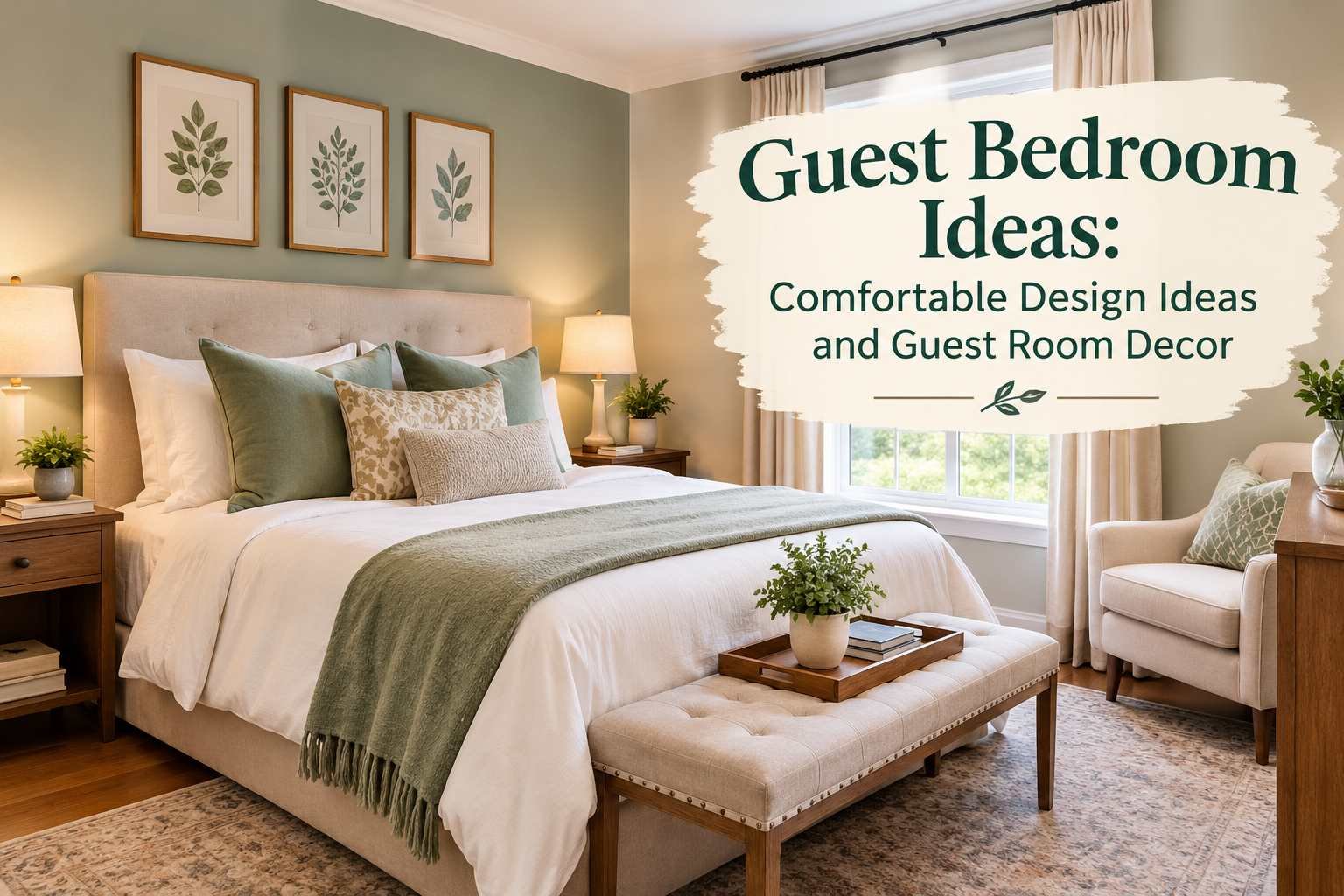
Guest bedroom ideas work best when they help visitors feel comfortable without making the room feel stiff or overly decorated. A welcoming guest room doesn’t need expensive furniture or a complete renovation. A supportive bed, a little storage, pleasant lighting, and a few thoughtful details can make the space feel like a home away from home. These guest bedroom design ideas and guest room decor tips can help you create a room that feels inviting, practical, and easy to maintain.
1. Start with a Comfortable Bed
The bed is the most important part of a guest bedroom. It’s where visitors will rest, so comfort should come before decorative extras. If you’re buying a mattress, a medium-firm option is often a sensible choice for a room used by different people. If replacing it isn’t in the budget, a well-fitted mattress topper can make an older mattress more comfortable.
Fresh, breathable bedding makes a difference, too. Cotton or linen sheets feel pleasant through most seasons, while a lightweight comforter can be layered with an extra blanket at the foot of the bed. Keep one or two spare pillows in a closet so guests can choose the height they prefer.
Try not to cover the bed with so many cushions that visitors have nowhere to put them. Two sleeping pillows and a couple of decorative pillows are usually enough. The goal is to make the bed look inviting while keeping it easy to use.
2. Choose a Calm, Flexible Color Palette
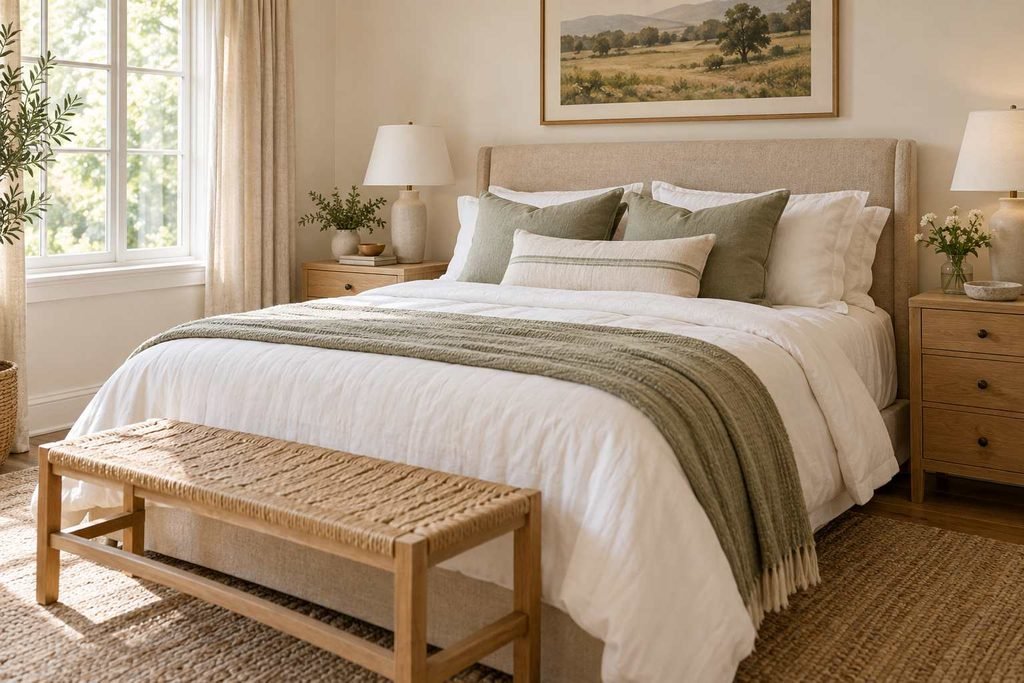
A guest room should feel restful, but that doesn’t mean it has to be plain. Soft neutrals such as warm white, beige, taupe, and pale gray make a room feel bright and are easy to pair with different bedding. Muted greens and blues can also create a relaxed mood without making the space feel cold.
If you enjoy stronger colors, use them in a few contained places: a painted accent wall, a patterned quilt, or a pair of curtains. That way, the room has personality but still feels comfortable to people with different tastes.
Before settling on a palette, consider the light in the room. A north-facing room may benefit from warm shades, while a bright, sun-filled room can handle cooler colors. Paint samples can look different from their small swatches, so try them on the wall and check them in daylight and in the evening.
3. Make a Small Room Feel More Spacious
Many homes don’t have a large room reserved for visitors. With a few smart choices, a compact bedroom can still feel comfortable. A bed with built-in drawers can provide space for extra bedding, and a narrow nightstand can hold the essentials without crowding the walkway.
Leave enough room to move around the bed. If the room is tight, consider a full-size bed instead of a queen, provided it suits the people who usually stay with you. Wall-mounted shelves can replace bulky furniture, while a mirror can reflect light and make the room feel more open.
Keep the floor as clear as you can. A small rug beside the bed adds warmth, but a large rug that catches on doors or blocks drawers can make a small room harder to use. In a compact space, a clear path to the door matters more than adding another decorative piece.
4. Add Lighting Guests Can Control
One overhead light rarely creates a comfortable atmosphere on its own. Add a bedside lamp or a wall-mounted reading light so guests can read without lighting the whole room. If the bed has two sides, matching lamps are a familiar and practical arrangement. In a smaller room, one lamp and a focused reading light may be enough.
A lamp with a switch that’s easy to reach from bed is especially helpful. If you’re using a wall switch for the overhead light, consider adding a bedside option so visitors aren’t left crossing a dark room at night.
Warm-white bulbs tend to make bedrooms feel more relaxing. Avoid very bright or cool-toned lighting near the bed, as it can feel harsh in the evening. A small night-light or a low lamp can also help guests find the bathroom without turning on every light.
5. Provide a Place for Clothes and Luggage
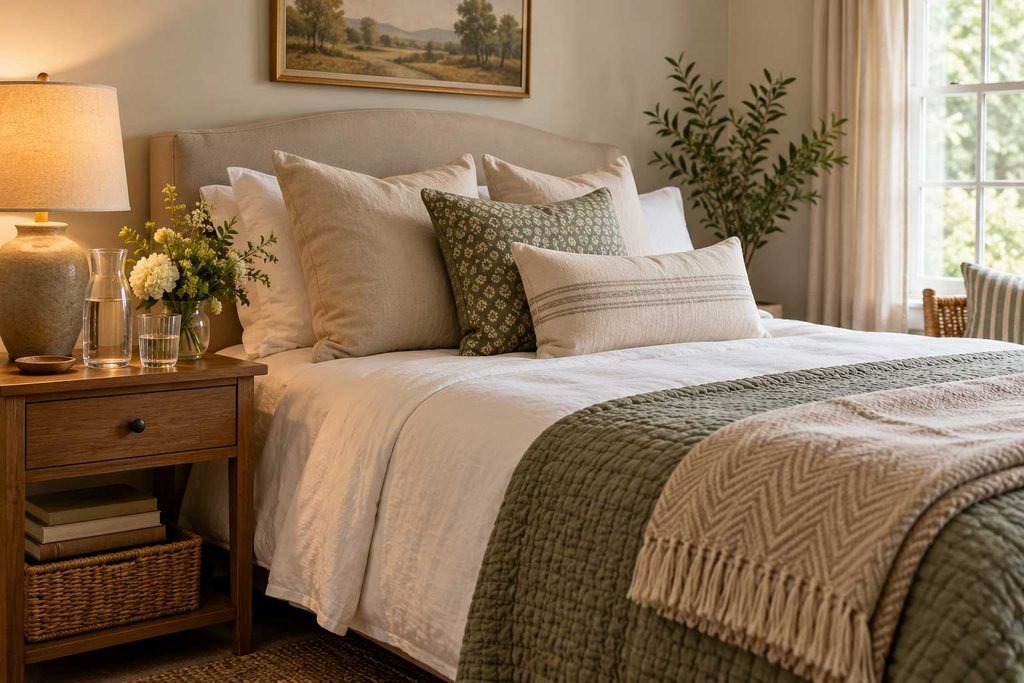
Guests need somewhere to put their belongings. If there’s a closet, clear a section of hanging space and add a few hangers. If the room doesn’t have a closet, a simple clothing rack, a row of hooks, or a compact dresser can do the job.
A luggage rack is useful because it keeps a suitcase off the bed and floor. If you don’t own one, a sturdy bench or low table may work just as well. Leave a little open space beside it so guests can reach their belongings without moving furniture.
For longer stays, an empty drawer is a considerate touch. It doesn’t have to be a full dresser drawer; even one cleared shelf or basket can help visitors unpack and settle in.
6. Use Guest Room Decor That Feels Personal
Guest room decor gives the space character, but it should still leave room for visitors to make themselves comfortable. A framed print, a small vase, a textured throw, or a few favorite books can make the room feel cared for. You don’t need to match every item or fill every surface.
Choose pieces that fit the room’s colors and scale. A large piece of art can anchor the wall above the bed, while a cluster of small frames may suit a narrow space. If you use decorative objects on the nightstand, keep them to one or two items so there’s room for a phone, glass of water, or personal belongings.
Plants can add a fresh look, but think about their care. A low-maintenance plant may be suitable if the room gets enough light. Otherwise, a small branch in a vase or a good-quality artificial plant can bring a natural touch without creating extra work.
7. Give Guests Space to Work or Read
Some visitors may need to check email, finish a work task, or enjoy a quiet moment away from the rest of the home. If space allows, include a small desk or writing table with a comfortable chair. A narrow desk can fit against a wall and double as a place to set down a bag.
If a desk won’t fit, a comfortable chair in a corner can serve as a reading spot. Add a small side table and a lamp, and leave a book or magazine nearby. Keep the chair’s placement practical: it shouldn’t block a door, closet, or walkway.
Good access to outlets is another helpful detail. Make sure guests can charge a phone near the bed or desk. A discreet extension cord or charging station can help if outlets are awkwardly placed, but keep cords tidy and away from walking paths.
8. Choose Window Treatments for Privacy and Sleep
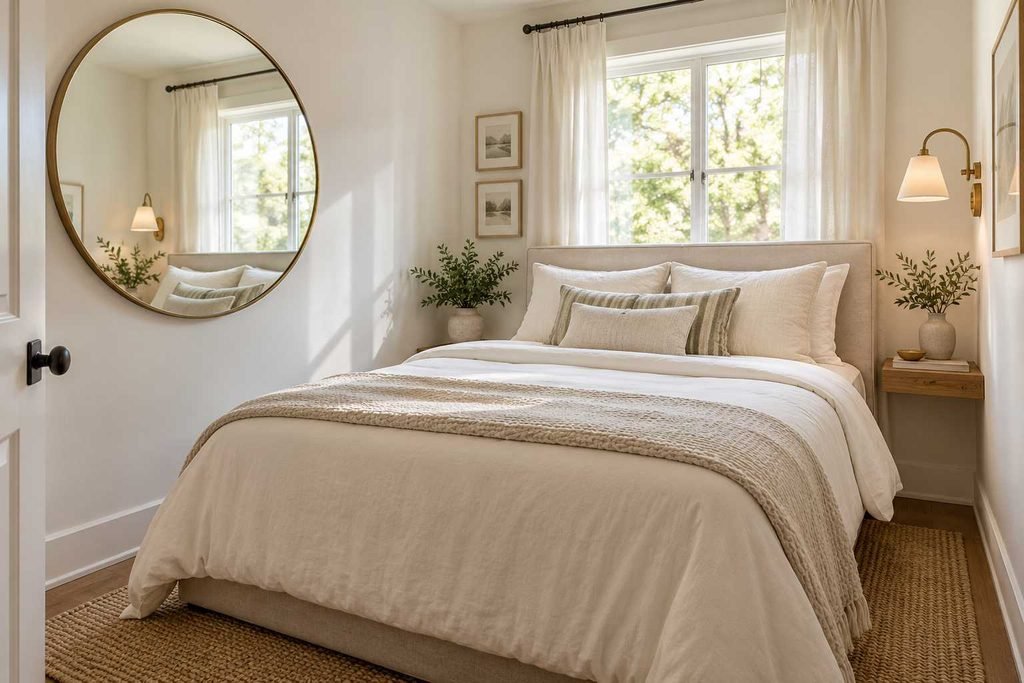
Light control can affect how well a visitor sleeps. If the room gets early morning sun or faces a street, curtains or shades can offer both privacy and a darker place to rest. Blackout curtains are useful for guests who are sensitive to light, though room-darkening shades may be a better choice if you want some daylight to come through.
Layering window treatments gives you more flexibility. A sheer curtain can soften bright daylight, while a heavier curtain provides privacy at night. Make sure the curtains open and close easily, and avoid placing furniture where it prevents visitors from reaching them.
If the room has a street-facing window, check at night to see whether the interior is visible from outside. Privacy is one of those details people may not mention, but they’ll appreciate having.
9. Add Storage Without Filling the Room
Storage can make the room easier to keep tidy, but too much furniture can make it feel crowded. A nightstand with a drawer, a basket for extra blankets, and a few closet hangers may be all you need.
Use closed storage for items that aren’t meant for guests, such as spare linens, cleaning supplies, or seasonal clothing. Open shelves are better for books or a small decorative accent. If the room has a dresser, leave at least one drawer empty rather than using every space for household storage.
A tray on the nightstand can keep a few small items together, such as a remote, tissues, and a notepad. It’s a simple way to make useful things easy to find without making the surface look cluttered.
10. Bring in Soft Textures
A room can look finished and still feel a little cold. Soft textures help make it more comfortable. Consider a knit throw, cotton bedding, a cushioned headboard, or curtains with a bit of weight. A rug beside the bed can feel pleasant underfoot, especially on hardwood or tile.
Mix textures rather than relying on one material everywhere. Smooth sheets, a woven blanket, and a soft rug create subtle contrast. You don’t need a large number of colors or patterns for the room to feel layered.
Think about how easy each item is to wash. Guest bedding and throws should be simple to freshen between visits. If you choose a delicate material, keep it for a small accent rather than something that needs frequent cleaning.
11. Make the Room Work for Different Visitors
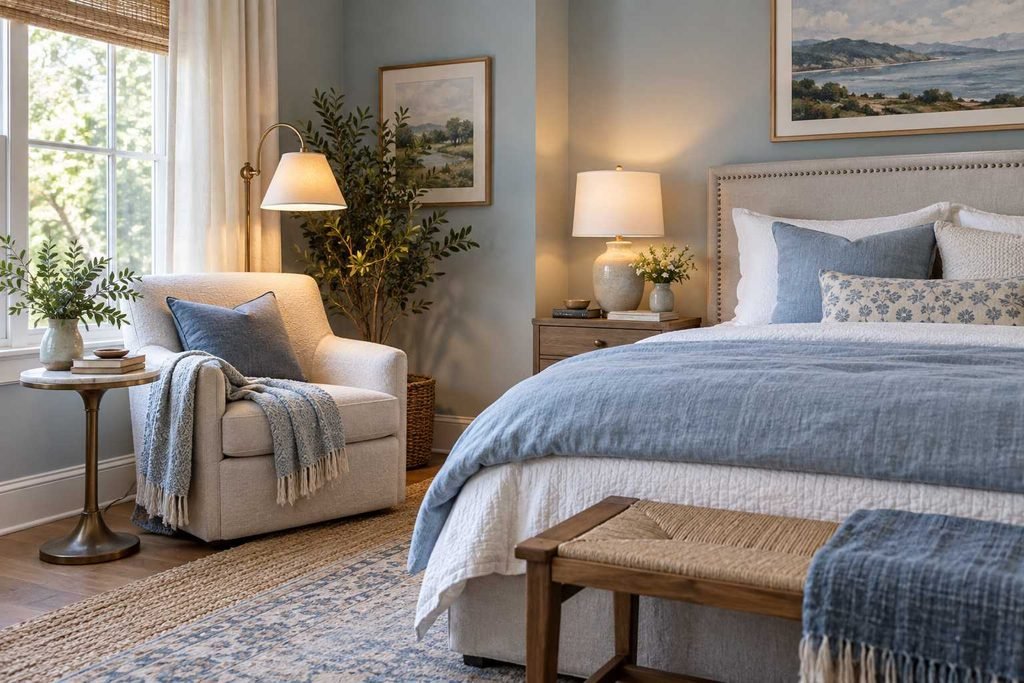
A flexible room can welcome family, friends, and overnight guests with different needs. Keep an extra blanket in an easy-to-find place and offer a choice of pillows. If visitors may have different schedules, add a bedside clock or make sure the time is easy to check on a phone.
A simple welcome note can explain where to find towels, how to use a fan, or which bathroom guests should use. You don’t need to write a full instruction sheet; a few clear details can prevent awkward guesswork.
If you sometimes host children, store breakable decor out of reach and keep an extra blanket or night-light available. If older relatives stay over, make sure the route to the bathroom is clear and that the bed is easy to get in and out of.
12. Bring Nature Inside
Natural touches can soften a bedroom and help it feel less formal. Wood furniture, woven baskets, linen bedding, or a small arrangement of branches can add warmth without requiring much maintenance. A simple landscape print can bring in color while keeping the room calm.
If you use fresh flowers, choose a subtle arrangement and avoid heavily scented varieties. Strong fragrances can bother some guests, especially if they have allergies or sensitivities. The same goes for scented candles, room sprays, and plug-in fragrances: a clean, neutral-smelling room is usually the most comfortable choice.
13. Use Wallpaper or an Accent Wall Thoughtfully
Wallpaper can give a guest room a distinctive look, especially behind the bed. A small-scale pattern or soft botanical print can add interest without dominating the space. If you prefer paint, an accent wall in a muted color can provide a similar effect with less pattern.
In a smaller room, large high-contrast prints may make the walls feel closer. If you love a bold design, use it on one wall or in a limited area. Keep the rest of the room simple so the pattern has space to stand out.
Removable wallpaper can be useful if you like changing the look of a room, but follow the manufacturer’s instructions and test a small area first. Some surfaces and finishes may not work well with peel-and-stick products.
14. Add Small Comforts That Matter
Thoughtful extras don’t have to be expensive. A carafe or clean glass for water, a box of tissues, a wastebasket, and a few spare toiletries can make the room feel prepared. Keep these items visible or leave a short note explaining where they are.
Depending on how you host, you might also include:
- A phone charger or charging cable
- A mirror near the closet or dresser
- A laundry basket for longer stays
- A fan or extra blanket for temperature preferences
- A small basket with travel-size toiletries
- A notepad and pen
Avoid stocking the room with items that could create more work than comfort. A few useful things are better than a crowded basket of products that may not suit every visitor.
15. Keep the Room Clean and Ready
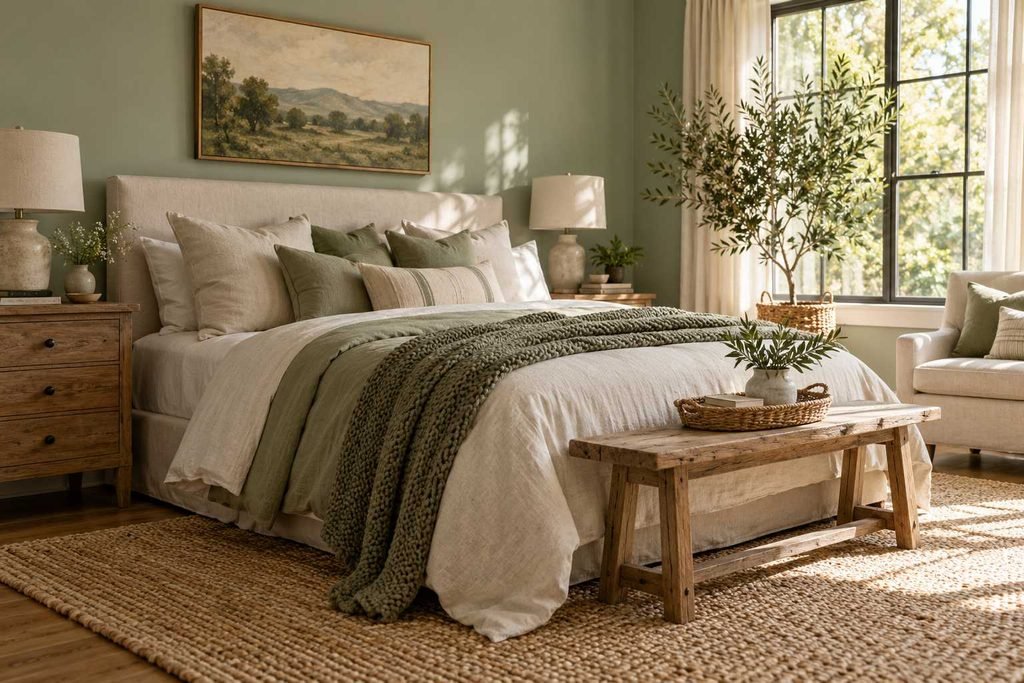
A well-designed room feels welcoming when it’s clean and easy to use. Wash sheets and pillowcases between visits, dust surfaces, and check that the bedside lamp and outlets work. Empty the wastebasket and remove personal items that might make the room feel like overflow storage.
Before a guest arrives, take a quick look from the doorway. Is there a clear path to the bed? Can they reach the light switch? Is there somewhere to put a suitcase? This simple check often reveals small problems that are easy to fix.
If the room doubles as an office or storage space, keep the guest area clearly defined. A tidy desk with a few work essentials is fine; scattered paperwork and boxes may make visitors feel they’re sleeping in a spare corner.
16. Guest Bedroom Ideas for Different Styles
You can adapt these guest bedroom ideas to the style of your home without making the room feel like a showroom.
Modern and Minimal
Use simple furniture, a limited color palette, and clean-lined lamps. Keep surfaces open and add warmth with textured bedding or a wood nightstand. The room should feel calm, not empty.
Cottage-Inspired
Layer floral or checked bedding with painted furniture, soft curtains, and a woven basket. Keep the pattern mix gentle by repeating one or two colors throughout the room.
Coastal
Use soft blues, warm whites, natural wood, and woven textures. A landscape print or subtle stripe can suggest a coastal feeling without relying on themed decorations.
Traditional
Choose a classic bed frame, a pair of matching lamps, and a restrained pattern for the curtains or bedding. Add a framed print or small bedside clock to give the room a familiar, settled look.
Boho-Inspired
Combine a few natural textures with a patterned rug, a plant, or handmade-looking decor. Keep enough open space around the bed so the room feels relaxed rather than crowded.
Frequently Asked Questions
What should every guest bedroom have?
At a minimum, a guest room needs a comfortable bed, clean bedding, a bedside light, a place for belongings, and enough privacy. A water glass, wastebasket, hangers, and access to charging outlets are useful additions.
How can I decorate a guest room on a budget?
Start with clean bedding and rearrange the furniture you already have. Add a secondhand nightstand, a washable throw, or inexpensive framed prints. Small improvements to lighting and storage often matter more than buying a matching furniture set.
What colors work well in a guest bedroom?
Soft neutrals, muted greens, gentle blues, and warm earth tones are versatile options. Choose shades that suit the room’s natural light, then add personality with art, bedding, or a small accent color.
How do I make a guest room feel welcoming?
Make the bed, clear a little storage space, provide a lamp guests can control, and leave out a few practical items such as towels or a phone charger. A clean, uncluttered room with thoughtful details feels welcoming without much effort.
Is a queen bed necessary in a guest room?
No. A queen bed is comfortable for many visitors, but a full-size bed can work well in a smaller room. Choose a size that leaves enough space for guests to move around and store their belongings.
How can I make a guest room feel larger?
Use furniture that fits the room, keep the floor and walkways clear, and choose lighter colors if the space feels dark. Wall-mounted shelves and a mirror can help a small room feel more open.
Conclusion
A comfortable guest room comes from paying attention to how people will use the space. A supportive bed, soft lighting, privacy, and a little room for luggage can make a bigger difference than elaborate decorations. Add guest room decor that suits your home, keep everyday comforts within reach, and leave enough open space for visitors to settle in.
The best guest bedroom design ideas are the ones that balance style with practical details. You can create a warm, restful room with a few thoughtful updates, even if you’re working with a small space or a modest budget.
3 thoughts on “Guest Bedroom Ideas: Comfortable Design Ideas and Guest Room Decor”