
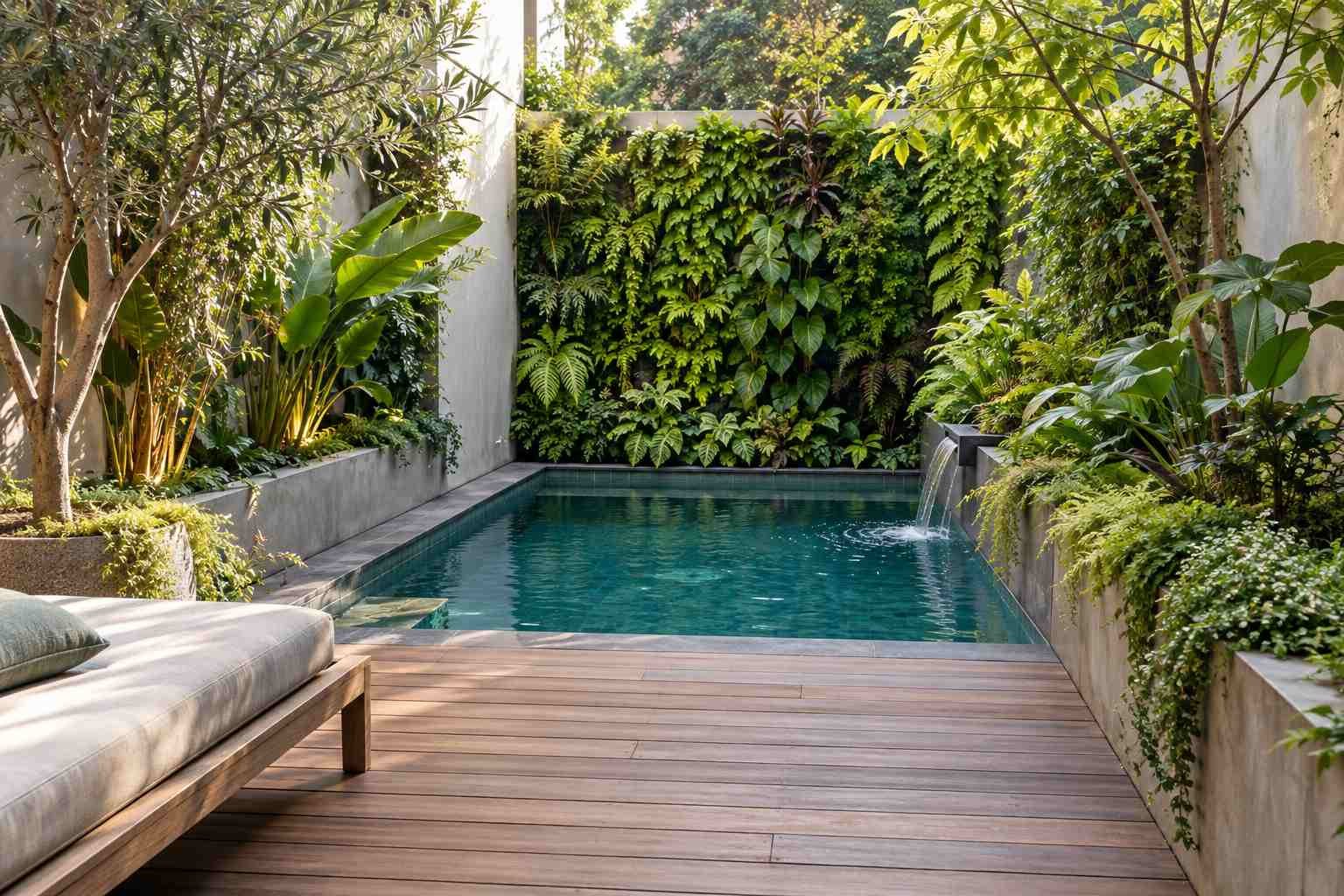
A gardening pool project can turn the space around a swimming pool into a more comfortable, welcoming part of your backyard. Plants can soften hard paving, add privacy, and bring color and texture to the water’s edge. The trick is choosing plants and materials that suit your climate, fit the available space, and are easy to maintain around a pool.
A poolside garden has a few special needs. Leaves, flowers, berries, and loose soil can end up in the water, while roots may affect nearby paving or pipes. The deck also needs to remain safe and easy to walk across. Thoughtful planning helps you create a lush setting without making pool care more difficult.
These gardening pool ideas cover planting, layout, containers, shade, privacy, and maintenance so you can plan a space that works for your home and lifestyle.
1. Start with a practical poolside plan
Before choosing plants, map the space around the pool. Note the deck width, gates, steps, outdoor shower, equipment access, and the path people use to get in and out. Keep these routes open and avoid placing planters where they narrow a walkway.
Consider how the sun moves across the yard. One side may be hot and bright for most of the day, while another stays shaded. Observe the area at different times before deciding where to place trees, seating, or sun-loving plants.
Also think about who uses the pool. If children or older adults swim often, prioritize open sightlines and uncluttered paths. A gardening pool layout should look attractive while making it easy to see the water, move around safely, and reach pool equipment when needed.
2. Choose plants that suit your climate
The best plants for your pool area depend on your local climate, soil, sun exposure, and water restrictions. Native and regionally adapted plants are often a useful starting point because they are suited to local conditions. A nearby nursery or extension service can help identify suitable choices for your area.
Look for plants that hold their shape, tolerate the available light, and do not shed excessive leaves or fruit into the pool. Avoid selecting solely by appearance: a plant that grows quickly may soon crowd the deck, while a tree with aggressive roots could cause problems near paving or underground lines.
Ask about mature size before planting. The small shrub you buy today may eventually spread across a walkway. Give plants enough room to reach their expected size, and check recommended spacing on the label or with a horticulture professional.
3. Use ornamental grasses for movement
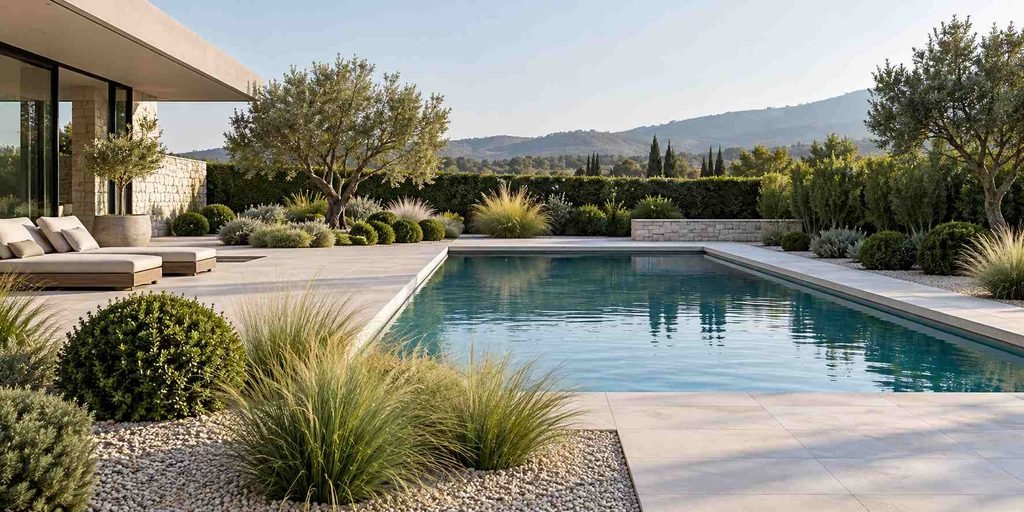
Ornamental grasses add soft texture beside the straight edges of a pool. Their movement in a breeze can make the garden feel lively, and many varieties bring interest through more than one season. Choose clumping types with a predictable mature size, and place them far enough from the deck to avoid loose blades blowing into the water.
Grasses work well in repeated groups along a fence or garden bed. Repeating the same plant several times creates a cleaner look than mixing many unrelated species. Pair them with low shrubs or groundcovers to make the planting feel layered.
Before planting, check whether a grass is suited to your region and whether it spreads aggressively. Some species can become invasive in certain areas. A well-planned gardening pool design uses plants that fit the local environment as well as the visual style.
4. Add a privacy screen with shrubs
Shrubs can help create a sense of privacy without building a tall solid wall. Evergreen varieties may provide year-round screening, while flowering shrubs add seasonal color. Use plants with dense but manageable growth and leave space for pruning.
A layered screen often looks more natural than a straight row. For example, a taller shrub at the back, a medium plant in front, and a low groundcover at the edge can soften a fence and add depth. Keep shrubs away from gates, pool equipment, and any area where visibility is important.
If privacy is needed quickly, consider a trellis with a suitable climbing plant, provided it will not block access or damage nearby structures. Check how much maintenance the plant needs and whether its leaves or flowers are likely to drop into the pool.
5. Add color with carefully placed flowers
Flowering plants can brighten the pool area, but placement matters. Put flowers in beds away from the immediate waterline so petals and pollen are less likely to collect in the pool. Choose varieties that bloom at different times if you want color through more of the season.
Use a limited palette to keep the garden cohesive. White flowers can look crisp beside blue water, while pink, yellow, or purple blooms can create a more playful effect. Repeating a few varieties usually looks calmer than adding a different flower at every corner.
Some flowers attract bees and other pollinators. That is valuable in a garden, but you may prefer to place especially attractive flowering plants farther from the busiest seating or swimming areas. Be mindful of household allergies and pets, too.
6. Use containers for flexible planting
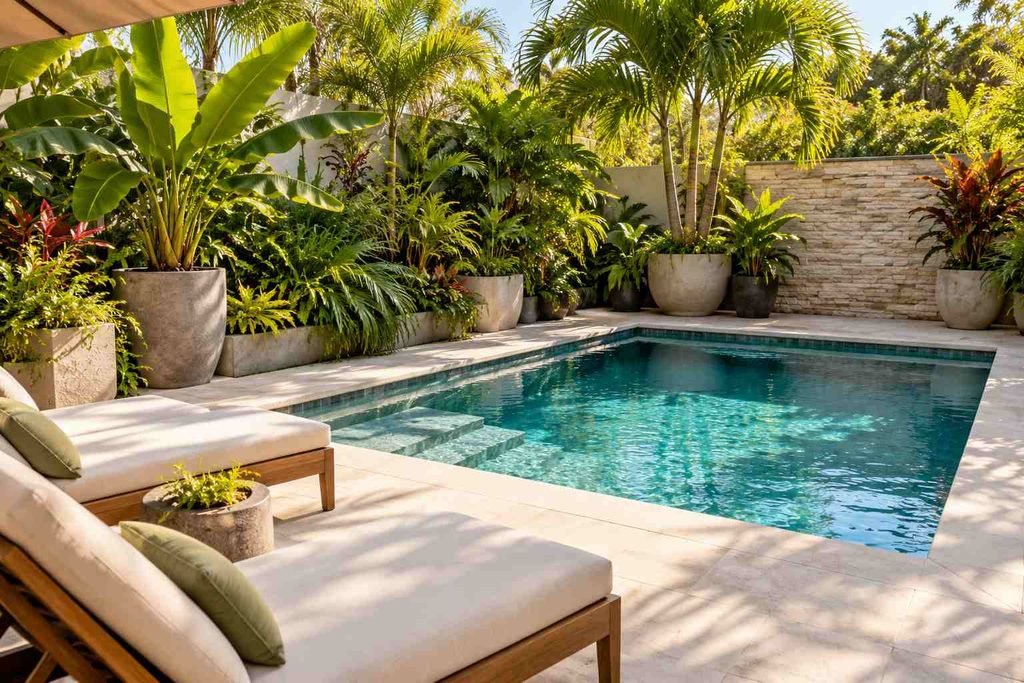
Containers are a practical choice when you want greenery without digging near pool plumbing or paving. They can be moved to adjust the layout, add seasonal color, or clear space for a gathering. They are especially helpful for patios and small yards.
Choose stable pots with drainage holes, and use a potting mix suitable for the plants you select. Place saucers or protective pads beneath containers where needed to reduce staining on the deck. Avoid putting pots where water can pool around them or where they may be knocked over.
Large containers can anchor a seating area, while smaller pots can add color near a wall or outdoor shower. Keep the overall number manageable: too many pots can make the deck feel crowded and increase watering work.
7. Create a tropical look with foliage
Broad-leaf plants can give a pool area a tropical feel, especially in warm climates. Combine different leaf shapes and heights to create visual variety. A large-leaf plant can serve as a focal point, while smaller plants fill in around it.
In cooler regions, you can still create a similar effect with hardy plants that have bold foliage, or use tropical-looking plants in containers that can be moved indoors before cold weather. Check each plant’s temperature needs and sunlight requirements before buying.
A tropical style does not need to be crowded. Leave open views of the water and provide enough space between plants for airflow and maintenance. A gardening pool design feels more relaxing when the planting frames the pool instead of overwhelming it.
8. Make the planting low maintenance
Poolside gardens are easier to enjoy when they do not require constant cleanup. Choose plants that produce limited litter, avoid placing messy trees above the water, and use groundcover or mulch in beds to reduce bare soil. Keep mulch contained so it does not wash or blow onto the deck.
Drip irrigation can help direct water to the roots while keeping paved areas drier. If you use an automated system, adjust it for rainfall and seasonal needs. Overwatering can create slippery surfaces and may wash soil toward the pool.
Keep a small maintenance routine: remove dead leaves, trim plants before they reach walkways, and inspect containers for drainage. Regular light care is usually easier than allowing overgrowth to build up.
9. Add shade where people sit
Shade can make the poolside more comfortable during hot weather. A pergola, shade sail, large umbrella, or carefully positioned tree can provide relief without covering the entire pool. Choose a solution that suits the yard’s size and does not interfere with pool use.
Trees can provide natural shade, but their roots, branches, and leaf drop should be considered before planting. Position them at a suitable distance from the pool, paving, and underground services. If you want shade sooner, an umbrella or shade sail may be easier to install and adjust.
A shaded seating area also helps define a place to relax after swimming. Use durable outdoor furniture and keep a clear path between the seating and the pool steps.
10. Use low plants near the water
The area closest to the pool is often best kept simple. Low-growing plants can soften the edge without blocking views or creating a barrier. Keep foliage trimmed so it does not spill onto the deck or make the surface difficult to clean.
Avoid plants with thorns or sharp leaves near routes people use barefoot. Also avoid species that drop large amounts of leaves, seeds, or sticky sap directly over the water. The fewer materials that reach the pool, the less often you may need to skim.
For gardening pool projects with limited deck space, use a narrow planting strip or a few well-chosen containers rather than filling every available edge.
11. Combine hardscape and planting
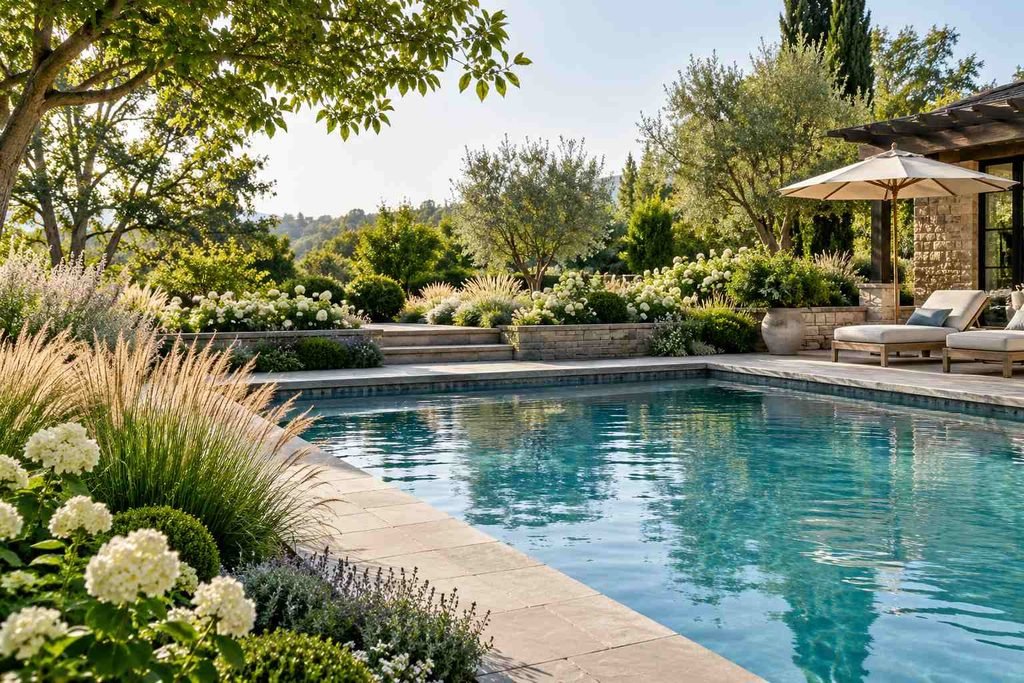
A poolside garden does not need to be all plants. Stone, pavers, timber decking, gravel, and raised planters can help organize the space and reduce muddy areas. The right combination depends on the pool design, drainage, and the materials already used in your yard.
Use hard surfaces to create a stable route around the pool and designate spots for loungers or dining. Add planting beds beyond the walking area to soften the edges. If you are adding new paving, make sure the surface is appropriate for wet conditions and professionally installed.
Repeating a material can make the whole yard feel connected. For instance, the same stone used on a low retaining wall and a planter edge can tie different parts of the garden together.
12. Make a small pool area feel spacious
In a compact yard, use vertical space and keep the ground plane open. A narrow trellis, wall-mounted planters, or a few tall containers can add greenery without taking up much floor area. Choose plants with controlled growth and avoid oversized furniture.
Use a consistent color palette for pots and paving. Too many different materials and plant types can make a small area feel busy. A few repeated plants, combined with open deck space, usually create a more restful impression.
Keep the pool’s edge and access points visible. A compact layout should never sacrifice safe movement just to fit more planting.
13. Design a family-friendly pool garden
If children use the pool, keep sightlines open from the house and seating areas. Avoid dense planting that creates hidden corners near the water. Keep toys, furniture, and large pots away from pool gates and paths.
Choose plants that are not thorny and avoid species that may be harmful if touched or eaten. Check plant safety with a trusted local source, especially if children or pets may explore the garden. Pool safety barriers and supervision remain essential; landscaping is not a substitute for them.
A family-friendly gardening pool area can still be colorful. Use sturdy planters, low-maintenance shrubs, and a defined play or seating zone beyond the main walkway.
14. Add lighting for evening use
Outdoor lighting can make the pool area more comfortable after sunset and help people see steps and paths. Use lights designed for outdoor conditions, and have any electrical work near a pool handled by a qualified professional in line with local codes.
Path lights can mark the route between the house and pool. Low-voltage landscape lights can highlight a tree or a textured wall. Avoid aiming bright lights directly into the water or neighbors’ windows.
Lighting should support safe movement as well as atmosphere. Make sure steps, gates, and changes in surface level are easy to see.
15. Keep pool maintenance in mind
Plants near a pool may shed leaves, pollen, flowers, or fruit. The amount varies by species and season, so ask about litter before planting. Put higher-litter plants farther from the water and select low-shedding choices near the deck.
Do not allow soil, mulch, or fertilizer to wash into the pool. Use edging to separate planting beds from paved areas, and follow label instructions when applying garden products. If the pool has a specific sanitation system, check whether nearby materials or runoff could affect it.
Regular skimming and cleaning are part of pool care, but good landscaping can reduce unnecessary debris. A gardening pool plan should include both the look of the garden and the work required to maintain it.
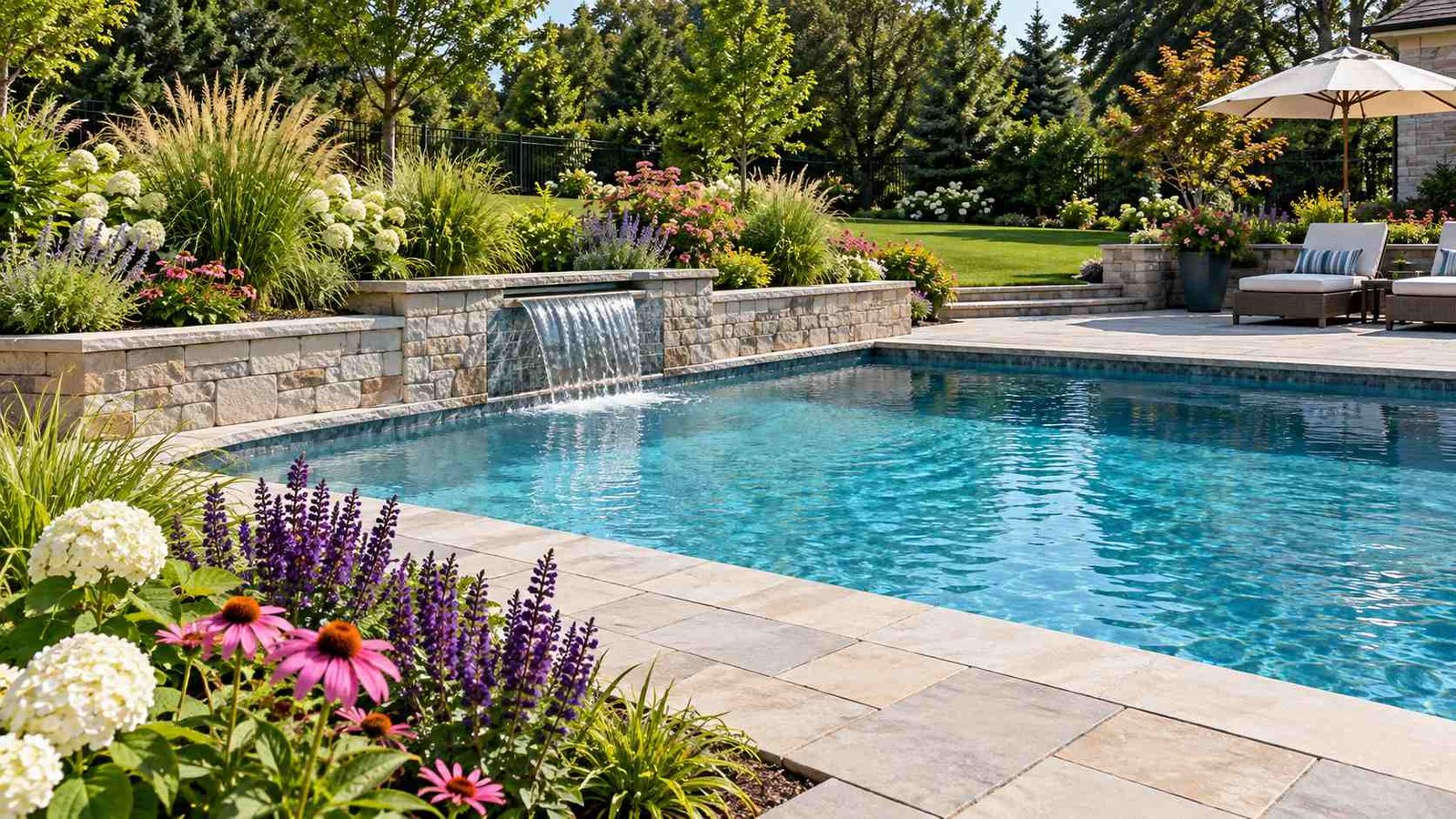
A simple poolside planting plan
You can organize your design in a few layers:
- Closest to the pool: keep the edge open, with low plants or a clear deck.
- Middle layer: add shrubs or grasses with a suitable mature size.
- Back of the garden: use taller plants, trellises, or screening where privacy is needed.
- Around seating: add containers, shade, and a small number of flowering accents.
- Along paths: keep surfaces clear and use lighting to make routes visible.
Before planting, check mature plant height and spread, local hardiness, water needs, root habits, and any safety concerns. A nursery can help you select options that suit your climate and the conditions around your pool.
Frequently asked questions
What is a gardening pool design?
A gardening pool design is a plan for the plants, paths, containers, and outdoor features surrounding a swimming pool. It balances appearance with access, drainage, maintenance, and safe movement around the water.
What plants are best around a swimming pool?
The right plants depend on your climate, soil, sun, and pool layout. Many homeowners look for plants that suit local conditions, have manageable roots, and shed relatively little near the water. Ask a local nursery or extension service for region-specific choices.
Should I plant trees next to a pool?
Trees can provide shade and privacy, but consider their mature size, roots, and leaf drop. Plant them at an appropriate distance from the pool, paving, and underground services. A landscape professional can help assess placement for a specific yard.
How do I keep leaves out of the pool?
Choose lower-litter plants near the water, place larger trees farther away, and keep beds trimmed. A pool cover and regular skimming can also help reduce debris, depending on your pool setup.
Can I use planters around a pool?
Yes. Containers are flexible and can work well on patios or near pool seating. Choose stable pots with drainage, protect the surface underneath if needed, and keep planters clear of walkways and access points.
How can I make a pool area more private?
Use appropriately placed shrubs, a trellis, a screen, or a fence that meets local requirements. Keep sightlines and access routes open, and choose plants suited to your climate and available space.
Conclusion
A poolside garden can make the backyard feel greener, more private, and more comfortable. Start by planning access and maintenance, then select plants that suit your local climate and the conditions around the pool. Add shade, containers, flowers, or layered planting where they improve the space without cluttering the deck.
The best gardening pool designs balance visual appeal with practical care. Leave clear paths, consider mature plant sizes, and choose materials and plants that are manageable for your household. With a thoughtful plan, the garden can frame the pool and make the whole outdoor area more enjoyable.