
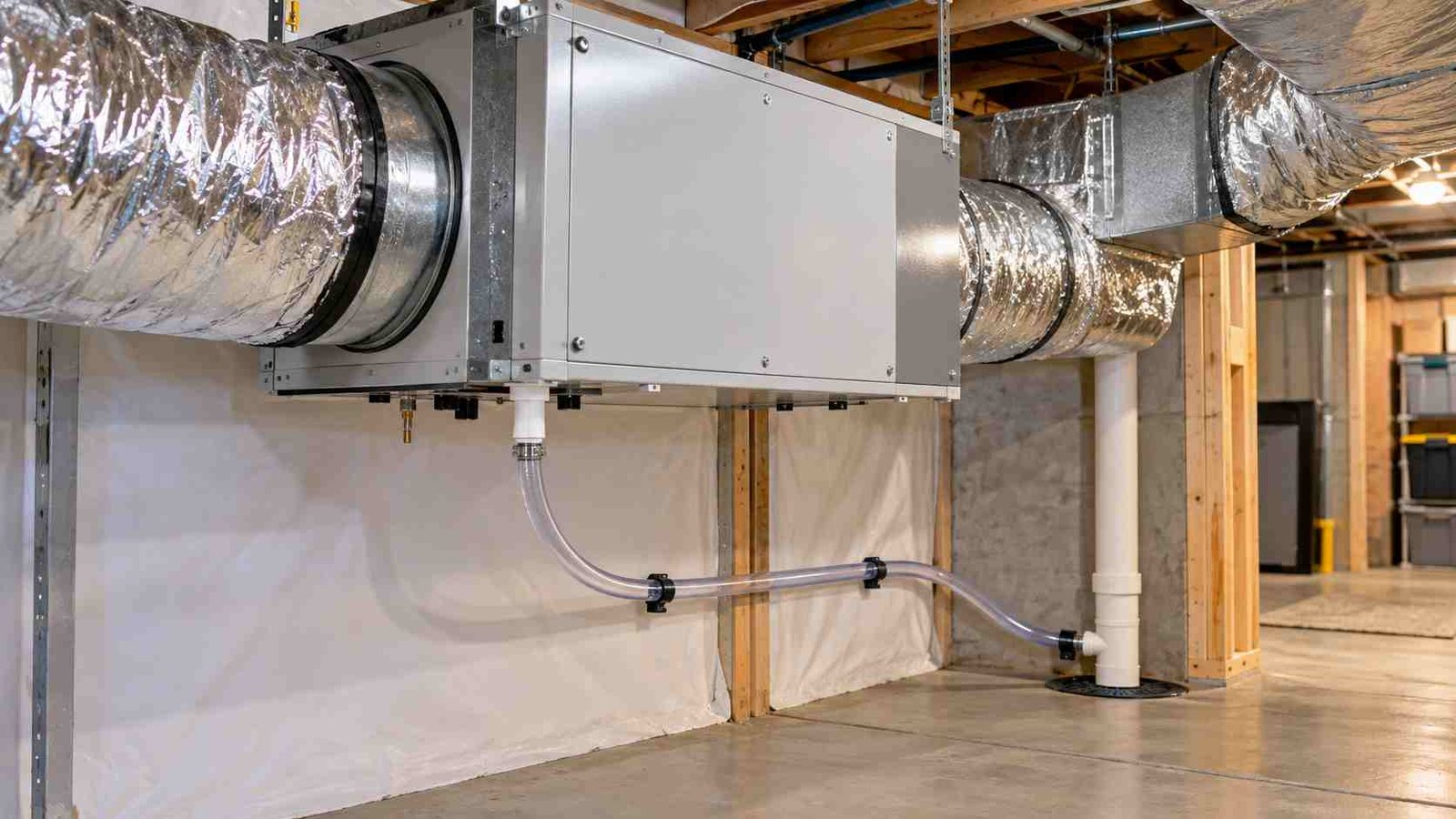
A whole house dehumidifier can help control damp, sticky air throughout a home when humidity remains high despite air conditioning and bathroom or kitchen fans. It connects to the home’s ductwork—or uses its own ducts—to remove moisture from the air in multiple rooms. Before choosing a system, it helps to understand how it works, what it can and cannot fix, and how to size and maintain it.
What is a whole-house dehumidifier?
It’s a permanently installed appliance that removes excess moisture from indoor air across multiple rooms. Most models connect to the central heating and cooling system’s return or supply ducts. Some have separate ductwork to draw in humid air and distribute drier air.
A portable unit usually serves one room or a defined area. A ducted system is designed to provide more even coverage, although the results depend on the home’s layout, duct design, air sealing, and installation. A poorly balanced system may leave some rooms damp while making others drier than intended.
Dehumidification is different from cooling. An air conditioner removes some moisture while it cools, but it may not run long enough to control humidity when temperatures are mild. A separate dehumidifier can operate when the home needs moisture removal but little cooling.
Humidity is measured as relative humidity (RH), the amount of water vapor in the air compared with the maximum it could hold at that temperature. The U.S. Environmental Protection Agency recommends keeping indoor humidity below 60% when possible, ideally between 30% and 50%. A small hygrometer can help you measure levels instead of guessing.
How does a ducted dehumidifier work?
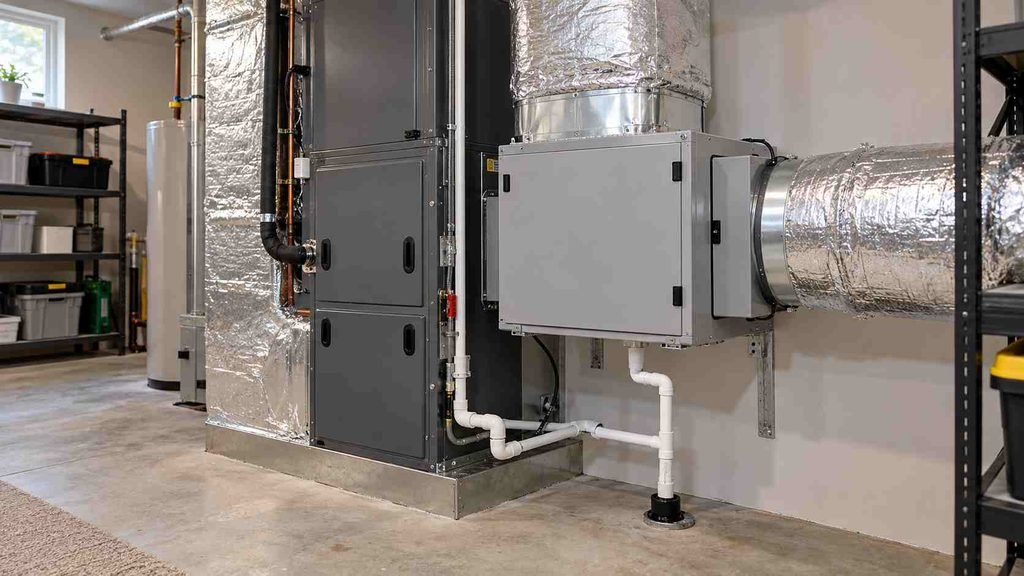
The system draws humid air over a cold coil. As the air cools at the coil, moisture condenses into water. The collected water flows through a drain line, and the drier air is sent back into the house. Many systems use the existing HVAC blower or have their own fan.
A humidistat or integrated control monitors the air and switches the equipment on when humidity rises above its setting. Depending on the model, you may be able to set a target level, select a fan mode, or connect it to a central thermostat.
Installation details matter. The drain needs a suitable route, ducts need to be correctly connected, and the system needs enough airflow. A contractor should check compatibility with the existing HVAC equipment and explain how the controls will operate. An appliance that is too large, too small, or incorrectly connected may struggle to keep conditions steady.
The system is also only one part of moisture control. A leak, wet crawl space, open sump pit, or poorly vented bathroom can keep adding moisture faster than equipment can remove it. Finding and correcting the source should come before relying on dehumidification alone.
Signs your home may need more humidity control
A damp or clammy feeling can be one clue, but it doesn’t tell you the exact RH. Measure humidity in several rooms over a few days, especially in areas that feel uncomfortable. Check the readings at different times, since showers, cooking, laundry, weather, and air-conditioning cycles can cause changes.
Other signs to investigate include:
- Condensation on windows or cold pipes
- Musty odors in closets, basements, or lower-level rooms
- Damp-feeling bedding, towels, or upholstery
- Paint that peels or bubbles near a moisture source
- A basement that feels humid even when the rest of the house is comfortable
These signs can have different causes. Condensation might point to high humidity, a cold surface, or insufficient ventilation. A musty smell may indicate a hidden leak or material that stayed wet. Look for plumbing drips, roof or foundation water entry, blocked gutters, and poorly draining air-conditioning equipment.
The EPA advises acting promptly when materials become wet and drying them within 24 to 48 hours when possible. It also recommends fixing moisture problems and cleaning visible mold rather than relying on a humidity-control device to solve them.

Potential benefits throughout the home
The main advantage is broader coverage than a portable unit can typically provide. With suitable ductwork and controls, one system can help manage moisture in several connected areas. That may be useful in a home where multiple rooms remain humid, or where moving and emptying portable appliances has become inconvenient.
More controlled humidity may improve comfort. Air that is less damp can feel less sticky, and some homeowners may be able to use a slightly higher cooling setting while staying comfortable. Actual energy use depends on climate, home construction, thermostat settings, equipment efficiency, and how often the system runs. A dehumidifier uses electricity, so it does not guarantee lower energy bills.
Moisture control may also help reduce conditions that support mold growth, but it does not remove existing mold or repair water damage. If there is visible growth, a persistent leak, or extensive damp material, address that problem directly and seek qualified help when needed.
An ENERGY STAR certified system can be one way to compare efficiency. ENERGY STAR says certified dehumidifiers use 20% less energy than comparable conventional models; the current product listing and specifications can help you evaluate eligible equipment.
Choosing the right system for your home
Sizing should account for more than the home’s square footage. Climate, the amount of outside air entering the house, insulation, duct layout, moisture sources, and how tightly the building is sealed all affect performance. A contractor can assess those factors and explain the equipment capacity being proposed.
Ask for a clear explanation of:
- Capacity: How much moisture the system is designed to remove under specified conditions
- Coverage: Which rooms and zones the design is intended to serve
- Controls: Whether the system has its own humidistat or works through a thermostat
- Drainage: Where condensate goes and how the drain will be protected from blockage
- Sound: How much noise to expect near the equipment and through the ducts
- Filter and coil access: How routine service will be carried out
- Efficiency: The model’s certified efficiency rating and expected operating conditions
Avoid selecting equipment by capacity alone. A unit may have an impressive removal rating and still be a poor match for a particular home. ENERGY STAR recommends that whole-home equipment be sized and installed correctly by a professional. Its installation guidance also notes that sealing the home and its ducts can improve performance and reduce energy use.
Installation considerations
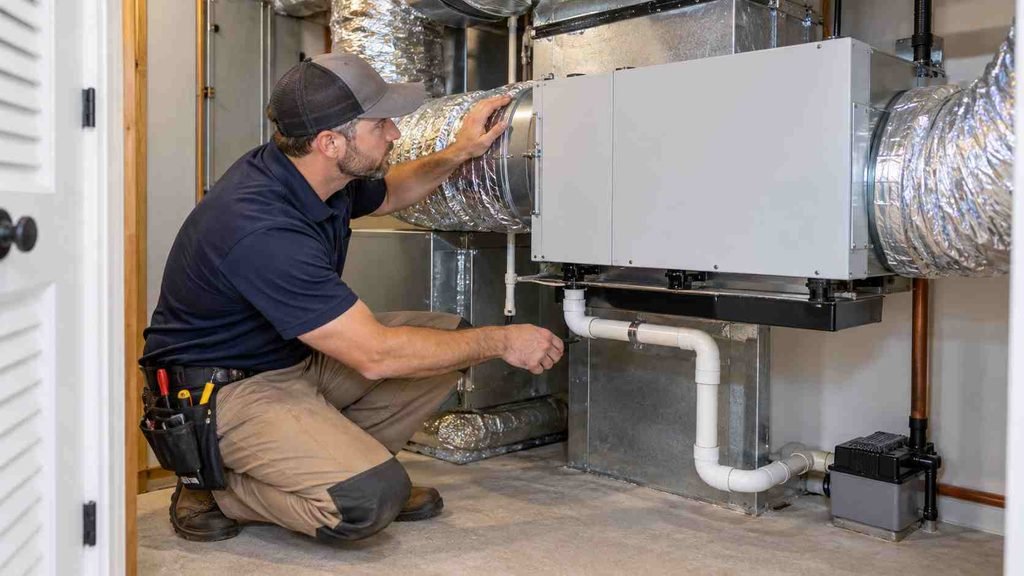
A qualified HVAC professional should inspect the current system, measure the home, and discuss where the equipment and controls will go. Ask whether the quote includes electrical work, duct adjustments, drainage, start-up testing, and instruction on the controls. Comparing detailed proposals is more useful than comparing a single equipment price.
The installer should confirm that the system’s airflow and duct connections suit the home. They should also explain the condensate route and what to do if the drain clogs. If the house has a basement, crawl space, or other damp area, ask whether moisture is entering from outside or from a plumbing or drainage problem. Treating the source may be necessary before equipment can maintain the desired conditions.
After installation, request a demonstration of the settings and maintenance access. Confirm where the filter is, how often it should be checked, whether the drain has an accessible cleanout, and what signs indicate a service call is needed. Keep the model and serial number, warranty details, and contractor’s service information in a place you can find later.

Operating costs and everyday use
Running cost varies with local electricity rates, equipment efficiency, indoor and outdoor conditions, and the amount of moisture entering the house. The system may run more during humid seasons or after activities that add water vapor, such as cooking, showering, and drying clothes indoors.
Start with the manufacturer’s instructions and a reasonable humidity setting. Avoid setting an unnecessarily low target: very dry air can be uncomfortable, and extra runtime uses energy. Use a hygrometer in more than one location to see whether conditions are reasonably consistent. If readings differ sharply between floors or rooms, ask an HVAC professional to check airflow and control placement.
Moisture-reduction habits can help the equipment do its job. Use bathroom exhaust fans during showers and for a while afterward. Vent cooking moisture outdoors when possible, repair plumbing leaks, and make sure the clothes dryer exhausts outside. Keep gutters clear and direct rainwater away from the foundation. ENERGY STAR notes that reducing moisture sources can reduce the need for dehumidification.
If the system seems to run constantly, produces little water, or leaves the house humid, don’t assume it needs a lower setting. Check the filter and control settings, look for drainage problems, and consider whether outdoor air or a hidden water source is adding moisture. A technician can test operation and duct conditions.
Maintenance for dependable performance
Follow the owner’s manual for service intervals and maintenance steps. Many systems have a filter that needs periodic cleaning or replacement. A dirty filter can restrict airflow and affect performance, so inspect it more often during dusty periods or heavy use.
Keep the condensate drain clear and check for standing water or leaks around the unit. The drain pan and line should be inspected according to the manufacturer’s directions. If you notice water near the equipment, turn it off if the manual instructs you to, protect the surrounding area, and arrange service to identify the cause.
A professional maintenance visit can include checking electrical connections, controls, coils, drainage, and duct connections. Ask the technician to show you any issue they find and explain whether it needs immediate attention. Regular maintenance can catch a clogged drain or airflow problem before it affects the rest of the system.
Common mistakes to avoid
One common mistake is buying a system before measuring humidity or checking for leaks. The equipment may run continuously if water is entering through the foundation, a roof leak, plumbing, or excessive outdoor air. Diagnose the moisture source first.
Another is expecting humidity control to fix every odor, allergen, or mold concern. Dehumidification addresses moisture in the air. It does not replace cleaning, repairs, adequate ventilation, or professional remediation when a problem is large or persistent.
Avoid ignoring maintenance, either. A clogged filter or drain can reduce performance and may lead to water damage. Finally, don’t judge success from one reading taken beside a vent. Compare measurements across rooms and over time.
FAQs
Is a whole-house system better than a portable dehumidifier?
It depends on the problem. A portable appliance may suit one damp room or a temporary need. A ducted system may be more convenient when humidity affects several connected rooms and the home has suitable HVAC or dedicated ductwork. Compare installation cost, operating cost, coverage, and maintenance before deciding.
What humidity level should I aim for?
The EPA advises keeping indoor relative humidity below 60% if possible, ideally between 30% and 50%. Conditions vary with climate and season, so use a hygrometer and follow equipment guidance rather than choosing an unnecessarily low setting.
Can it prevent mold?
Controlling excess moisture can reduce one condition that supports mold, but no appliance can guarantee that mold will not grow. Fix leaks, dry wet materials promptly, clean visible growth appropriately, and seek professional help for extensive or recurring problems.
Does it replace air conditioning?
No. Air conditioning cools indoor air and removes some moisture as part of that process. A dehumidifier focuses on removing moisture and may run when the home does not need much cooling.
How long does installation take?
Timing depends on equipment placement, ductwork, electrical requirements, drainage, and the condition of the existing HVAC system. Ask the contractor for an estimate after an on-site assessment rather than relying on a general time promise.
Conclusion
A properly selected whole house dehumidifier can help manage moisture across multiple rooms, particularly when humidity stays high and simpler steps have not been enough. Measure conditions first, look for leaks and other moisture sources, and compare equipment based on the home’s layout, installation plan, efficiency, and maintenance needs. A professional assessment can help determine whether a ducted system is a sensible fit and what changes will help it work well.