
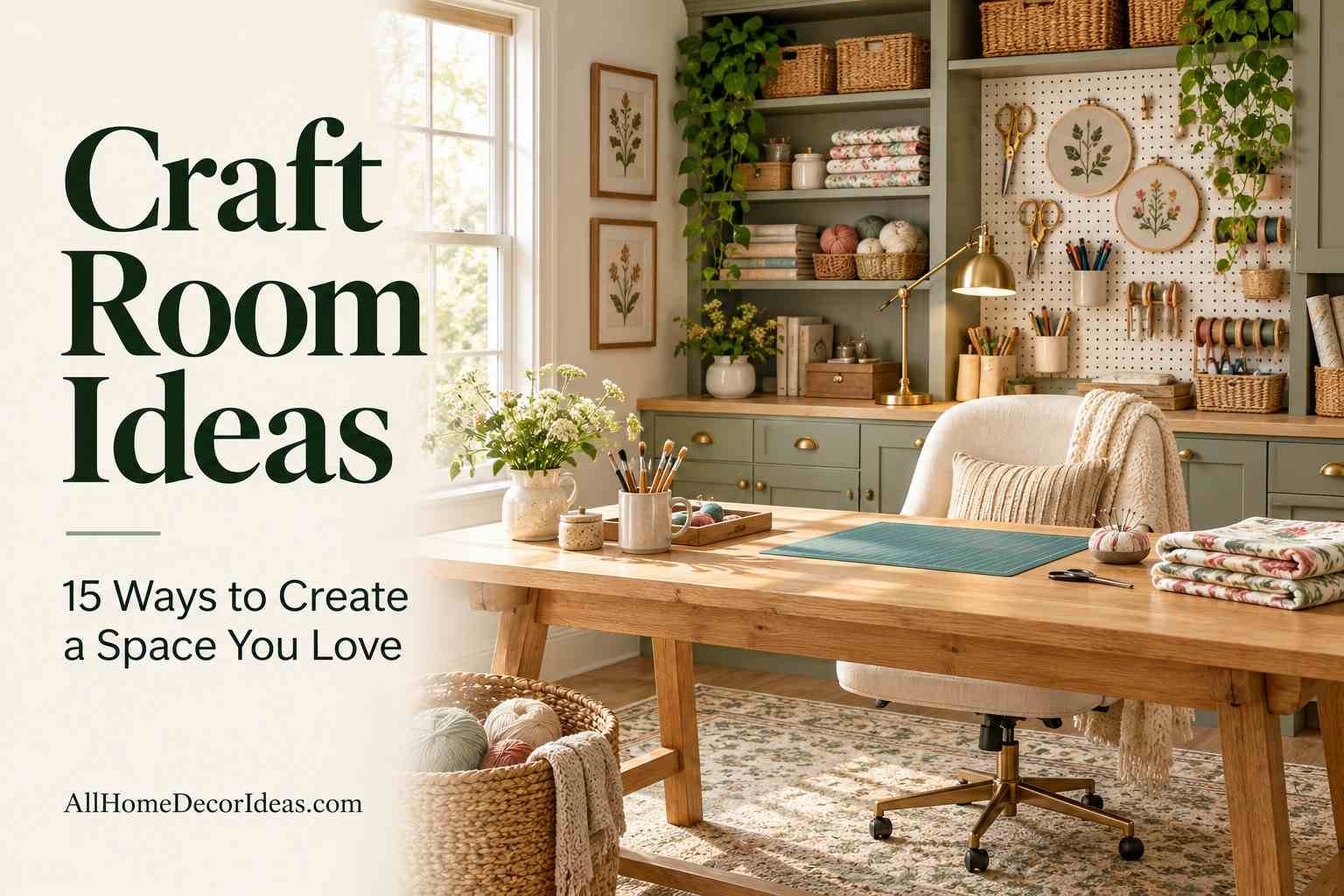
The best craft room ideas make it easier to begin a project and less frustrating to put everything away afterward. That might mean a bright sewing room, a small desk for paper crafts, or a cupboard that opens into a creative workspace. You do not need matching jars, expensive cabinetry, or an entire spare bedroom. You need a layout that supports the things you actually enjoy making.
These fifteen approaches combine attractive decorating choices with practical organization, followed by advice on planning, spending priorities, lighting, and keeping the space useful over time.
Start With Your Craft, Not the Storage Catalogue
Before comparing craft room ideas, write down the activities you do most often. Sewing, painting, knitting, model-making, and scrapbooking place different demands on a room.
A sewing machine needs a stable surface and space for fabric to move. Paper crafting benefits from shallow storage where sheets are easy to see. Knitting supplies can live in portable baskets, while painting may require a suitable cleanup arrangement and material-specific ventilation.
Measure the equipment you already own, including the clearance needed to use it. Then identify what currently interrupts your projects.
If you always clear the dining table before cutting fabric, a dedicated surface might be your priority. If you repeatedly buy supplies you cannot find, better organization may matter more than another piece of furniture.
1. Turn a Spare-Room Corner Into a Creative Workspace
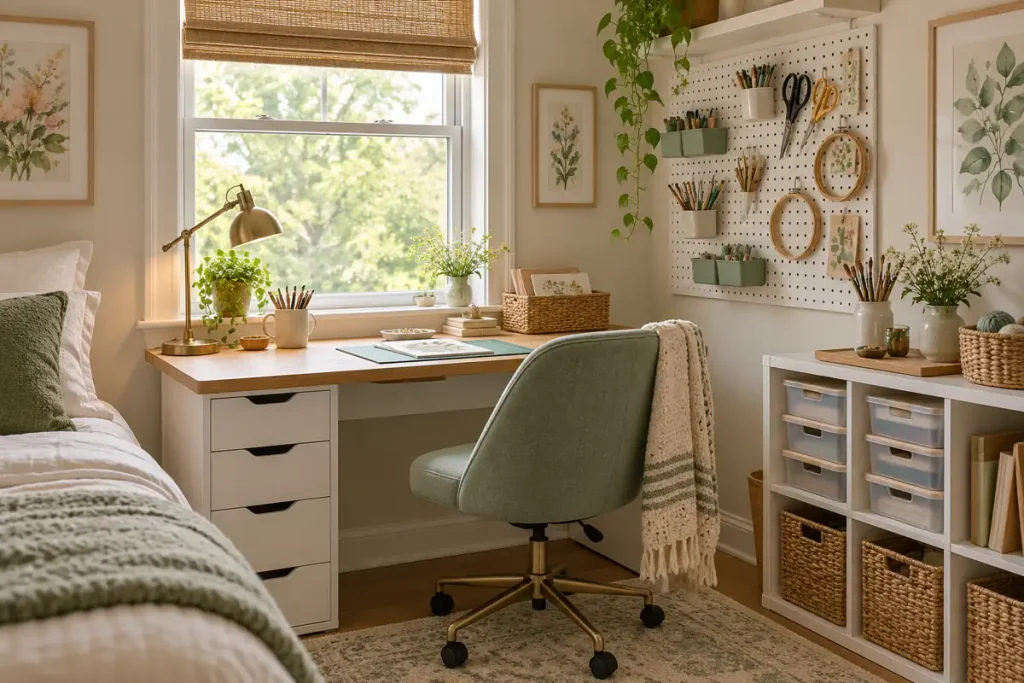
A compact desk beside a wall can provide enough space for drawing, journaling, embroidery, or small paper projects. Choose furniture that leaves the room’s other functions intact.
Keep frequently used tools close by and occasional supplies in a nearby cabinet. An adjustable task lamp helps the corner remain useful after daylight fades.
Position the desk thoughtfully around windows, doors, and heating. A beautiful photograph is less useful than a setup where you can move the chair comfortably and reach the materials you need.
2. Create a Central Cutting or Assembly Table
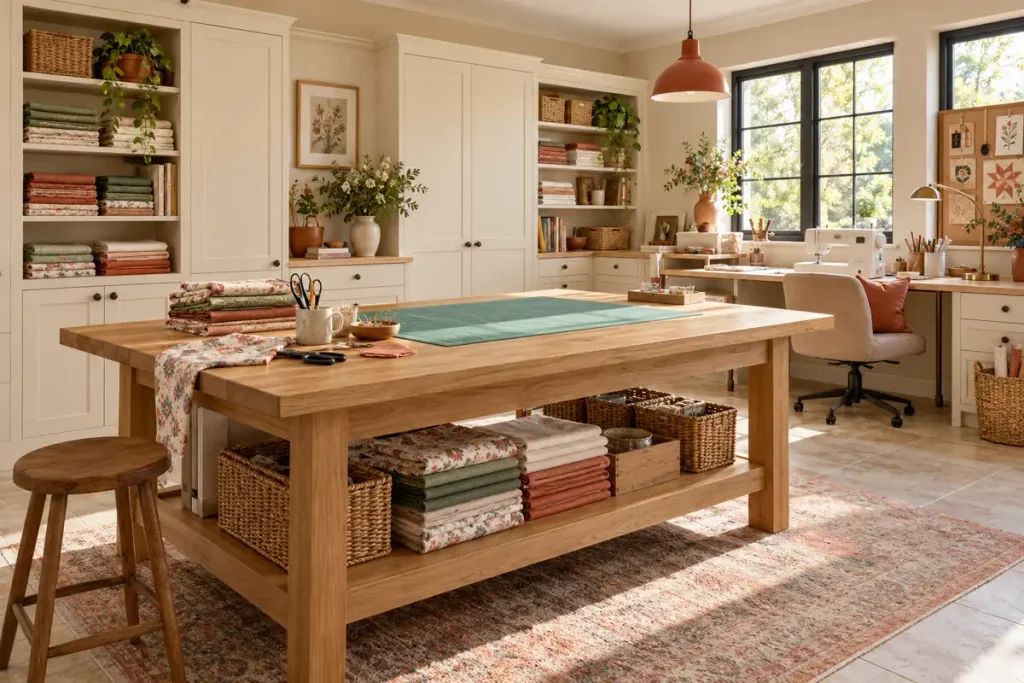
A larger work surface can transform the way you approach sewing, wrapping, and assembling projects. It provides room to spread materials out without constantly moving other items.
Among craft room ideas, a central table is especially useful when you need access from more than one side. Measure the surrounding walking space before committing to it.
Choose a height and surface appropriate to the task and your body. A table that feels convenient for standing work may not suit detailed seated activities.
Avoid improvising a heavy tabletop across unsecured storage units. Use a stable, properly supported arrangement with a suitable load capacity, and consider how the furniture will behave when you lean against it.
3. Use a Cabinet That Closes Around Your Supplies
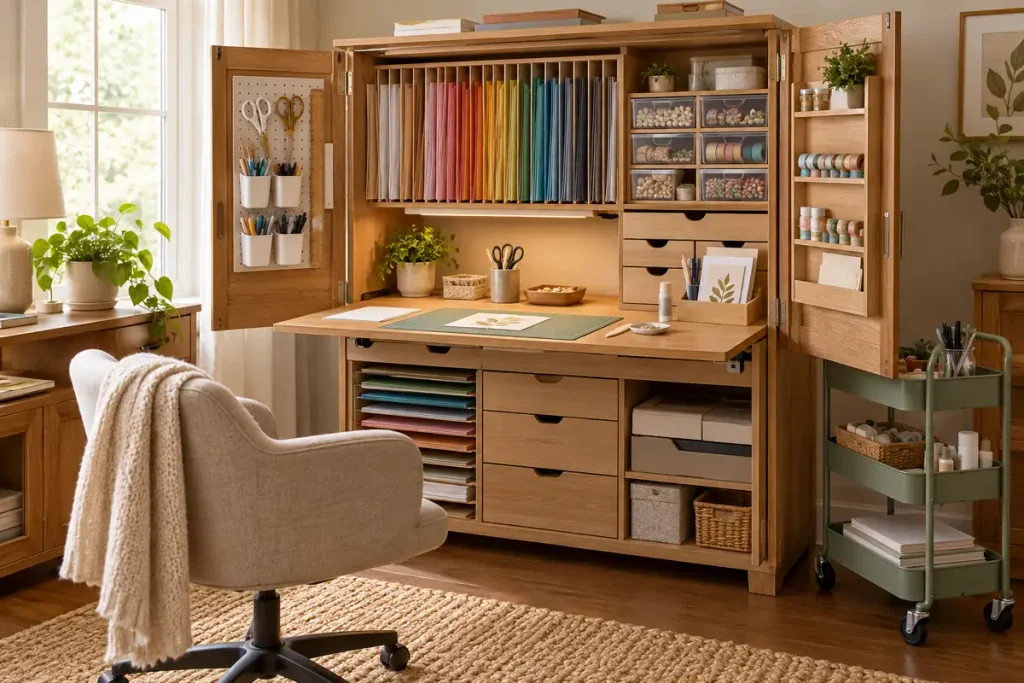
A craft cabinet can help a creative workspace share a bedroom, study, or living room. Open it when you want to work and close it when the activity is finished.
Plan the interior around actual items rather than assuming a cupboard full of identical shelves will suit everything. Paper, fabric, tools, and unfinished projects often need different compartments.
Check that doors can open fully without blocking a route through the room. A fold-out surface must have appropriate supports and enough usable depth.
4. Make Wall Storage Work Harder
Pegboards, rails, and shallow shelves can free up a worktop while keeping tools visible. They are useful for scissors, rulers, tape, and small containers when installed appropriately.
Effective craft room ideas keep the most-used objects within comfortable reach. Avoid creating a display that looks organized but requires stretching over delicate work.
Use hooks and fittings designed for the particular storage system. Check load limits, wall construction, and the suitability of the fixings.
Keep sharp tools out of children’s reach. Also think about what hangs above your head or working area; heavy equipment belongs somewhere more secure than a convenient-looking hook.
5. Give Paper and Card Their Own Storage
Paper can become creased, dusty, and difficult to identify when it is stacked wherever space remains. Separate it by size and by how you use it.
Vertical files can suit some sheets, while supported shallow drawers may work better for others. Check that the storage dimensions fit the paper without bending its edges.
Keep everyday colors accessible and specialty materials together. Avoid mixing scraps, full sheets, templates, and instruction booklets into one container.
Give yourself a limited place for useful offcuts. Once it is full, review the contents. Saving every tiny piece can make the materials you actually need harder to find.
6. Design Around a Sewing Machine
Sewing-focused craft room ideas should begin with stability, fabric movement, and comfortable access to controls. A desk chosen only for its appearance may shake or feel cramped.
Allow space beside and behind the machine for the projects you make. A small repair and a bulky quilt do not require the same arrangement.
Store thread and notions in a way that makes selection easy without exposing everything to dust. Provide a separate place for cutting tools.
If ironing is part of your routine, plan a safe position and storage arrangement for the equipment. Follow appliance instructions, keep heat away from loose materials, and allow hot items to cool appropriately before putting them away.
7. Use a Rolling Cart for Flexible Projects
A suitable trolley can keep the supplies for one activity together. It is helpful when you craft in a shared room or need to clear a surface between sessions.
Choose a size that fits where you intend to store it. Check shelf heights against bottles, baskets, or equipment before buying.
Keep heavier items low and observe the manufacturer’s load limits. Lockable wheels may be useful, but a cart should not be assumed to provide a stable workbench.
Treat it as a mobile project station rather than overflow storage for the entire room. A crowded trolley becomes difficult to move and makes small items harder to retrieve.
8. Create a Shared Space With Clear Boundaries
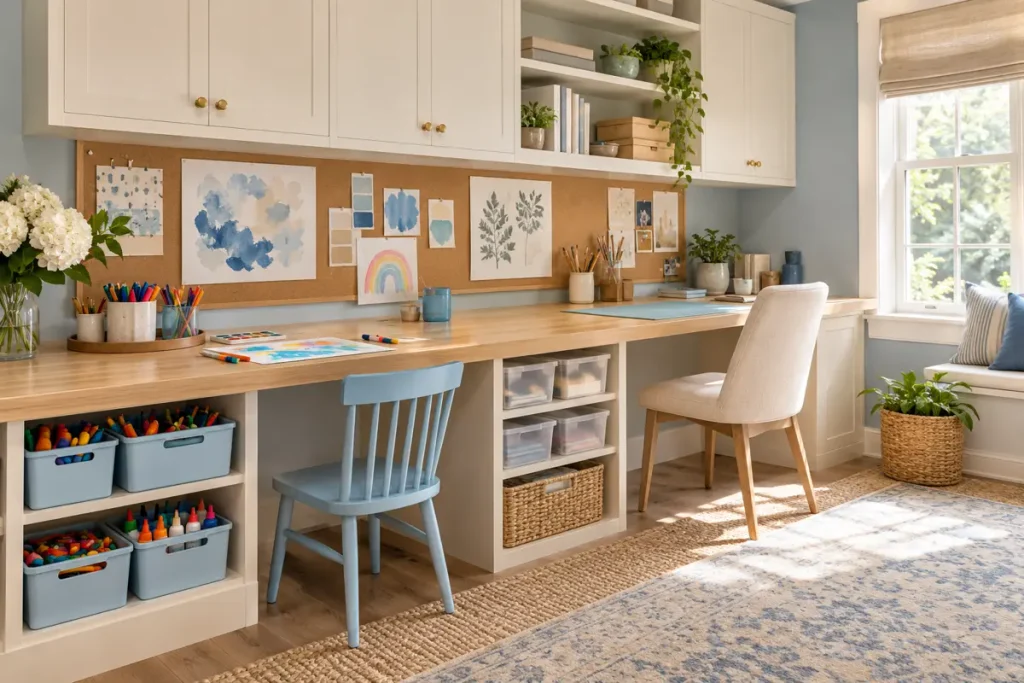
Shared craft room ideas work best when each person has a defined place for tools, materials, and unfinished work. This matters whether you share with a partner, friend, or child.
A long workbench can provide separate stations, but check that both users have sufficient space. Individual drawers or baskets reduce confusion over supplies.
For family use, choose age-appropriate materials and separate adult tools from children’s activities. The U.S. Consumer Product Safety Commission’s Art and Craft Safety Guide provides guidance on selecting and using craft materials.[1]
Follow age recommendations, product warnings, and supervision requirements rather than assuming that all craft supplies are interchangeable.
9. Make a Small Room Feel More Open
A compact creative room benefits from editing as much as organizing. Decide which equipment genuinely needs to remain in the room and what can be stored elsewhere.
Use shallow storage where appropriate, but keep enough worktop depth for the activity. An ultra-slim desk is not helpful if it cannot accommodate your project.
Repeat a restrained palette across larger furniture pieces. A light wall, simple cabinets, and a few coordinated baskets can create a quieter backdrop for colorful materials.
Leave some visual breathing room.
10. Combine Closed Storage With a Few Open Displays
Closed storage helps contain visually busy supplies, while open shelves can show beautiful materials or finished work. A mixture often feels more welcoming than either extreme.
These craft room ideas are useful if the workspace is visible from another room. Put everyday clutter behind doors and display a few objects you enjoy seeing.
Consider maintenance before choosing containers. Open yarn baskets and exposed shelves may need more dusting than cabinets.
Follow furniture instructions for anchoring where required. IKEA’s safety guidance emphasizes securing furniture to suitable walls to reduce tip-over risk.[2] Choose appropriate fixings for the wall and product, and do not assume that filling a cabinet makes it safe from tipping.
11. Build a Clear System for Unfinished Projects
An unfinished project needs a home that protects it and makes restarting simple. Otherwise, the main work surface can gradually become permanent storage.
Use one tray, box, or shelf space for each active project. Keep its essential materials together and include a brief note about the next step if that helps.
Match the container to the work. Something wet, fragile, or requiring ventilation may need a different arrangement from folded fabric or knitting.
Limit the number of projects occupying prime storage. If a box has not been opened for months, decide whether to resume, repurpose, or let go of its contents.
12. Choose Lighting for Detailed Work
Lighting deserves a place near the top of your craft room ideas list. A room can look bright overall while the exact area beneath your hands remains shadowed.
Combine general illumination with an adjustable task light suited to the activity. Position it so your hands and tools do not cast an awkward shadow across the work.
Test the setup while sitting or standing where you will actually work. Check reflections on shiny surfaces and glare from windows.
For color-sensitive projects, compare materials under the lighting in which the finished item will be seen. A paint, thread, or fabric combination may appear different under daylight and warm evening lamps.
13. Add Personality Without Losing Working Space
A creative room should give you something pleasant to look at, but decoration does not need to occupy the desk. Use a pinboard, framed print, or small display shelf.
Choose objects that reflect your interests rather than buying a complete themed collection. A handmade cushion or a framed piece of your own work can provide enough character.
Keep inspiration boards selective. Replace images when your interests change instead of layering them until the board becomes visual noise.
If plants are part of the scheme, place them where watering will not threaten tools, paper, or electrical equipment.
14. Refresh a Craft Room on a Budget
Affordable craft room ideas begin with sorting supplies before buying storage. You may discover duplicate tools, empty packaging, and materials that no longer suit what you make.
Reuse suitable furniture and containers where they work. A sturdy table may need better lighting and organization rather than replacement.
Spend first on the things that remove a daily difficulty: a stable surface, a useful chair, or properly sized drawers. Coordinated accessories can come later.
Compare the full cost of a storage system, including inserts, doors, delivery, and installation. An inexpensive shell can become less economical once every component needed for your setup is included.
15. Choose a Style You Can Maintain
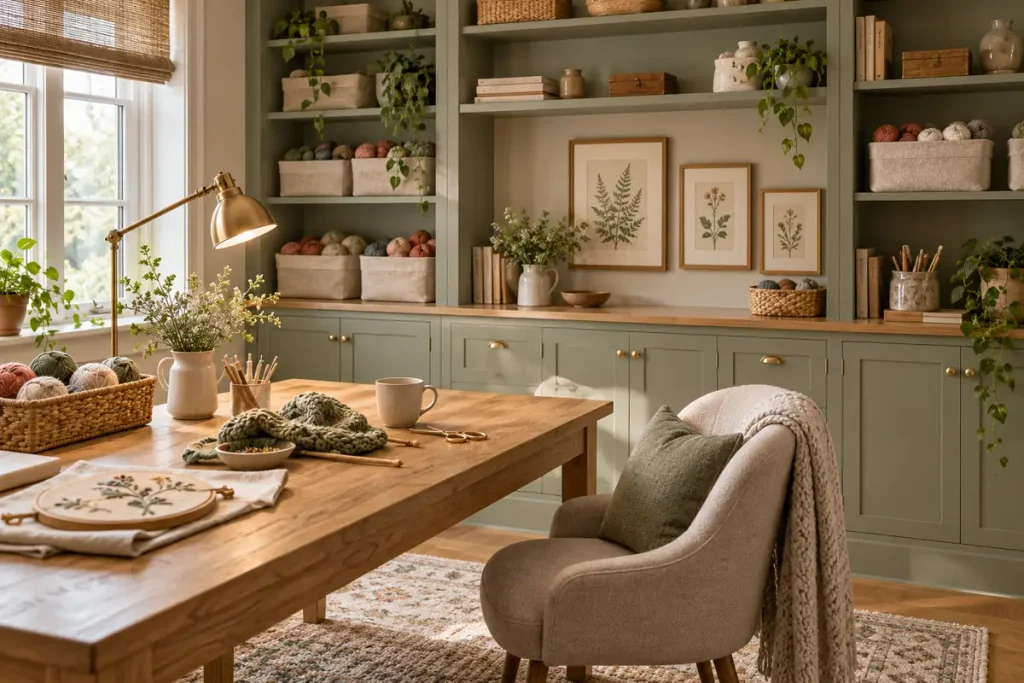
A craft room can be colorful, minimal, cottage-inspired, or modern. The most suitable style is one you can keep functional without constant rearranging.
Try a neutral base if your materials are already colorful. Alternatively, a muted green or blue cabinet can introduce personality without needing many accessories.
For any creative workspace, a simple reset routine is often more valuable than elaborate labeling. Return tools, put active work in its designated place, and clear the surface enough for the next session.
Design for the person you are, not an imagined version who decants every button and maintains perfectly arranged shelves. The room should encourage making things rather than create another project you feel obliged to finish.
Plan Storage Around Material Requirements
Different materials need different conditions. Read packaging, care instructions, and equipment guidance before choosing where everything will live.
Protect items from unsuitable heat, damp, and direct sunlight as advised by their manufacturers. Keep original labels and safety information with products that require them.
Ventilation needs also depend on the activity. Opening a window should not automatically be treated as sufficient for resin, sprays, solvents, or dust-producing processes. Consult the relevant product instructions and safety information.[1]
If your chosen activity needs controls that the room cannot provide, reconsider the location or method. A room’s decorative scheme should follow the practical requirements of the craft.
Make the Layout Easy to Use and Clean
Think about the route between taking materials out, working, setting items aside, and putting everything away. Repeatedly crossing the room for basic tools can make simple projects feel more involved.
Leave enough space to move safely and reach storage. Keep exits clear, and avoid trailing electrical leads through walking routes.
Choose surfaces and protective coverings appropriate to the materials you use. Check cleaning recommendations before allowing paint, adhesives, or dyes near furniture finishes.
A small cleanup kit can make resetting easier, but store it separately from craft materials where needed. Keep food and drink away from activities involving substances or debris that could contaminate them.
Turn Inspiration Into a Manageable Plan
The most useful craft room ideas solve a specific problem in your current setup. Choose three priorities before creating a shopping list.
For example, you might need a clear sewing surface, better paper storage, and a place to keep projects between sessions. Sketch those elements first and add decoration afterward.
Measure furniture footprints with tape and check how doors, drawers, and chairs move. Buy in stages if you are unsure how much storage you need.
For more decorating inspiration, explore AllHomeDecorIdeas.com. A creative workspace can feel connected to the rest of the home while keeping the practical details that make your hobby enjoyable.
Frequently Asked Questions
How can I create a craft space without a spare room?
Use a desk, cabinet, or suitable trolley in a shared room. Give supplies a defined home and choose a setup that can be cleared without dismantling every project.
What should I buy first?
Start with a stable work surface, appropriate seating, and useful lighting. Sort existing supplies before buying organizers so you know what must fit inside them.
Are clear containers better than opaque ones?
It depends on the contents and your preferences. Clear containers can help identify supplies, while opaque storage creates a quieter appearance. Materials with special storage requirements need suitable containers regardless of looks.
How do I organize fabric?
Group it in a way that supports your projects, such as by type, size, or intended use. Store it clean and dry according to its care requirements, and keep smaller remnants within a defined limit.
Can a craft room double as an office?
Yes, if both activities have suitable space and storage. Protect work equipment from craft debris and keep enough clear surface area to switch tasks without a major cleanup.
How do I keep the room tidy?
Use convenient storage, limit active projects, and finish each session with a brief reset. If putting something away is consistently awkward, adjust its storage location rather than relying on more labels.
Conclusion
The right craft room ideas make creativity easier to return to. A practical surface, thoughtful storage, comfortable lighting, and a place for unfinished work can transform a modest corner into a workspace you look forward to using.
Start with your main activity and the frustrations you want to remove. Build the layout around those needs, add personality gradually, and leave room for your interests to change. A beautiful creative space earns its place by helping you enjoy what happens inside it.