
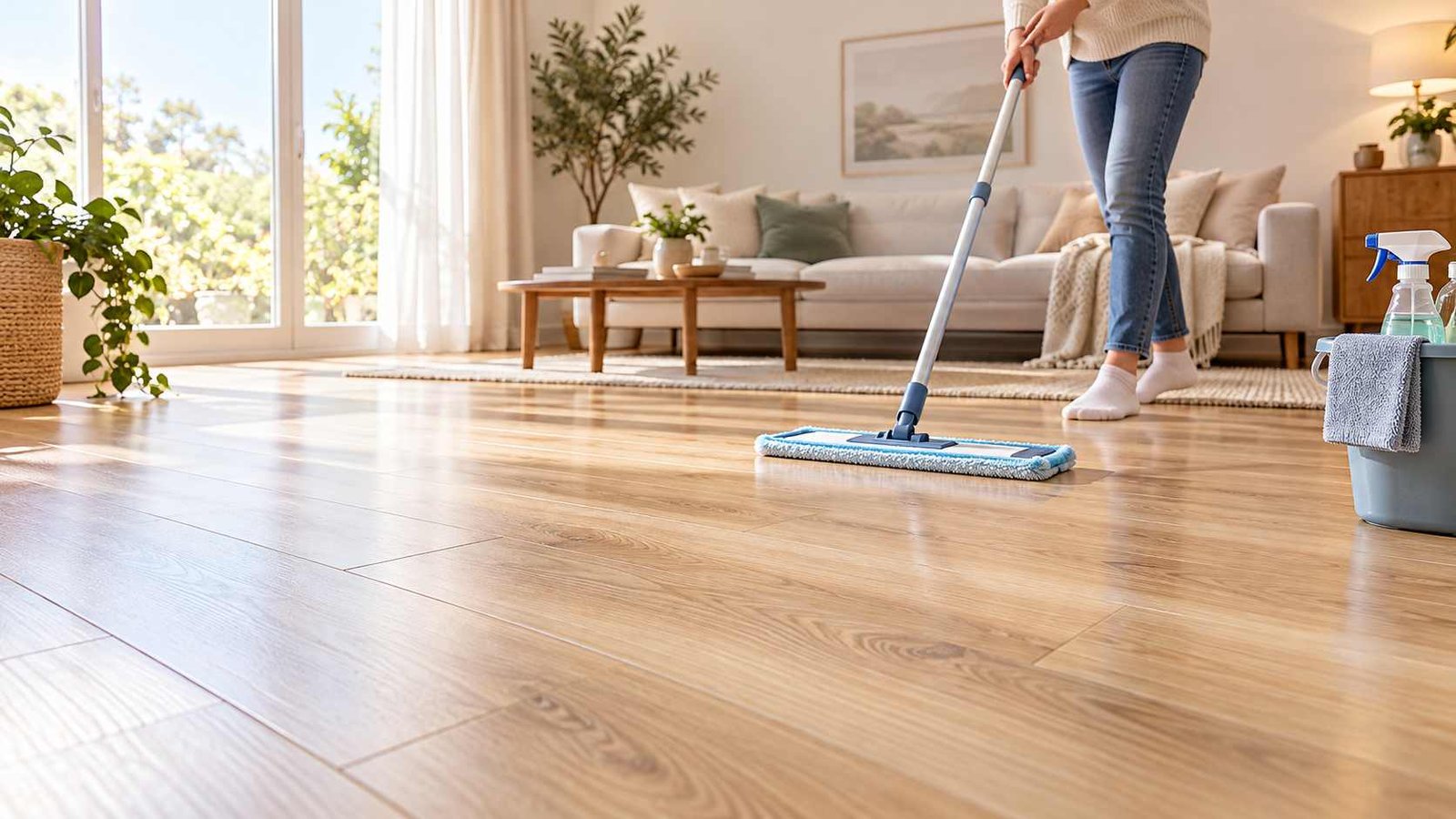
Knowing how to clean laminate floors properly can help keep them looking fresh without damaging the surface or the joints between planks. The most important rule is to use as little moisture as your flooring manufacturer allows. Sweep or vacuum away grit first, choose a cleaner approved for your floor, and wipe spills promptly.
Laminate is designed to be practical, but it still needs the right care. Fine sand can dull the finish, excess water can seep into seams, and unsuitable cleaners may leave a sticky film. The best routine is usually simple: remove dry debris, spot-clean marks, then use the manufacturer’s recommended method for occasional deeper cleaning.
Before you start: Find the flooring brand and model if you can. Manufacturer instructions differ. Shaw, for example, advises against wet mopping its laminate, while Pergo recommends a damp mop for its own flooring. Follow the directions for your specific floor rather than assuming one method fits all.
What You’ll Need
Gather your supplies before cleaning so you can work steadily and respond to spills without leaving a wet patch unattended.
- A soft-bristle broom or dry microfiber dust mop
- A vacuum with a hard-floor attachment and the beater bar turned off
- A clean microfiber mop, if your flooring instructions allow damp mopping
- A laminate-safe cleaner recommended by the flooring manufacturer
- A soft, clean cloth for spills and spot cleaning
- A plastic scraper for hardened wax or gum, if your manufacturer permits it
Avoid using abrasive pads, stiff brushes, steel wool, or a vacuum head with a rotating beater bar. These can scratch or dull the surface. Shaw specifically recommends regular sweeping, dusting, or vacuuming with a hard-floor attachment rather than a beater bar.
How to clean laminate floors properly: step-by-step
1. Clear the floor
Pick up toys, shoes, pet bowls, and lightweight furniture that could get in the way. Move heavier furniture only if you can do so safely; dragging it across the floor may scratch the finish. Use felt pads under furniture legs and lift pieces instead of pulling them.
If you’re cleaning a large room, divide it into sections. This makes it easier to keep track of which areas you’ve swept and which still need attention.
2. Remove dust, hair, and grit
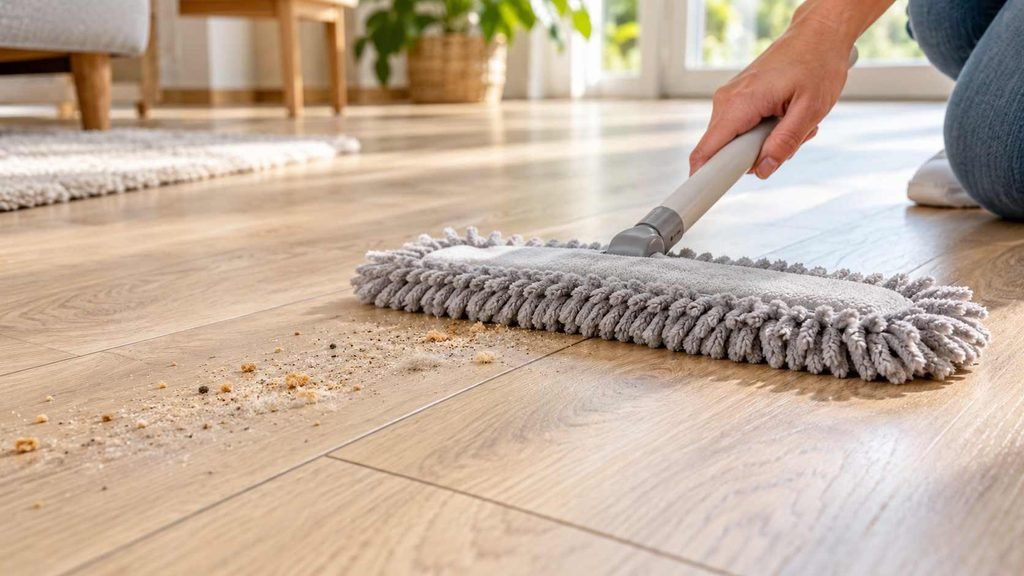
Sweep with a soft broom or run a dry microfiber mop over the floor. Work along the plank direction where practical, especially if dust has collected in the seams. In a busy home, pay extra attention to entryways, under the dining table, and around pet beds.
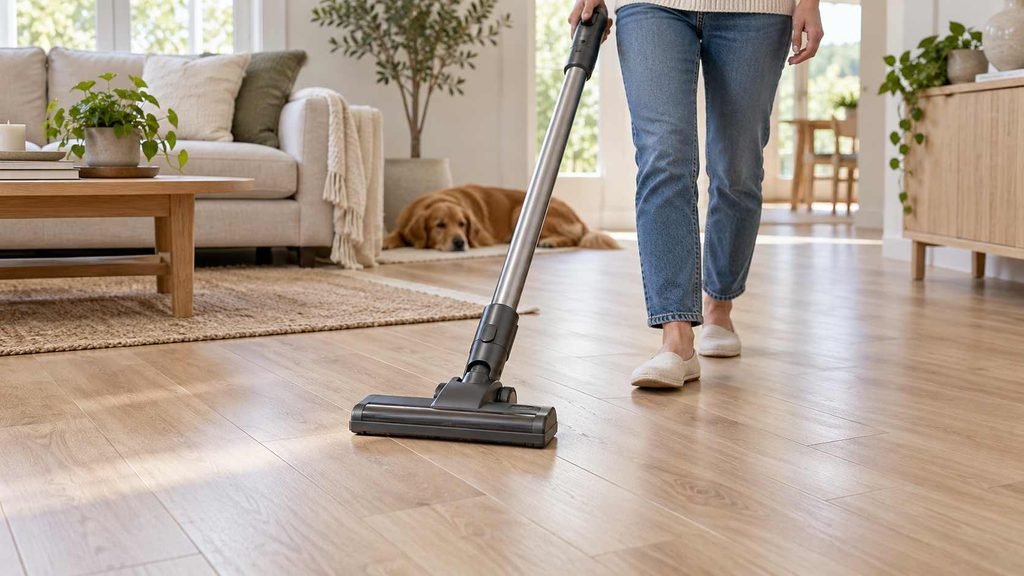
If you prefer vacuuming, choose a hard-floor setting or attachment. Turn off the beater bar so the rotating brush doesn’t scuff the laminate. Take care around thresholds and edges, where small stones and grit can collect.
3. Spot-clean marks before mopping
Look for sticky spots, footprints, or dried food. Apply a laminate-approved cleaner to a cloth, not directly to the floor, unless the product label specifically says otherwise. Wipe the mark gently and dry the area with a clean cloth if any moisture remains.
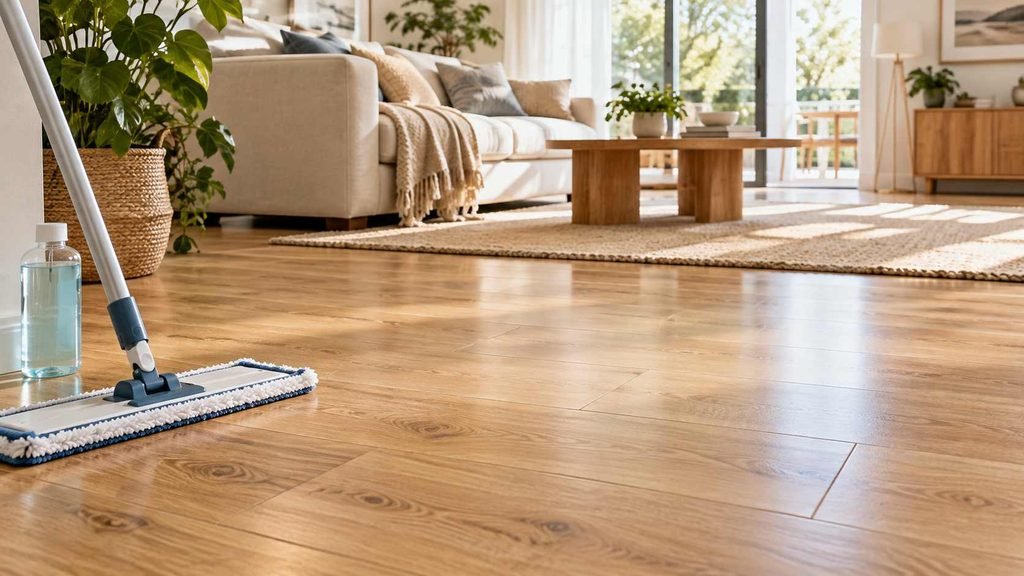
For small marks, spot-cleaning may be all the floor needs. There’s no benefit to using more liquid than necessary. If the mark doesn’t come away with light pressure, check the product instructions before trying a stronger method.
4. Prepare the mop according to the floor’s care guide
Some laminate manufacturers allow damp mopping with a microfiber mop; others warn against wet mopping. Read the flooring instructions before deciding how much moisture to use.
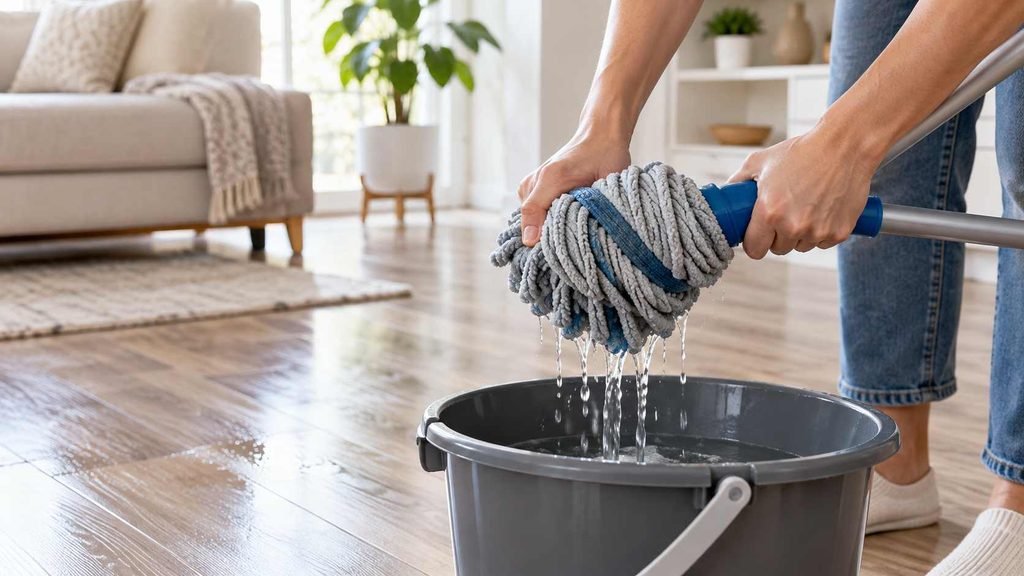
If damp mopping is permitted, the mop should be only slightly damp, never dripping. Wring it out thoroughly before it touches the floor. Use the cleaner at the dilution stated on the label. Extra concentrate can leave residue, and homemade mixtures may not be suitable for your finish.
5. Clean in small sections
Mop a small section at a time, moving along the direction of the planks. Rinse and wring out the mop when it becomes dirty. Don’t let cleaner or water pool in seams, around the edges, or beneath appliances.
If the floor looks wet after you pass over it, stop and use a dry microfiber cloth to remove the remaining moisture. Pergo’s general laminate-care guidance recommends a vacuum, microfiber cloth, or damp mop; its product documentation also says the floor should be dry after damp mopping.
6. Let the surface dry
Allow the room to air-dry. Keep people and pets off the freshly cleaned section until it is dry to the touch. Don’t use a hair dryer or place a heater near the floor to speed things up; direct heat isn’t a substitute for removing excess moisture.
How to clean laminate floors properly without streaks
Streaks often come from too much cleaner, a dirty mop pad, or residue left behind by the wrong product. If you’re learning how to clean laminate floors properly, use a fresh microfiber pad and measure cleaner according to its label. Avoid adding more product just because the floor looks dull; buildup may be the reason it looks that way.
Try these adjustments if streaks appear:
- Sweep or vacuum first so the mop doesn’t drag grit across the surface.
- Use a clean mop pad and change it when it becomes visibly dirty.
- Follow the cleaner’s dilution instructions exactly.
- Wring the mop thoroughly if your floor allows damp mopping.
- Dry any areas where moisture is still visible.
- Avoid waxes, polishes, oils, or shine enhancers unless your manufacturer explicitly approves them.
Mohawk advises using a cleaner made for hardwood and laminate, applying it to a mop rather than directly to the floor, and avoiding wax, polish, oils, soaps, detergents, and varnish on its laminate.
How to handle spills and common stains
Even floors that are marketed as water-resistant should not be treated as waterproof unless the manufacturer says so. Clean spills promptly and check the product’s warranty for limits.
Water, juice, or another drink
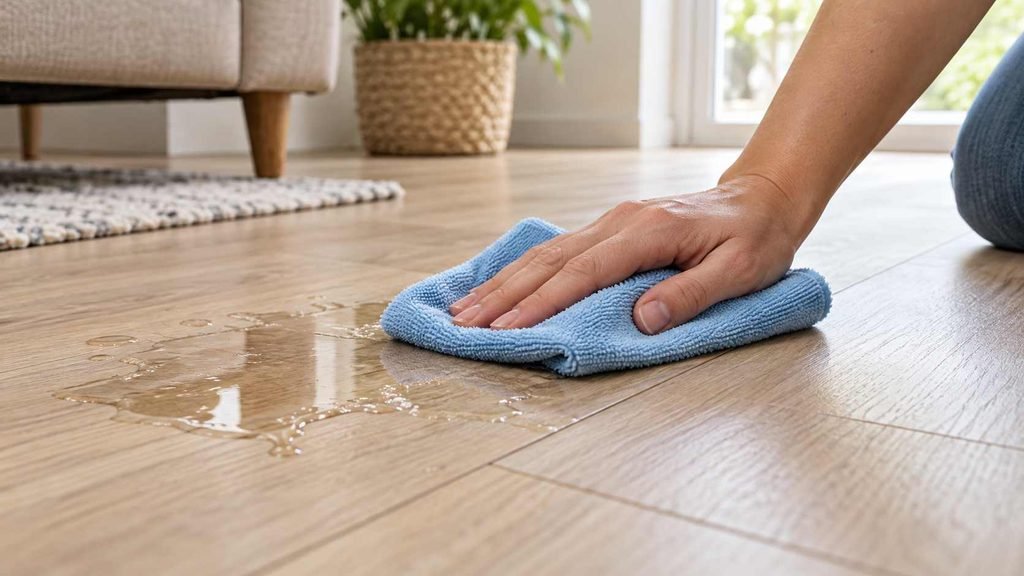
Blot the liquid with an absorbent cloth as soon as you notice it. Wipe the area with a barely damp cloth only if the floor’s care instructions allow it, then dry it completely. Pay close attention to plank joints and edges.
Food
Lift solid food with a spoon or soft cloth rather than scraping with a knife. Wipe residue using a laminate-safe cleaner applied to a cloth. Dry the area afterward if the product or flooring directions call for it.
Mud and dirt
Let thick mud dry enough to lift without smearing, then pick it up gently. Sweep or vacuum the remaining grit. Use a damp cloth or approved cleaner for the last trace, if permitted.
Candle wax or chewing gum
Some manufacturers recommend hardening wax or gum with ice, then carefully lifting it with a plastic scraper. Shaw gives this method for its laminate care guidance, but take care not to gouge the surface and follow your own floor’s instructions.
Ink, paint, or marker
These stains can require a stronger spot treatment, and manufacturer guidance varies. Some flooring guides list specific solvents for certain marks, but using the wrong one may damage the finish. Check your brand’s stain-removal instructions before applying acetone or another solvent. Keep any liquid away from the seams and test as directed.
What Not to Use on Laminate Flooring
When researching how to clean laminate floors properly, you may find advice to use vinegar, dish soap, steam, or an all-purpose cleaner. Don’t assume a popular household remedy is safe for your floor. Check the care instructions first, especially if your warranty is still active.
Unless your manufacturer specifically allows them, avoid:
- Steam mops and steam cleaners
- Wet mops or buckets of water
- Abrasive cleaners, steel wool, and scouring pads
- Wax, polish, oil soap, or shine-restoring products
- Bleach, ammonia, or strong chlorinated cleaners
- Soap or detergent that can leave a film
- Beater-bar vacuum settings
- Scrubbing machines or powered polishers
Shaw warns that wet mopping or using liquid cleaners outside its care guidance can cause swelling, warping, or joint separation. Pergo’s advice differs for some of its products, which is why your specific flooring instructions should guide your routine.
How Often Should You Clean Laminate Floors?
The right schedule depends on foot traffic, pets, children, and how much grit comes in from outside. A busy kitchen or entryway may need attention more often than a guest room.
A simple routine can help:
- Daily or as needed: Sweep visible crumbs and wipe up spills.
- Weekly: Dust mop or vacuum high-traffic rooms.
- When visibly dirty: Spot-clean marks with an approved product.
- Occasionally: Damp mop only if your manufacturer allows it.
You don’t need to deep-clean the whole floor every week if a dry mop keeps it tidy. Frequent liquid cleaning can create unnecessary moisture exposure. Keep an entry mat near exterior doors to catch grit, and shake it out regularly so it doesn’t become another source of dirt.
How to Keep Laminate Floors Cleaner for Longer
Prevention is easier than removing ground-in grit. A few simple habits can reduce the amount of debris that reaches the floor:
- Place mats at exterior doors and in high-traffic areas.
- Use felt pads beneath chair and table legs.
- Lift furniture when moving it.
- Keep pet nails trimmed to reduce scratches.
- Wipe wet shoes and paws near the entrance.
- Clean crumbs under dining chairs before they get crushed.
- Use a floor mat in front of sinks if your flooring care guide allows it.
- Close curtains or blinds if strong sunlight repeatedly hits the same area.
Shaw recommends entrance mats and floor protectors as part of its laminate maintenance guidance.
Common Cleaning Mistakes to Avoid
A floor can look worse after cleaning if the process leaves residue or pushes grit around. Avoid these common habits:
Using too much water. Excess moisture can work into joints. Even when a floor is water-resistant, follow the limits in the care guide.
Skipping the dry clean first. Mopping over sand and crumbs can cause scratches.
Using the same dirty mop pad throughout the room. A saturated pad may spread dirt instead of lifting it. Rinse or replace it as needed.
Mixing cleaning products. Combining products can leave residue or produce a cleaner that isn’t approved for laminate.
Trying several stain treatments at once. If a spot remains, pause and consult the manufacturer’s stain chart rather than layering more products.
Frequently Asked Questions
How often should I mop laminate floors?
Mop only as often as needed and only in the way your flooring maker approves. Many floors can be maintained with regular dry dusting and occasional spot cleaning; some allow a slightly damp microfiber mop.
Can I use a steam mop on laminate?
Check the flooring manufacturer before using steam. Shaw advises against steam cleaners for its laminate, and Pergo warns that moisture forced into joints may cause fading, discoloration, swelling, or other damage on some floors.
Why does my laminate floor look cloudy after mopping?
Cloudiness may come from cleaner residue, too much product, or a cleaning solution that doesn’t suit the floor. Stop adding cleaner, check the flooring instructions, and use only the recommended method to remove residue.
Can I use vinegar on laminate flooring?
Don’t use vinegar unless your floor’s manufacturer says it is safe. Cleaning recommendations differ, and acidic or homemade solutions may affect the finish or warranty.
What is the best mop for laminate?
A soft microfiber mop is a common choice because it picks up fine dust and uses little liquid. If damp mopping is not permitted for your floor, use it dry instead. Pergo lists microfiber cloths and damp mops among its laminate-care tools, while other brands set stricter limits.
How do I clean laminate floors properly when there are pets?
Vacuum or dust mop often to remove hair and grit, wipe up accidents promptly, and use only an approved cleaner. Put mats near doors and food bowls, and avoid letting water sit around the seams.
Conclusion
To learn how to clean laminate floors properly, begin with the care instructions for your exact flooring. Sweep or vacuum first, use a laminate-safe cleaner for spots, and follow the manufacturer’s directions for any damp mopping. Keep water away from seams, dry spills promptly, and skip products or equipment that aren’t approved.
A little regular dry cleaning usually does more for a laminate floor than an aggressive wash. With the right tools and a moisture-conscious routine, you can keep the surface neat while reducing the risk of streaks, scratches, and damage.