
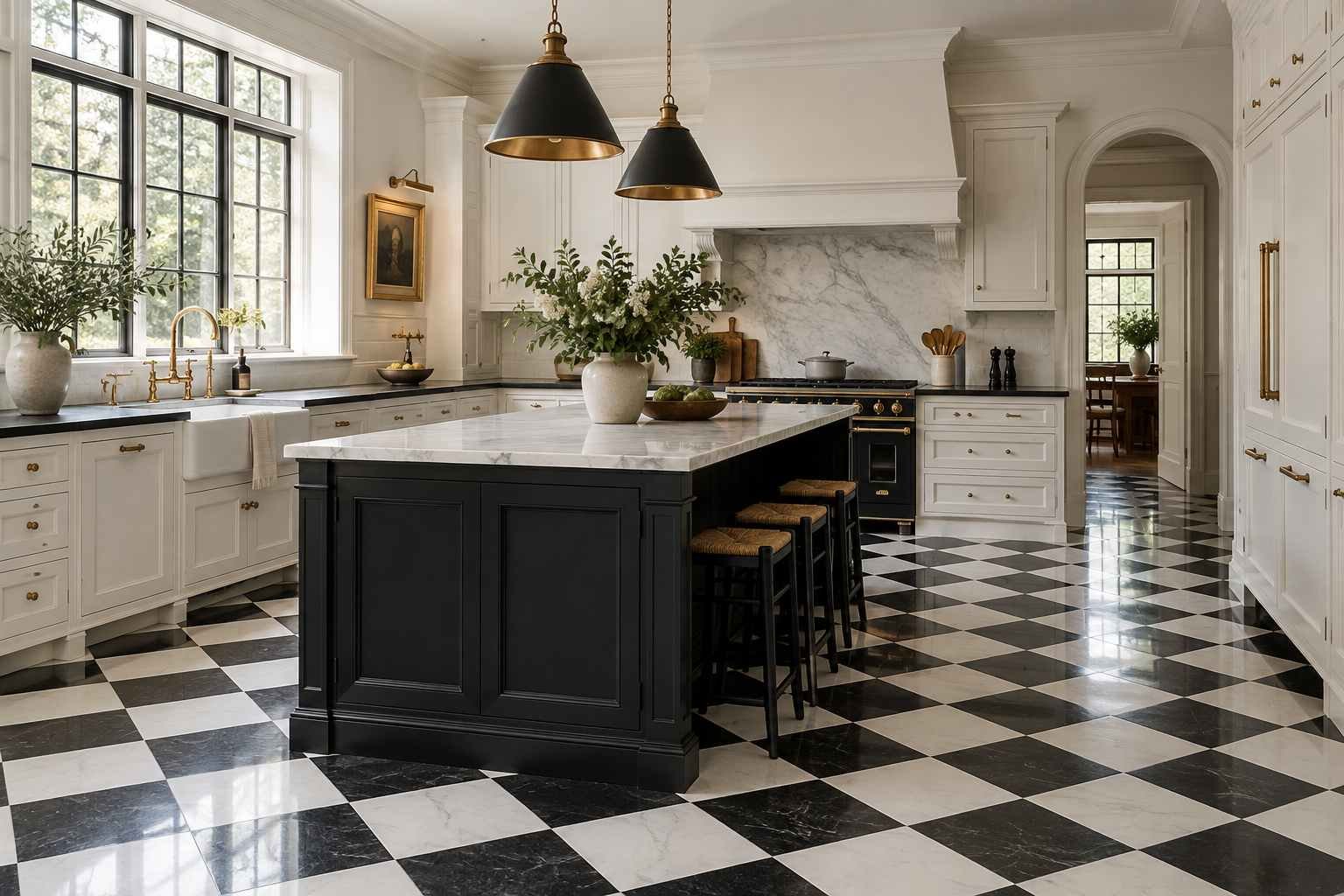
Among all the areas in the house, the kitchen is the most useful. Therefore, the flooring is critical to the space. It adds to the ambiance and the appeal of the interiors. It also needs to withstand frequent spills, stains, and general wear and tear. There is a range of flooring options to help elevate any space. From porcelain tiles to patterned flooring, each solution has its pros and cons. It is also important to keep in mind that the choice depends on the individual needs and the aesthetic of the kitchen.
There is no need for overly complex solutions. Instead, consider the available color options and materials. A simple yet elegant solution is perfect for any home. After going over these kitchen flooring ideas, it will be easier to select the ideal option for personal or professional needs.
Top Kitchen Flooring Options
1. Porcelain Tile
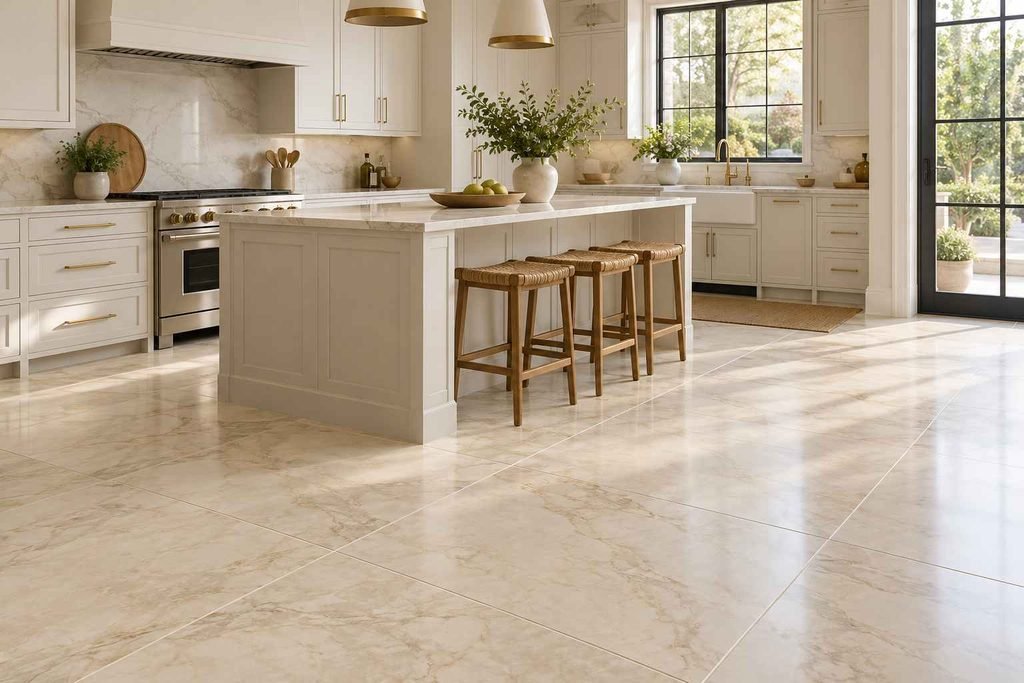
Porcelain tile is perfect for a high-traffic area such as a kitchen. It is durable, and its colors, sizes, and patterns offer a range of options. It is easy to clean and can withstand daily pressures due to its strength. This material is extremely versatile and complements most of the contemporary interiors. Porcelain can mimic the appearance of other surfaces, such as marble, concrete, or natural stone.
Why It Works:
- Highly resilient to stresses.
- Its patterns replicate popular stone and wood styles.
- It is easy to maintain and clean, with several available shades and variations.
- It fits both modern and traditional decor.
Porcelain tiles are a popular choice among residents and contractors. A single tile set can create a uniform solution throughout the house or a particular area.
2. Warm Wooden Finish
Wooden flooring is a versatile and warm solution for kitchens. It defines the interior with its style and character. Planks or veneers can complement most of the cabinets found in different kitchens. Warm neutrals and cool natural hues of hardwood add to the charm of wooden kitchen flooring.
Engineered wood flooring is a great alternative as it is highly dependable and resistant to environmental factors. It can withstand the pressures of everyday use while being simple to maintain. Wood floors are a fantastic choice in open-plan kitchens, as they create a seamless transition from one area to another. It is a subtle yet striking way of uniting all sections. Coordinating these materials in various tones creates a balanced and harmonious layout.
3. Luxury Vinyl Flooring
Luxury Vinyl flooring is made from vinyl and features a realistic design to mimic tiles and wood. The vinyl layer is a durable and waterproof material. This option offers the beauty of natural products with easy maintenance. It is comfortable and warm to the touch, unlike some other materials. This solution comes in a variety of tile and plank patterns.
It is extremely simple to clean and maintain, making it ideal for high-traffic areas and residents with a busy schedule. It creates a sophisticated interior without extra expenditures. However, this option should be applied with caution—carefully picking luxury vinyl flooring reduces the risk of damage and prolongs its service life. In addition, it is critical to maintain this material according to the manufacturer’s instructions.
4. Natural Stone Options
Natural stone surfaces are highly desirable as they feature unique patterns, coloring, and textures that are not replicated in other materials. Each piece is distinct, with no two matching in pattern, color, or texture. These materials are best suited for traditional and contemporary kitchens. Light-colored slate can add a sense of rustic charm to the area, while limestone has a neutral tone that enhances the beauty of its surroundings.
Popular Natural Stone Options & Characteristics:
- Slate: Adds a sense of rustic and traditional vibes.
- Neutral Tones: Highlight the organic, natural beauty of the stone.
- Light-Colored Limestone: Great in neutral-toned and modern kitchens.
- Versatility: Allows stone to be used seamlessly across different kitchens and home areas.
- Variety: Natural stone comes in a wide range of striking colors and textures.
Stone flooring requires more maintenance than some other options. Sealing is an essential procedure because it ensures the integrity and durability of the stone. It is also relevant to research and understand the specific needs of different stone materials.
Design and Layout Styles
5. Large-Size Floor Tiles
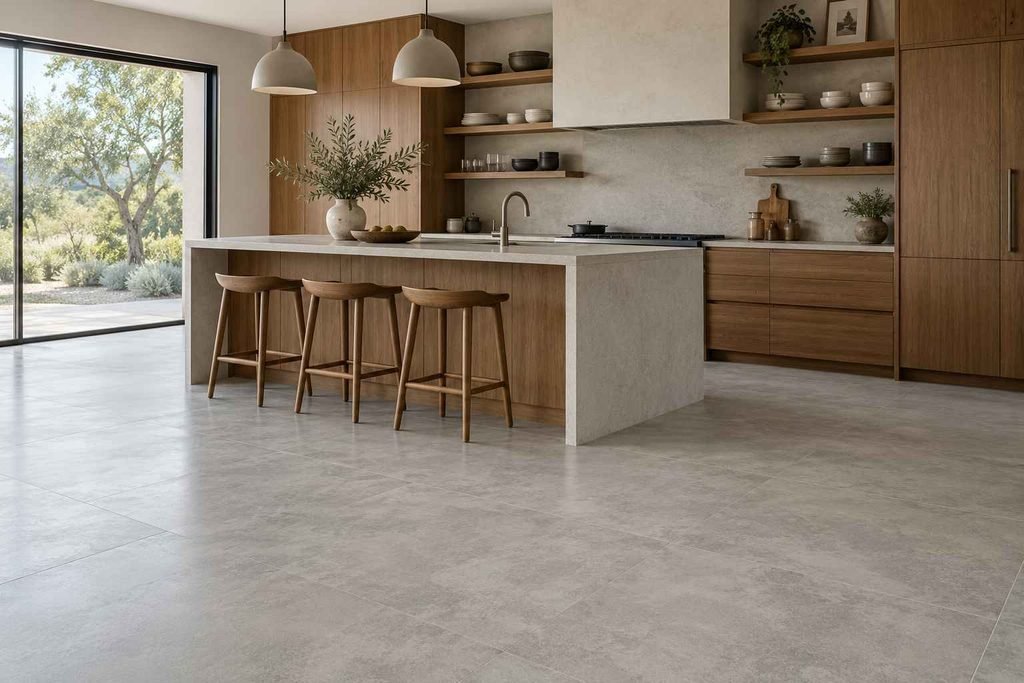
Large-size floor tiles can transform smaller kitchens and redefine their appearance. These tiles can provide an illusion of a larger space if applied correctly due to the limited number of grout lines. Modern aesthetics favor minimalist solutions like large tile designs, which complement most plain cabinets.
Benefits of Large Tiles:
- They provide a sense of openness and extra space. Combining them into oversized versions yields a dramatic effect.
- There are fewer grout lines when using larger tiles in kitchens.
- It creates a sense of simplicity that modern interiors appreciate.
Tiling the kitchen with light tones makes the illusion more realistic, though the option is not limited exclusively to light colors.
6. Decorative and Patterned Floor Tiles
This flooring option can be applied on its own or combined with other materials to create amazing patterns. Decorative tiles come in various hues and geometric shapes, offering more than traditional options. This unique combination is highly effective when paired with plain cabinets. This option is perfect for people who do not mind spending more to acquire decorative materials that last long.
Why It Works:
Floor tiles in bold designs add character and charm to an ordinary space. Creating a feature floor needs more attention to other elements to ensure a pleasing contrast. Geometric patterns suit modern-style kitchens, while traditional and country spaces look great with vintage tiles. It is also possible to create a stunning effect by combining black-and-white geometric designs with plain white cabinets.
7. Contemporary Concrete Style
Concrete-style material is perfect for homeowners who prefer contemporary and modern furnishings. The flooring does not overpower other elements in the kitchen, but accentuates them, creating an ideal background. It is applied as a solid sheet covering the entire area.
Using this flooring option requires choosing neutral shades that will not overshadow other materials. Polished concrete flooring is an extremely durable material requiring minimal maintenance. Alternatively, concrete-effect porcelain can be found in larger tile sizes to enhance the space.
Popular Concrete Pairings:
- Pairs beautifully with wooden kitchen cabinets to offset the cool aesthetic of concrete.
- Warm hues work best when paired with contrasting, eye-catching cabinetry.
8. Light Floor Options for Bright Kitchens
Light-colored flooring is an amazing choice for small kitchens and for those who want to enhance the lighting of their interiors. White, ivory, pale wood, and gray combine the appeal of neutrality with brightness. These floor plans help create an open and welcoming space.
Design Considerations:
- Bright color ranges allow more light into the interiors. These floors can be combined with white cabinets to amplify the effect.
- They create an amazing contrast with ordinary, unadorned kitchen cabinets and offer stylistic flexibility.
- The floor color can coordinate with other features like cabinets, backsplashes, and countertops.
Light gray tones are usually paired with minimalistic, open-layout kitchens. However, light floors are sensitive to dirt and require more frequent cleaning and maintenance.
9. Classic Black-and-White Style
The black-and-white style floor is ideal for traditional kitchens. It offers homeowners an outstanding option that requires minimal maintenance. This design typically implements a checkerboard pattern that provides a unique look.
Design Possibilities:
- Combining white and black creates a striking color scheme.
- Charcoal is another viable alternative that complements various ranges of white hues.
- You can use the entire range of black and white or opt for specific selections like checkerboard.
- Modern aesthetics call for mixing geometric layouts with contrasting colors.
- Using a mix of white and black kitchen cabinets works alongside the floor to create the perfect juxtaposition.
10. Herringbone and Chevron Layouts
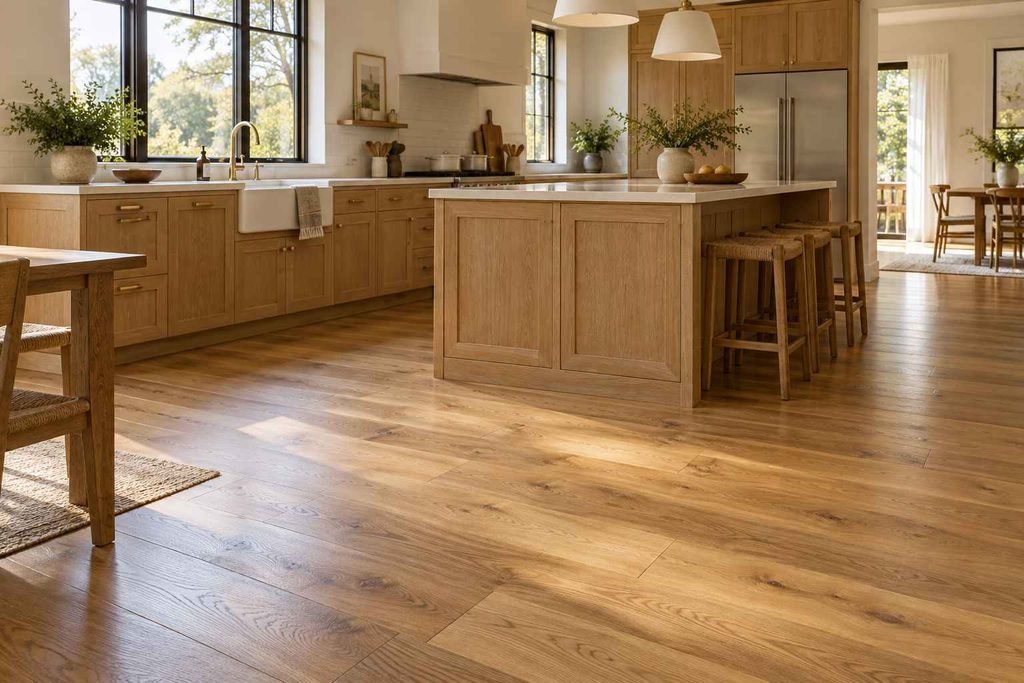
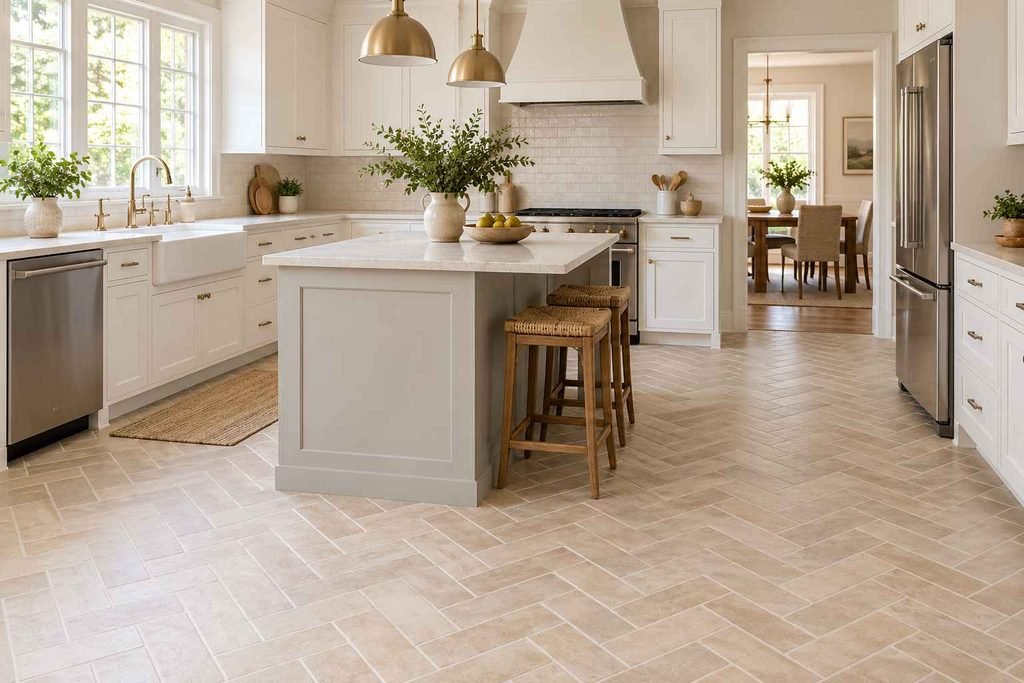
Herringbone and chevron layouts can be implemented in kitchens to create outstanding features that transform the area. Both layout options combine several smaller tiles or planks into larger ones to create unique geometric patterns.
Layout Tips:
- Using materials that are not overly colorful will enhance the look of the intricate pattern.
- Materials such as porcelain or wood look best in these layouts.
- For residential purposes, this option works best when other elements create a more muted setting.
11. Warm Neutral Floors with White Cabinets
White kitchens leave a lasting impression by allowing an equal and even spread of natural light. However, without contrast, they can seem underwhelming or cold. Combining neutral hues with white cabinets adds charm and warmth. Beige or warm-gray floors combined with white cabinets create a space that is outstanding without being overly contrasting.
Why It Works:
Combining these options creates a flexible, versatile interior. A neutral-hued floor picks up most of the surrounding tones in the kitchen and creates the perfect contrast with white cabinets. Additionally, stainless steel appliances are visually softened when offset by warm wooden tones.
Planning and Installation Guidance
Matching All Elements in a Kitchen
Ensuring that the flooring matches other elements is worth considering prior to making a final selection. It is easy to get carried away and overlook other aspects, but paying equal heed to all components will enhance the overall setting:
- Modern Kitchens: Favor sleek, smooth surfaces with large tiles, concrete materials, wood, and stone.
- Traditional Kitchens: Look great with natural stone, wood, and classic tile work.
- Always consider the color of cabinets, countertops, backsplashes, and hardware to gain a cohesive design.
How to Choose the Right Flooring
Ascertaining the most suitable option for kitchen flooring relies on a few crucial factors:
- Function & Lifestyle: High usage by families or busy households means durability dictates the daily routine. Porcelain and luxury vinyl are best for high traffic.
- Kitchen Size: Smaller kitchens require lighter materials in larger dimensions to create the illusion of space. Larger kitchens allow for more creative pattern combinations.
- Budget & Waste: Review costs in relation to the chosen material and tile size to calculate total material waste and installation fees.
Common Mistakes to Avoid
- Choosing Solely on Appearance: Ignoring subfloor conditions, layout constraints, or traffic intensity can lead to costly mistakes.
- Rushing the Selection: Adequate time should be spent contemplating different flooring options, size, traffic, and overall maintenance.
- Neglecting Details: Selecting an inappropriate tile or grout color and ignoring smooth transitions between adjoining room floorings are common pitfalls.
Maintenance and Care
Proper care and maintenance techniques prolong the lifespan of any material and preserve its aesthetic appeal:
- Routine Cleaning: Keep materials free of debris and dust by regularly sweeping, vacuuming, or combining both methods.
- Prompt Spill Management: Attend to liquid spills immediately to prevent deep staining or discoloration.
- Protective Measures: Use entry mats to catch dirt and apply felt pads beneath heavy appliances to minimize scratches or abrasions.
- Product Instructions: Use cleaning chemicals specifically formulated for your floor type as directed by the manufacturer (especially for sealed natural stone).
Frequently Asked Questions
What is the best material for kitchen flooring?
It depends on lifestyle, budget, and personal preferences. Porcelain and luxury vinyl are the most functional choices for durability. Natural stone and real wood are favored by those who prioritize high-end aesthetics.
What are the most popular kitchen flooring options?
Porcelain, luxury vinyl, natural stone, and wood are the most popular choices. Large-format tiles, patterned decorative tiles, and herringbone layouts are currently highly sought after.
Are light-colored floors suitable for kitchens?
Yes, light colors make small spaces feel open and enhance natural lighting. Popular shades include light gray, white, pale wood, and beige. Keep in mind that they may require more frequent cleaning.
Can wood flooring be used in a kitchen?
Yes, provided proper precautions are taken during installation and maintenance. Engineered wood is the ideal choice because it withstands moisture and environmental fluctuations better than solid hardwood.
Which kitchen floors are the easiest to maintain?
Porcelain tile and luxury vinyl flooring are the easiest to maintain, making them ideal for busy households.
Are patterned floor tiles a good choice for small kitchens?
Yes, but they are best paired with simple cabinets. To keep a small kitchen from feeling cramped, consider using lighter-colored patterns or combining them strategically with larger tile sizes.
Should flooring match the kitchen cabinets?
They do not need to match, but they should complement each other. Flooring and cabinets should create a cohesive layout alongside countertops and backsplashes without feeling cluttered.
Are black-and-white floors still in style?
Yes, black-and-white flooring—such as checkerboard or geometric tile—has a timeless appeal that works seamlessly in traditional, country, modern, and contemporary kitchens alike.
Conclusion
The right floor can completely change the atmosphere of a kitchen. It can make the room feel brighter, warmer, larger, more traditional, or more contemporary. From durable porcelain and practical luxury vinyl to natural stone, wood, patterned tiles, and herringbone layouts, there are plenty of options to explore.
The best kitchen flooring ideas combine style with everyday practicality. Think about how your kitchen is used, how much maintenance you are comfortable with, and how the flooring will work with your cabinets and countertops.
Take your time before making a final decision. Compare samples, consider your budget, and choose a material that can handle your daily routine. With the right flooring, even a simple kitchen can feel more comfortable, attractive, and complete.
3 thoughts on “Kitchen Flooring Ideas: 11 Stylish and Practical Ways to Upgrade Your Kitchen ”