
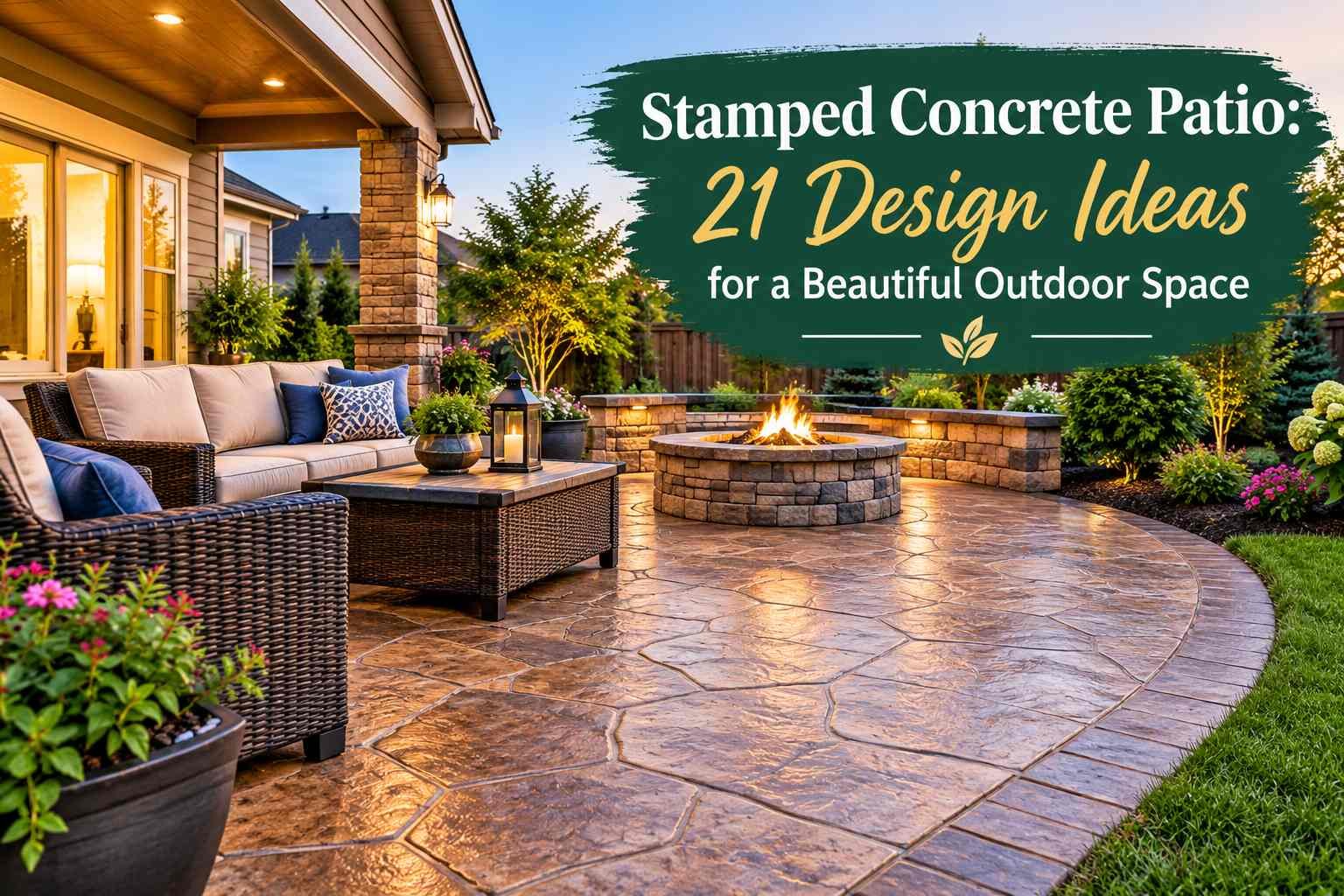
A stamped concrete patio can give a backyard the look of natural stone, brick, or wood while creating one continuous outdoor surface. With the right pattern, color, and layout, it can work as a quiet place to relax, a dining area for family meals, or a gathering spot around a fire feature. The key is to plan the surface around how you use your yard, not just how it will look in a photo.
Concrete offers plenty of design flexibility, but the finished result depends on careful preparation, drainage, installation, and maintenance. Explore these ideas to find a style that suits your home, and use them as a starting point when discussing options with a qualified contractor.
1. Start with a layout that fits your yard
Before choosing a pattern, decide where the patio should sit and what it needs to accommodate. A dining table needs room for chairs to move back, while a lounge area benefits from a clear route around the furniture. If you plan to include a grill, leave enough space to work safely and keep it a comfortable distance from walls, furniture, and overhanging branches.
Mark the proposed shape on the ground with a garden hose or stakes and string. Walk around the outline and picture where the furniture will go. This simple step can reveal awkward corners or narrow paths before construction begins.
A stamped concrete patio can be designed in a broad range of shapes, but curves and angles may affect labor and formwork. Keep the outline simple if your yard is small or the project budget is limited.
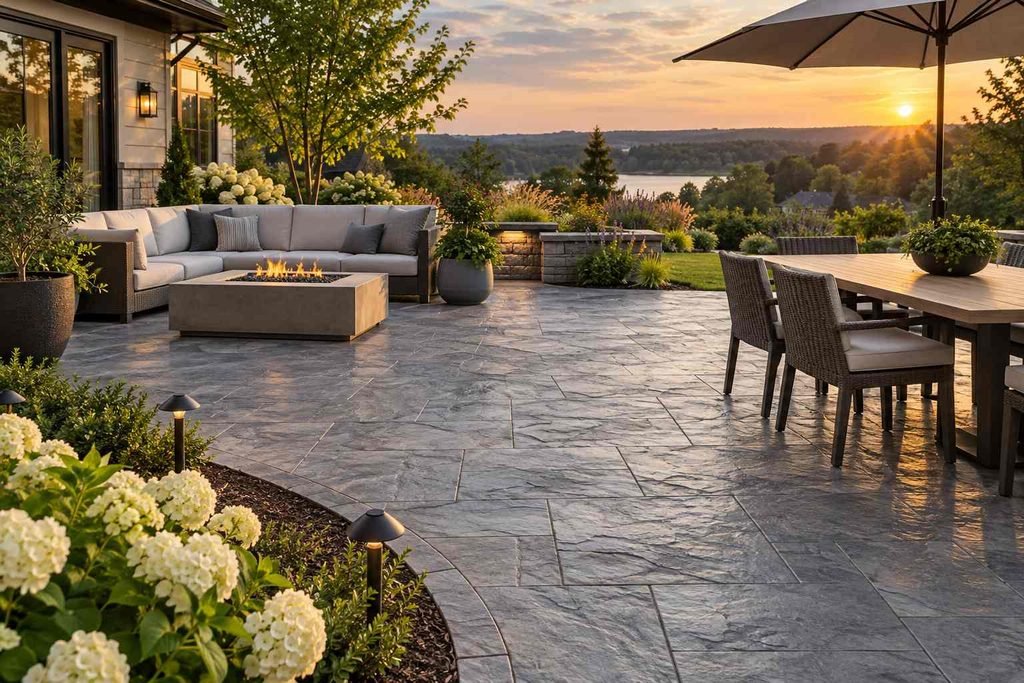
2. Choose a slate pattern for a natural-stone look
Slate-inspired stamps create irregular shapes and textured joints that resemble cut stone. Gray, charcoal, and taupe shades suit contemporary homes, while warmer gray-brown blends can feel more traditional. A slate pattern works especially well beside planting beds, stone retaining walls, or a home with natural materials.
The impression of stone comes from both the stamp and the color treatment. Ask to see samples in daylight and near your home’s exterior finishes. A pattern that looks subtle on a small sample may feel much busier when repeated across a large surface.
3. Use a cobblestone pattern for a classic feel
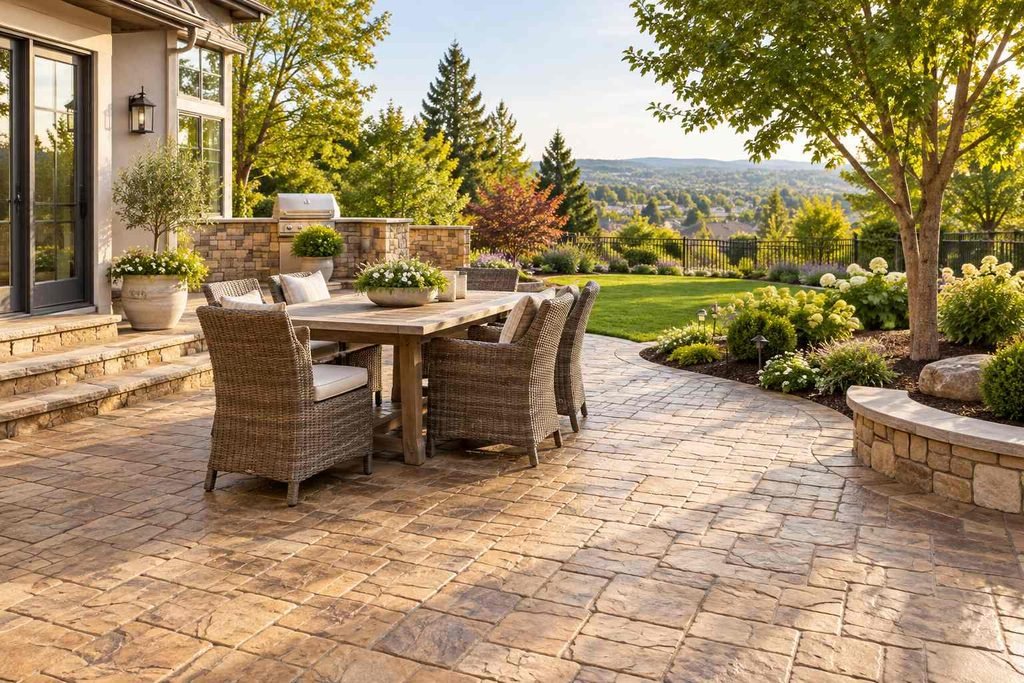
A cobblestone pattern can bring an old-world quality to a garden or traditional home. It works well in courtyards, on paths leading to a patio, or as a small accent area near a back door. Choose a color blend that complements the house rather than trying to mimic a specific stone exactly.
A highly detailed pattern may feel crowded in a small yard. If the patio is compact, ask about larger cobblestone stamps or a simpler layout that leaves more visual breathing room.
4. Add a contrasting border
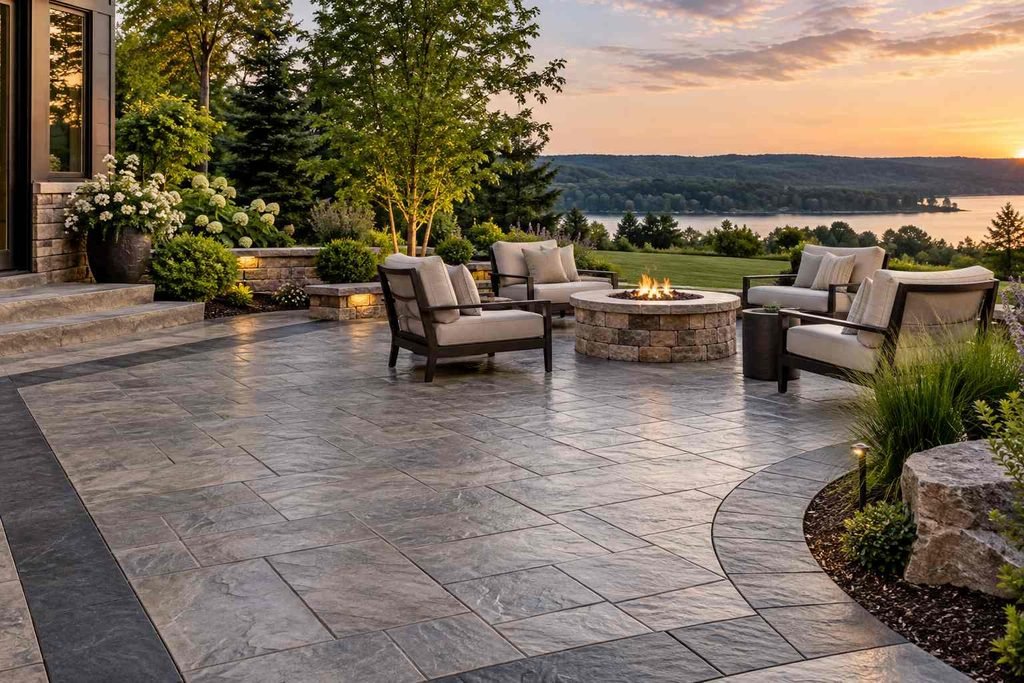
A border can give the patio a finished edge and help define the shape. Some homeowners use a darker band around the perimeter, while others choose a second stamp or a smooth concrete edge. A border can also frame a dining zone or separate a seating area from a pathway.
Keep the border proportional to the patio. A wide, high-contrast band can dominate a small surface, while a narrow border may be difficult to notice on a very large one. Take time to compare samples together; color combinations can look different under sun, shade, and outdoor lighting.
5. Combine stamped texture with a smooth section
Using two finishes can create a visual distinction without building a wall or adding a different material. For example, a textured outer area can frame a smooth central space beneath a table. This can make the layout feel more intentional and help divide a large patio into zones.
Plan the transition carefully with your installer. The change in finish should be level and comfortable to walk across, especially near doorways or common routes. If the surfaces meet at a sharp line, use it to reinforce the patio’s overall geometry.
6. Choose colors that complement your home
Color should connect the patio to the house, garden, and outdoor furniture. For a light exterior, medium gray or warm taupe can provide contrast. Brick homes may pair well with earth tones, while a modern home can suit cooler grays or restrained charcoal accents.
Ask the contractor how the color will be applied and how it may vary across the surface. Concrete can have natural tonal variation, and stamped textures catch light differently throughout the day. A small sample is helpful, but a larger sample viewed outdoors is more informative.
Ideas for a balanced palette
- Use one main tone and a subtle secondary color.
- Match the general warmth of nearby brick, siding, or stone.
- Consider how the surface will look when wet and in direct sun.
- Avoid selecting a shade based only on an indoor sample or screen image.
7. Create a dining zone with room to move
A patio dining area needs more than enough space for the table itself. Leave room for chairs to slide out and for people to pass behind seated guests. If the table will sit near a doorway, keep a clear path between the home and the yard.
A simple rectangular surface often works well for dining because furniture is easy to arrange. Use a border, a pergola, or nearby planters to make the area feel distinct without interrupting the walking route.
8. Design a comfortable lounge area
A lounge zone can include outdoor sofas, low chairs, and a coffee table. Place it where people can enjoy the garden or a view, and consider shade during the hottest part of the day. A pergola, umbrella, or shade tree can make the surface more comfortable and protect furniture from strong sunlight.
Check the patio’s dimensions before buying large furniture. Oversized pieces can make the area feel cramped, while furniture that is too small may look lost on a broad concrete surface. Leave enough open space for circulation and easy cleaning.
9. Make room for a fire pit
A fire pit can anchor an outdoor seating arrangement and make the patio useful on cool evenings. Choose a location with enough clearance from the house, trees, fences, and furniture. Follow the fire feature manufacturer’s instructions and local safety requirements, particularly if the unit uses gas or is built into the patio.
A stamped concrete patio with a stone-like texture can complement a masonry fire feature. Keep the surrounding surface relatively open so chairs can be moved and the area can be cleaned easily.
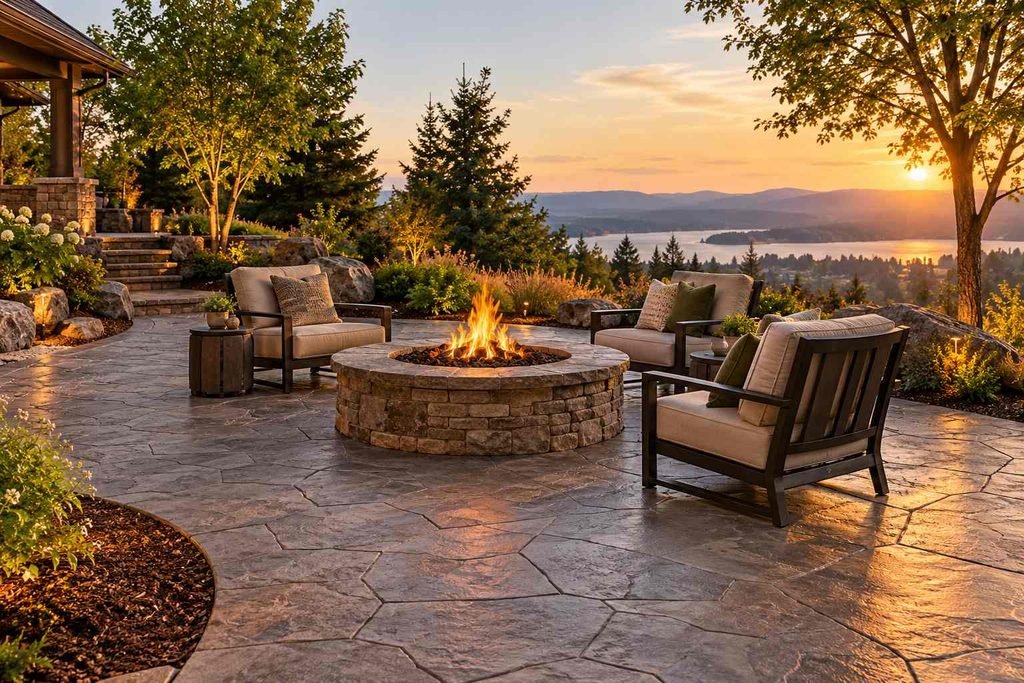
10. Plan a poolside surface with safety in mind
A poolside patio needs a finish that is comfortable and suitable for wet conditions. Ask the installer how the chosen texture performs when damp and how it will be maintained. The surface should also direct water appropriately and avoid creating troublesome puddles near the pool or house.
Color matters around a pool, too. Very dark surfaces may become hot in direct sun, while very light colors can show dirt and leaves more clearly. Consider where the sun falls during the day and how the surrounding landscaping affects shade.
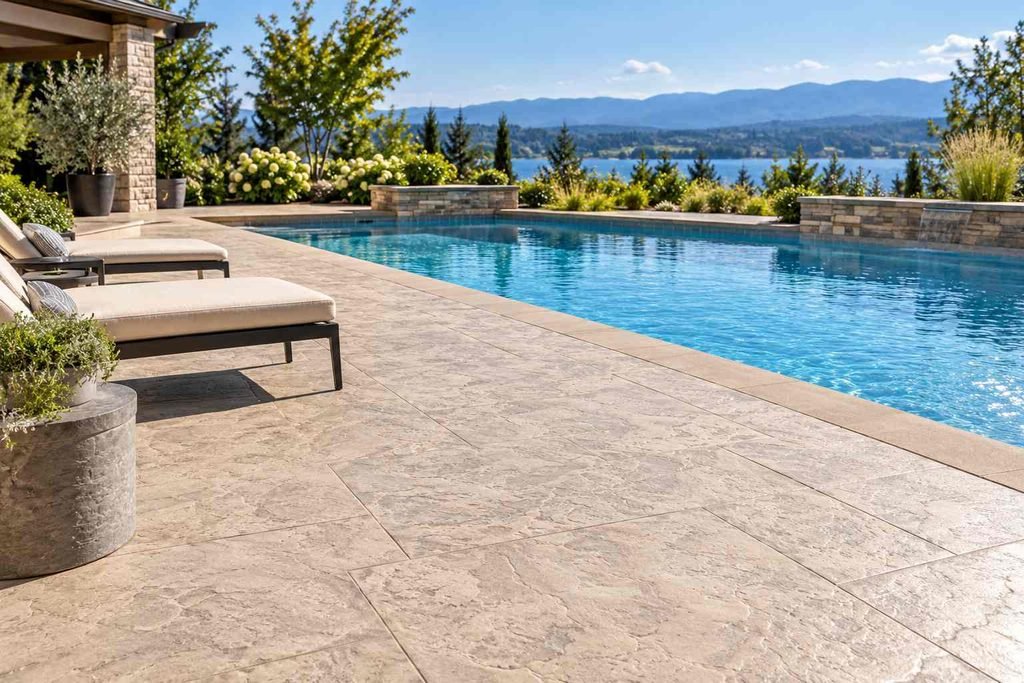
11. Add steps and paths that connect the yard
Steps can connect a patio to a lawn, garden, or raised deck. Paths can link the patio to a gate, shed, or outdoor kitchen. Using a related pattern or color can make the whole yard feel coordinated, while a simpler path finish can keep the main patio as the focal point.
Think about slope, drainage, and how the path will be used in wet weather. Steps should be consistent in height, and walkways should be wide enough for everyday movement. These details are important for comfort as well as appearance.
12. Use curves to soften a rectangular yard
A curved edge can make a patio feel less formal and help it blend into planting beds. Curves work well around a fire pit, a garden border, or a small seating nook. They can also create a gentle transition between the patio and lawn.
Curves may require more layout work than straight edges. Use them where they serve a purpose, such as making space around furniture or following the shape of a garden bed. Avoid adding bends solely for decoration if they create awkward leftover spaces.
13. Include a pergola or shade structure
A pergola can define an outdoor room and provide partial shade. It may also create a convenient place for lighting or climbing plants, depending on the structure and local conditions. Coordinate its location with the patio layout before pouring the concrete, especially if support posts will be anchored into or beside the slab.
If a roof, awning, or attached structure is part of the plan, check local building requirements and the manufacturer’s installation guidance. Shade can affect how the surface dries and how the patio is used, so include it early in the design process.
14. Make space for an outdoor kitchen
An outdoor kitchen can include a grill, counter, storage, and sometimes a sink or refrigerator. Place it where cooking smells and smoke will not drift directly into open doors or windows. Keep the serving route convenient, and leave enough counter space for food preparation.
Built-in cooking equipment can add complexity to a patio project. Discuss utility connections, ventilation, clearances, and drainage with qualified professionals before construction. Even a simple grill station benefits from a stable, easy-to-clean surface.
15. Coordinate the patio with garden planting
Plants can soften hard edges and make the patio feel connected to the landscape. Use planters near seating areas, or add garden beds along the patio perimeter. Choose plants suited to the local climate and the amount of sun each area receives.
Leave room between the concrete and plants for growth and maintenance. Avoid placing trees too close if their roots could affect the patio over time. A landscape professional can help select plants that fit the space and reduce ongoing upkeep.
16. Understand how installation affects the result
A finished surface depends on more than the pattern. Site preparation, base compaction, drainage, concrete mix, timing, and the stamping process all affect how the patio performs. The installer must work within the material’s setting window, so a clear plan and experienced crew matter.
Before hiring, ask to see examples of completed projects and discuss the proposed process. Request a written estimate that explains the preparation, finish, color approach, control joints, sealing, and cleanup. Ask what maintenance the contractor recommends and what conditions may affect the schedule.
17. Plan for joints and drainage
Concrete expands and contracts with temperature changes. Control joints are used to help manage where cracking is more likely to occur, though they cannot guarantee that concrete will never crack. Ask where the joints will be placed and how they will fit into the pattern.
Drainage should move water away from the home and avoid low spots that collect runoff. Discuss the slope with the contractor, especially if the patio meets a doorway, foundation, pool, or neighboring surface. Proper grading can help prevent water problems later.
18. Keep the surface clean and maintained
Routine care usually starts with sweeping away leaves and dirt, followed by rinsing or washing as needed. Clean spills promptly, especially oil, food, or anything that may stain. Use products appropriate for the finish and follow the installer’s recommendations.
Sealers can help protect the surface and maintain its appearance, but they require proper application and periodic renewal based on the product and conditions. Ask how often the surface should be resealed, how to prepare it, and what weather is suitable for the work.
19. Compare cost by looking at the whole project
Project price depends on the size of the area, site access, excavation, base preparation, pattern complexity, colors, borders, steps, and local labor. Removing an old patio or correcting drainage can add work. Instead of comparing only the total numbers, compare what each estimate includes.
A straightforward design may help manage the budget while still looking polished. You can also phase the project: complete the main patio first, then add a pergola, outdoor kitchen, or extra path later. Make sure any future additions are considered in the initial layout.
20. Choose furniture and lighting that finish the space
Furniture helps bring the surface to life. Repeat a color or material from the home’s exterior, then add cushions and planters for warmth. Use outdoor-rated lighting in the areas where people gather and move after dark. Keep cords and fixtures appropriate for outdoor conditions.
Because concrete is visually substantial, balance it with softer materials such as outdoor rugs, cushions, wood, and greenery. These elements make the patio feel comfortable without hiding the texture that drew you to the design.
21. Decide whether the look suits your routine
A stamped concrete patio can suit a range of homes, but it is not a perfect fit for every yard or homeowner. Consider the look you want, the maintenance you are willing to do, how the space will drain, and whether you may want changes later. A clear plan can help you weigh design appeal against practical needs.
Frequently Asked Questions
What is a stamped concrete patio?
It is a concrete surface textured with stamps before it fully sets to create patterns that resemble materials such as stone, brick, or wood. Color can be added to create more depth and variation.
How long does a stamped concrete patio last?
Its service life depends on installation quality, site conditions, climate, drainage, use, and maintenance. Good preparation and appropriate care can help it remain attractive over time. Ask local contractors how they address conditions common in your area.
Is stamped concrete slippery when wet?
Some finishes can be slicker than others, particularly if they are smooth or sealed with a glossy product. Ask about texture and traction for the intended location, especially around pools, steps, and frequently wet areas.
Can stamped concrete crack?
Concrete can crack as it shrinks, settles, or responds to temperature changes. Proper site preparation and control joints help manage cracking, but they cannot eliminate all risk. Ask the contractor how joints will be positioned and what to expect.
How often does concrete need to be sealed?
The schedule depends on the sealer, exposure, traffic, and local weather. Follow the product and installer guidance, and inspect the surface periodically for signs that it needs attention.
Can an old concrete patio be stamped?
Stamping is typically done while newly placed concrete is still workable. Existing concrete may be resurfaced or covered with an overlay in some situations, but the condition of the slab matters. Have a qualified installer assess it before choosing an approach.
Conclusion
A patio can become one of the most useful parts of a backyard when its design supports everyday life. Start with the layout, decide how you want to dine or relax, then choose a texture and color that work with your home. Pay close attention to site preparation, drainage, joints, and maintenance before installation begins.
A thoughtfully planned stamped concrete patio can bring together the look you want and the functions your household needs. Take time to compare patterns, view color samples outdoors, and ask contractors clear questions. With those decisions made early, the finished space can feel comfortable, practical, and connected to the rest of your landscape.
2 thoughts on “Stamped Concrete Patio: 21 Design Ideas for a Beautiful Outdoor Space”